Last updated November 17, 2026





Free written scope consultation - allowances, timeline, and change-order rules on paper before a single trade is scheduled
Home Remodeling Maintenance Schedule: What to Do and When
Most remodeling warranties include a clause that lets a contractor off the hook if routine maintenance wasn’t performed – and almost no homeowner reads that clause until something goes wrong. We’ve walked into East Los Angeles homes where a failing shower pan or peeling exterior paint would have been covered, except the homeowner had never sealed the grout or repainted the trim. The warranty was valid. The maintenance clause was not satisfied. In East Los Angeles, where summer heat bakes south-facing walls and the dry-wet cycle works on caulk and stucco year-round, that gap opens faster than most people expect. This guide gives you a schedule, the intervals that matter, and the documentation habits that keep your guarantee intact.
Quick Answer
A post-remodel maintenance schedule should hit every major system on a fixed calendar: caulk and grout inspection every 6 months, HVAC filter changes every 1 – 3 months, exterior paint and stucco checks every 12 months, and a full walkthrough of all remodeled surfaces once a year. Tasks tied to warranty coverage – sealing wet areas, maintaining exterior coatings, clearing drainage – must be done and documented with dated photos. Tasks that are purely cosmetic can slide. The difference between the two is what protects the money you already spent.
Styles & brands we work with
- Kitchen remodeling
- Bathroom remodeling
- Home additions & ADU
- Roofing
- Windows & doors
- Driveway & pavers
- Fence
Table of Contents
- Which Maintenance Tasks Are Tied to Warranty Coverage
- How East Los Angeles Climate Accelerates Wear
- The Six-Month Checklist: Caulk, Grout, and Seals
- The Annual Checklist: Exterior, Drainage, and Systems
- How to Document Maintenance for a Warranty Dispute
- Self-Perform vs. Licensed Tradesperson: Where the Line Is
- The Seasonal Calendar for East Los Angeles Homes
- Common Mistakes to Avoid
Which Maintenance Tasks Are Tied to Warranty Coverage
Not all maintenance is equal in the eyes of a warranty. Some tasks are written into the guarantee terms as conditions of coverage. Others are cosmetic upkeep that no warranty touches. Knowing which is which tells you where to spend your Saturdays.
Tasks typically tied to warranty coverage:
- Grout sealing and caulk replacement in wet areas. Kitchen backsplashes, shower surrounds, tub decks. If water gets behind tile because the seal failed, the repair is on you.
- Exterior paint and stucco maintenance. Cracks that let moisture into the wall assembly can void coverage on siding, framing, and window installs.
- Drainage clearance. Gutters, downspouts, and site grading that push water away from the foundation. Standing water against a slab is a maintenance failure, not a construction defect.
- HVAC filter changes. A clogged filter that burns out a blower motor after a remodel is a homeowner responsibility.
Tasks that are purely cosmetic and carry no warranty weight:
- Touch-up paint on interior walls
- Cabinet hardware tightening or replacement
- Re-caulking interior trim that has shrunk
- Refinishing a scratched floor
We put this distinction in writing at project close because it matters. Every Bradford Remodeling project ends with a documented scope and a signed written guarantee in your hand, and that guarantee spells out what maintenance keeps it valid. If you’ve had a kitchen remodel in East Los Angeles completed, the wet-area sealing schedule is your first line of defense.
How East Los Angeles Climate Accelerates Wear
East Los Angeles sits in a basin where summer temperatures routinely push past 95°F and the dry season runs from May through October with almost no rain. Then the winter storms arrive and dump weeks of moisture in a compressed window. That swing – months of baking followed by concentrated rain – is harder on a remodel than steady weather anywhere else.
What we see in East Los Angeles homes:
- Caulk failure on south- and west-facing walls. UV exposure breaks down latex caulk in 12 – 18 months on sun-blasted elevations. North-facing caulk lasts twice as long.
- Stucco hairline cracks that open in the dry season. When the rain comes, water tracks into those cracks. On older East Los Angeles properties near Whittier Boulevard and the neighborhoods around Garfield High School, we regularly see stucco that needed a seal coat two summers ago.
- Seismic movement on grout lines. Small ground movement is constant here. Grout cracks in tile floors and shower walls are common and should be caught before water gets behind them.
- Window seal degradation. The thermal cycle stresses window seals and glazing. If your remodel included new windows from a line like ES Windows or ECO Window Systems, check the perimeter caulk every six months, not annually.
This is why the schedule below is tighter than the one you’d use in a milder climate. A six-month caulk inspection in East Los Angeles isn’t overkill. It’s the minimum.
The Six-Month Checklist: Caulk, Grout, and Seals
Twice a year – once in spring before the heat, once in fall before the rains – walk every wet area and every exterior penetration. Here’s the sequence:
- Inspect all caulk joints in bathrooms and kitchen. Press a fingernail into the caulk. If it’s hard, cracked, or pulling away from the tile or tub, it needs replacement. Don’t just caulk over it.
- Check grout lines for cracks and missing grout. Run a finger along the shower floor and walls. Any gritty texture or visible gap means the sealer has worn through.
- Reseal grout in wet areas. A penetrating sealer every 6 – 12 months on shower floors, 12 months on kitchen backsplashes. This is cheap and fast.
- Inspect exterior caulk at windows, doors, and trim. Every window and door perimeter. If you have Therma-Tru doors or new glazing, the sealant around the frame is the first thing to check.
- Look at countertop seams. Cambria and Caesarstone surfaces are non-porous, but the seam adhesive can fail. A seam that’s lifting needs a pro, not a tube of silicone.
- Photograph everything with a date visible. More on this below.
This checklist takes about 90 minutes for a typical East Los Angeles home. Do it in April and again in October. If you’ve had a bathroom remodel in East Los Angeles done in the last year, this is the exact routine that keeps the wet-area portion of your guarantee live.
The Annual Checklist: Exterior, Drainage, and Systems
Once a year, in early fall before the rainy season, run a full exterior and systems pass. This is the inspection that catches expensive problems while they’re still cheap.
- Exterior paint and stucco: Look for chalky residue, blistering, or cracks wider than a hairline. On James Hardie siding, check the factory finish at cut edges – those need touching up. Recoat stucco with an elastomeric seal every 5 – 7 years in East Los Angeles sun.
- Gutters and downspouts: Clear debris. Check that downspouts discharge at least 4 feet from the foundation. This is non-negotiable for warranty coverage on foundation and framing.
- HVAC filters: Every 1 – 3 months depending on filter type. A 1-inch fiberglass filter needs monthly attention during heavy use. A 4-inch media filter can go 3 – 6 months. Write the change date on the filter frame.
- Roof inspection: From the ground with binoculars. Check flashing at chimneys, vents, and skylights. If your remodel included GAF or CertainTeed shingles, verify the flashing points haven’t lifted.
- Seismic check: Look at any new tile, cabinetry, or shelving for movement. Secure tall cabinets to studs if they aren’t already. East Los Angeles is earthquake country and the annual pass is when you catch hardware backing out.
- Drainage and grading: Soil should slope away from the house at roughly 6 inches over the first 10 feet. Settled soil after a remodel needs re-grading.
Budget 3 – 4 hours for a full annual walkthrough. It’s the cheapest insurance you’ll buy.
How to Document Maintenance for a Warranty Dispute
When a warranty claim happens, the question isn’t whether you did the maintenance – it’s whether you can prove it. A contractor processing a claim under a written guarantee has to determine whether the failure was a construction defect or a maintenance lapse. Your records decide that conversation.
How to build a maintenance record that holds up:
- Date every photo. Use a phone camera that embeds the date, or photograph a handwritten date card next to the area. A photo with no date proves nothing.
- Keep a simple log. A notes file or a notebook with date, task, and product used. “Oct 12, 2026 – resealed shower floor grout, product X.” Three lines is enough.
- Save receipts for materials and any hired work. A receipt for grout sealer or a paid invoice for exterior painting is evidence.
- Photograph the whole area, not just the detail. Wide shot plus close-up. The wide shot proves where the close-up was taken.
- Store it off your phone. Cloud folder or email to yourself. Phones get lost.
- Note the contractor’s name and project date. When you call about your guarantee, you want the project date and scope reference in front of you.
We recommend the same discipline whether or not your project was ours. Bradford Remodeling runs every project on The Garrison Standard, which means the written guarantee you receive at close has specific terms – and specific maintenance conditions. Your log is what proves you held up your end. If you’d like a copy of the maintenance conditions that apply to your project, call (833) 520-6636 and a live person will pull it for you.
Self-Perform vs. Licensed Tradesperson: Where the Line Is
Some maintenance you can absolutely do yourself. Some tasks, done wrong, break code compliance or void a warranty – and some are genuinely dangerous.
Safe to self-perform:
- Changing HVAC filters
- Replacing worn caulk in kitchens and baths (use the right product – 100% silicone in wet areas, paintable latex on trim)
- Sealing grout with a penetrating sealer
- Clearing gutters and downspouts (with a stable ladder, from the ground if possible)
- Touching up exterior paint on a single-story wall
- Tightening cabinet hinges and drawer slides
Requires a licensed tradesperson:
- Electrical. Any work inside a panel, new circuits, or replacing devices where the box is questionable. Electrical panels and wiring carry real shock and fire risk – this is not a maintenance item for a homeowner.
- Plumbing rough-in. Anything behind the wall. A shower valve replacement or supply line repair needs a licensed plumber to stay code-compliant.
- Gas lines. Never. Gas leaks are lethal. Any gas appliance work requires a licensed professional and a permit.
- Roof work above one story. Height work is where homeowners get hurt. Call a roofer.
- HVAC service beyond filters. Refrigerant handling is regulated and requires a certified technician.
- Structural or foundation concerns. A crack that worries you needs an engineer or licensed contractor, not a tube of epoxy.
Permits matter here too. If a maintenance task crosses into “repair or replacement” – like swapping a water heater or adding a circuit – East Los Angeles jobs fall under Los Angeles County and city permitting rules. Work done without a permit can create a code violation that outlasts the remodel. Our general contractor in East Los Angeles team pulls permits and passes inspection on every project, and we’ll tell you honestly when a maintenance item has crossed that line.
The Seasonal Calendar for East Los Angeles Homes
Here’s the year mapped out, adjusted for East Los Angeles weather patterns:
- January – February (rainy season): Watch for leaks at windows, doors, and roof flashing. Check drainage. Address any water intrusion immediately – this is peak claim season.
- March – April (pre-summer): Six-month caulk and grout inspection. Reseal wet areas before the heat. Check exterior caulk at windows and doors.
- May – June (heat onset): Service HVAC before the first heat wave. Change filters. Check exterior paint for UV chalk. Inspect window seals (CWS, ES Windows, and ECO Window Systems units all stress in the first summer).
- July – August (peak heat and UV): Minimal exterior work. Focus on interior checks. Watch for caulk pulling on sun-blasted walls.
- September – October (pre-rain prep): Annual walkthrough. Clear gutters. Check roof flashing. Re-grade soil. Touch up exterior paint and seam sealant.
- November – December (early rain): Inspect after the first significant storm. Photograph anything that looks off. File it in your log.
If you’ve recently completed a whole-home remodel in East Los Angeles, the first year is the critical window. Everything is at its newest, and every seal is under load for the first time. Catch the failures early.
Common Mistakes to Avoid
- Skipping wet-area sealing because “it looks fine.” Grout sealer wears invisibly. By the time you see water damage, the substrate behind the tile is compromised and the repair is a demo job, not a reseal.
- Caulking over failing caulk. A new bead over old, cracked caulk fails within months. Remove the old caulk fully, clean and let the joint dry, then reapply. In East Los Angeles heat, a bad caulk job shows up by the next summer.
- Ignoring hairline stucco cracks. A 1/16-inch crack looks harmless. Two rainy seasons later it’s a wall assembly problem that a warranty won’t cover because you skipped the seal coat.
- Never changing HVAC filters. The single most common warranty-voiding lapse we see. A $15 filter protects a $1,200 blower motor. Change it.
- Letting gutters dump at the foundation. Downspout discharge too close to the slab is a documented maintenance failure. Extend it. Bury it. Redirect it. Just fix it.
- Doing electrical or gas work yourself. A homeowner electrical repair that fails inspection can void multiple warranties at once and create a real safety hazard. Don’t.
- Keeping no maintenance record. When you need the guarantee, the burden of proof is on you. A dated photo log takes minutes and settles the conversation.
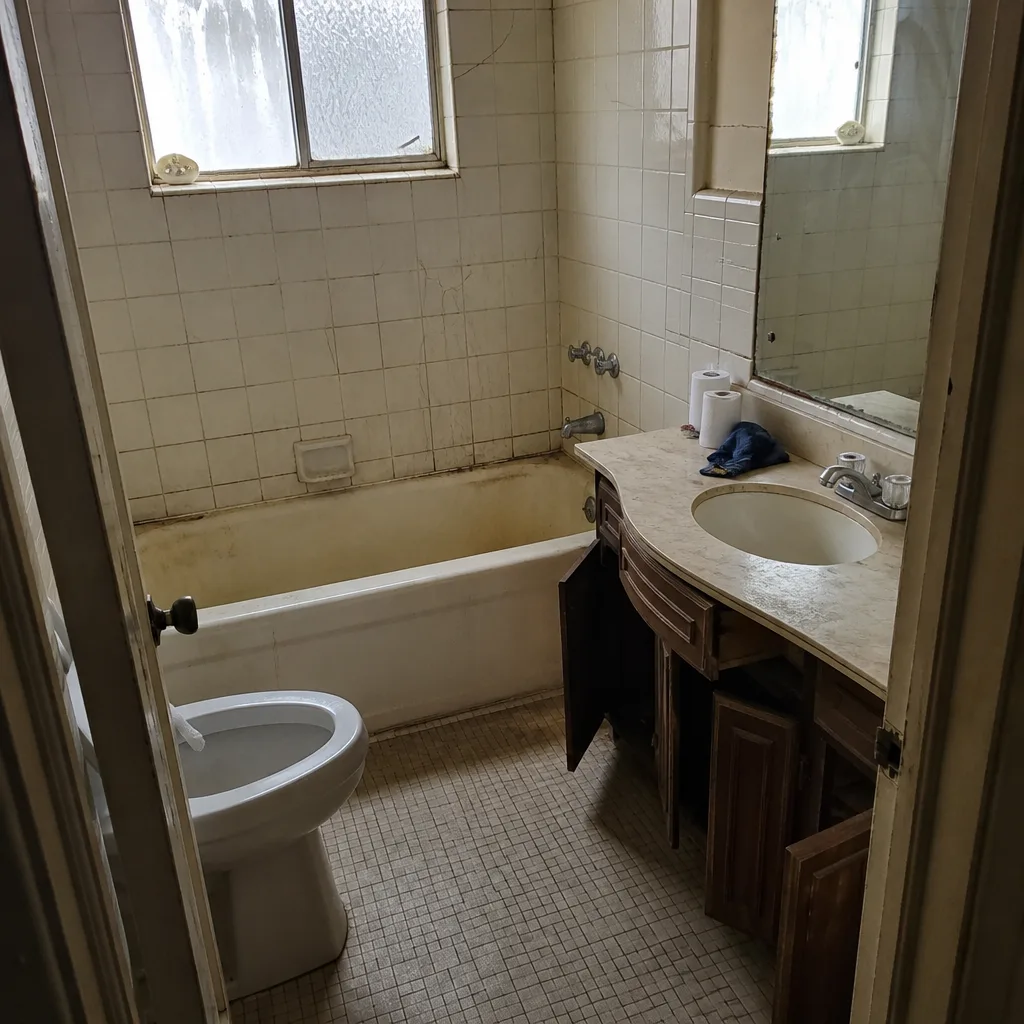
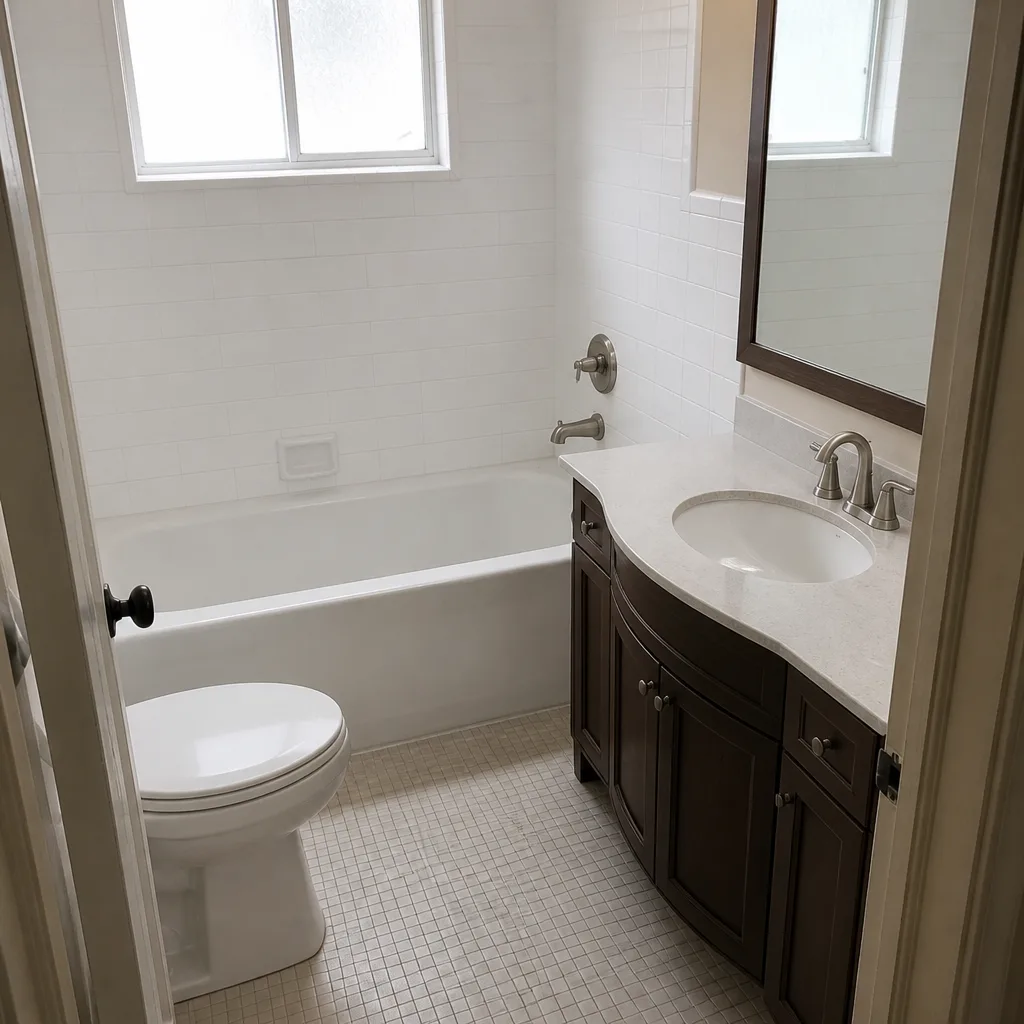
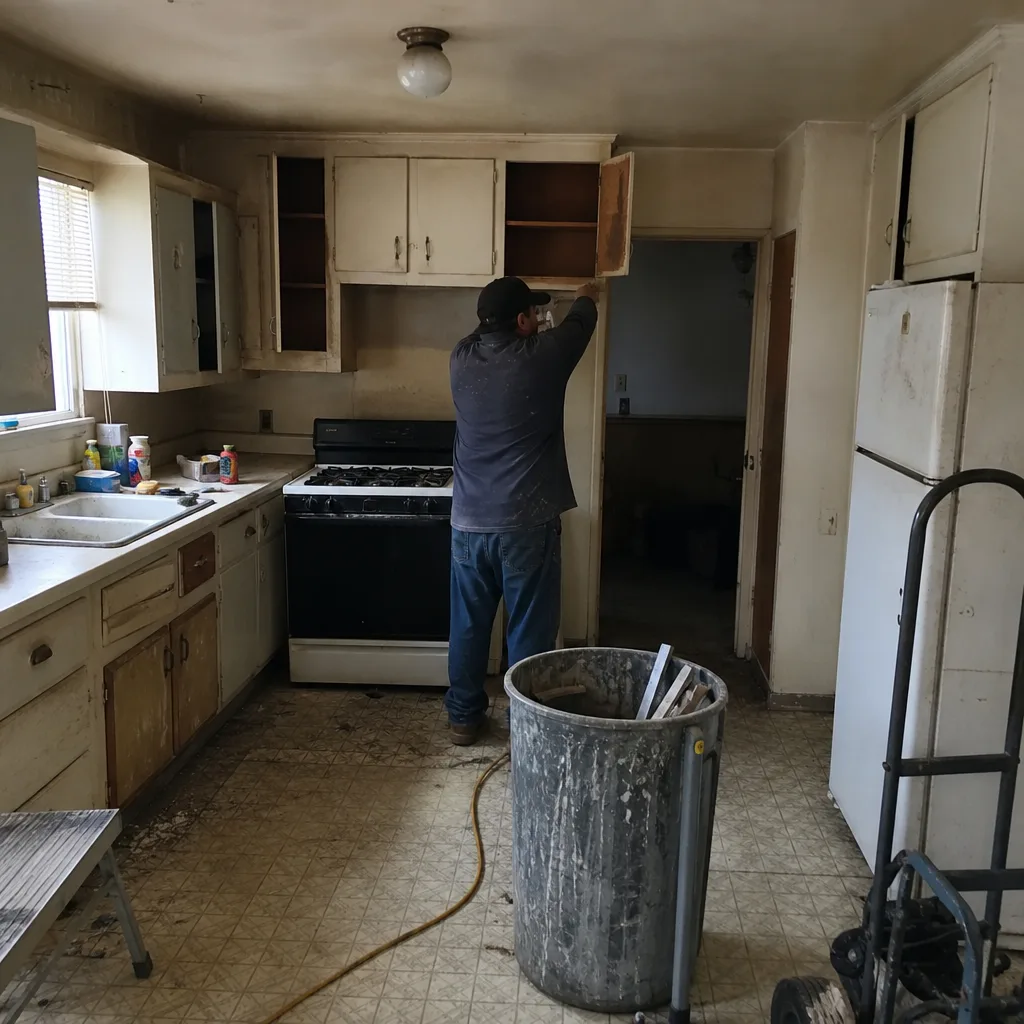
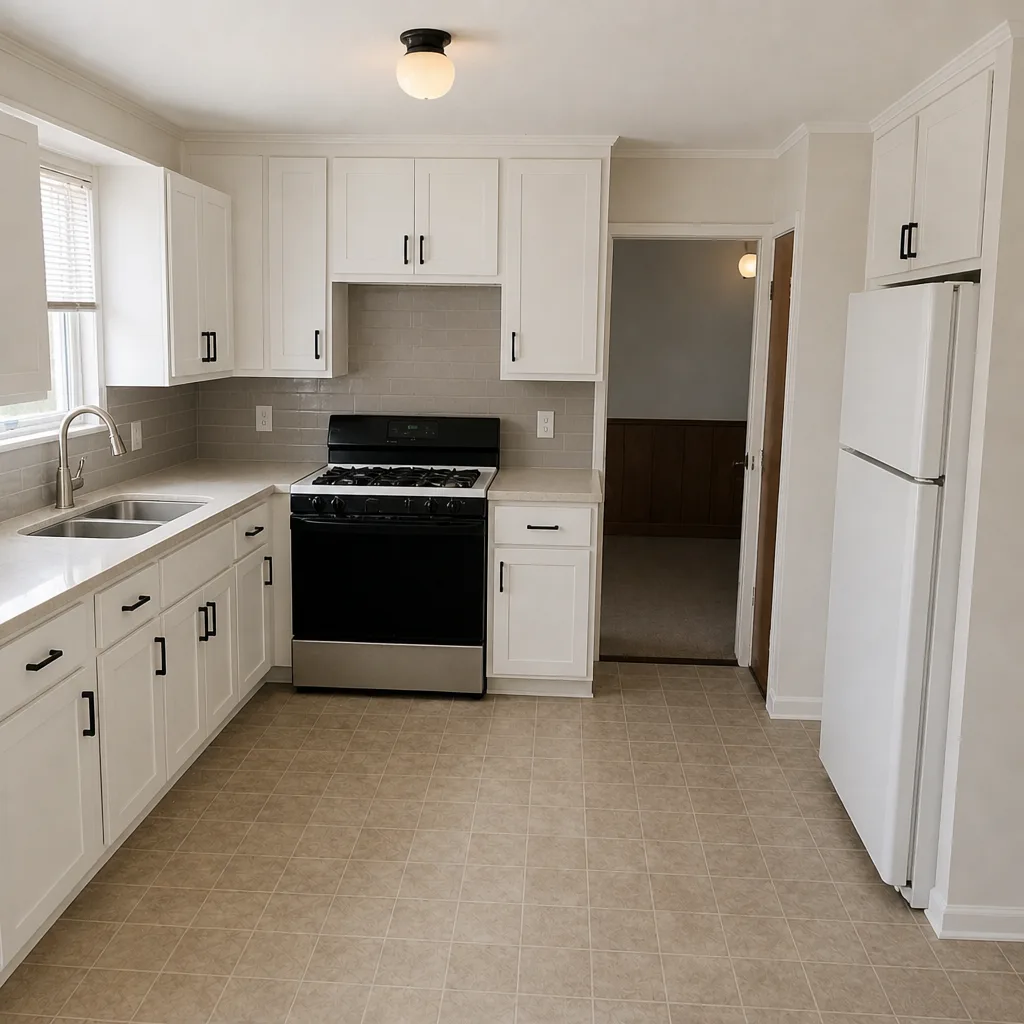
See the difference
 Before
 After
 Before
 After
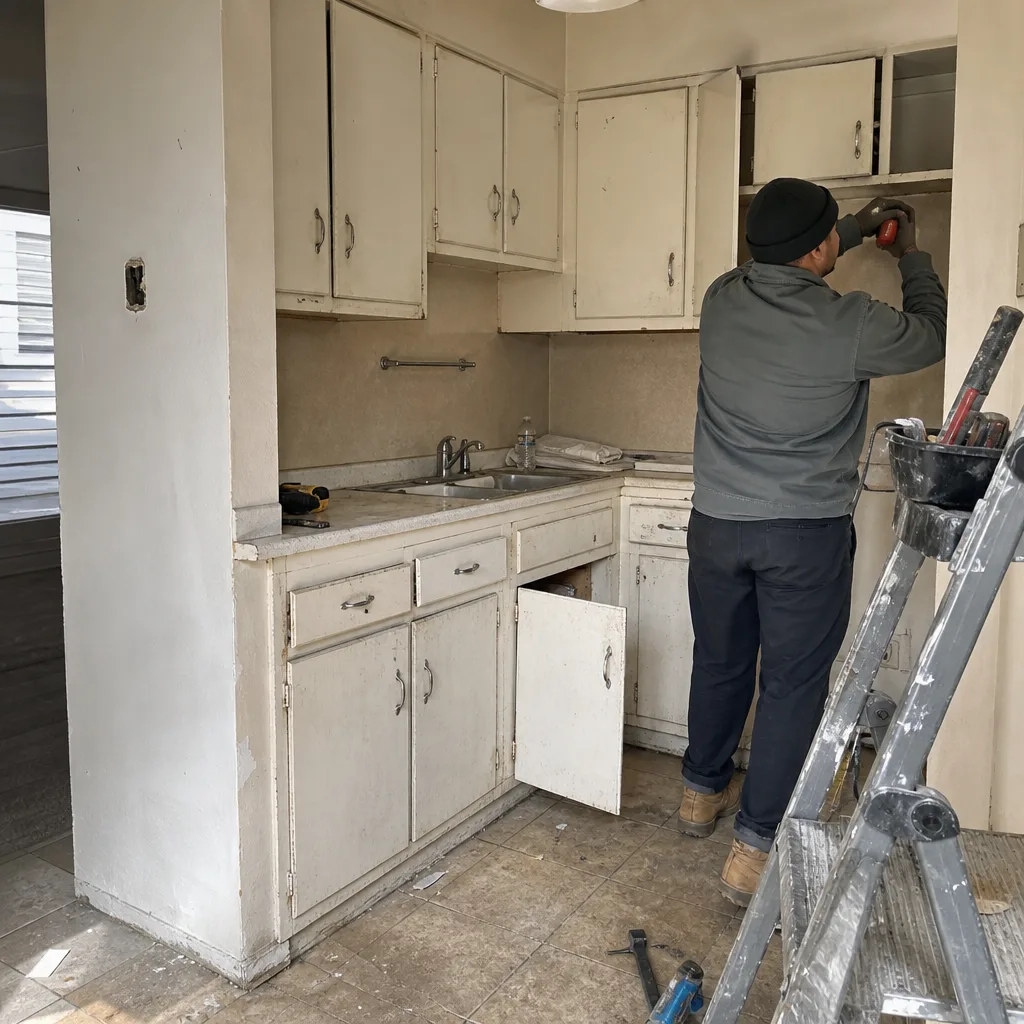 Before
 After
When to Call a Professional
Some maintenance should never wait for the next scheduled check. Call a licensed professional – and in most cases, a contractor who can assess warranty implications – when you see:
- Water staining on a ceiling or wall below a bathroom or window
- Caulk that keeps failing in the same spot, indicating movement or moisture behind the surface
- Grout that crumbles on a shower floor, suggesting a failed pan or membrane
- Paint or stucco that bubbles, showing moisture escape
- Any electrical issue: a warm panel, tripped breakers, burning smell
- Any gas smell or gas appliance trouble
- A foundation crack wider than 1/4 inch or one that’s growing
- Roof damage after a storm, above one story, or on a steep pitch
For anything tied to a remodeled surface, bring your project date and warranty paperwork to the call. Bradford Remodeling Co East Los Angeles offers free estimates in East Los Angeles – call (833) 520-6636. If the issue falls under the 365-Day Done Right Promise, we come back and correct it at no charge.
Frequently Asked Questions
Every 6 to 12 months on shower floors and walls, and every 12 months on kitchen backsplashes. East Los Angeles heat and the dry-wet cycle wear sealer faster than in milder climates. Penetrating sealer is the right product – a surface sealer doesn’t last here. Call (833) 520-6636 if you’re unsure whether your grout is still protected.
It can, yes. Most written guarantees include maintenance conditions, and a failure caused by skipped maintenance is typically excluded from coverage. The key is documentation: if you can show you resealed and inspected on schedule, a genuine construction defect stays covered. We put the maintenance terms in writing at project close for exactly this reason.
An annual inspection in early fall, with touch-ups on any chalking, blistering, or peeling areas, and a full exterior recoat every 5 to 7 years depending on the surface. James Hardie and stucco hold up better than wood siding, but East Los Angeles UV fades both faster than the manufacturer’s baseline. Photograph the exterior annually for your log.
Dated photos, a simple written log of tasks and dates, and receipts for materials or hired work. Photograph the wide area and the detail. Store everything in a cloud folder. When a claim is reviewed, this record is what separates a construction defect from a maintenance failure. Call (833) 520-6636 and we’ll walk you through what to keep.
Yes for caulk, grout sealing, filters, gutter clearing, and paint touch-ups. No for electrical, gas, plumbing behind the wall, roof work above one story, and any task that requires a permit. Those need a licensed tradesperson – self-performed electrical or gas work can void multiple warranties at once and creates a real hazard.
Documented scope, dated photos through the job, passed inspections, and a written guarantee at close. Bradford Remodeling installs a documented roster of name-brand materials – KraftMaid and Wellborn cabinetry, Cambria and Kohler fixtures, GAF and James Hardie exterior products, Therma-Tru doors – so every specification is traceable. Every completed project carries a written 365-day guarantee; if it fails inside that window, we make it right at no charge.
The Bottom Line
Maintenance protects the work you already paid for. The schedule that matters is simple: wet-area caulk and grout every six months, the full exterior and systems walkthrough once a year in early fall, HVAC filters every one to three months. Document all of it with dated photos and a log, because that record is what defends your warranty if a dispute ever comes. East Los Angeles’ heat, dry-wet swings, and steady seismic movement make the intervals tighter here than elsewhere. Done on schedule, the work stays squared away and the guarantee stays live. Bradford Remodeling puts every price and every guarantee in writing before a single tool comes out, and a live person answers (833) 520-6636 around the clock. Call to schedule your free estimate and we’ll walk your home’s maintenance calendar with you. Explore our East Los Angeles home remodeling services to see the full scope we work in.
Written by the team at Bradford Remodeling Co East Los Angeles.