Last updated November 17, 2026
Free written scope consultation - allowances, timeline, and change-order rules on paper before a single trade is scheduled
DIY vs Professional Home Remodeling: What’s Safe to Do Yourself
Here’s the split almost nobody talks about. A homeowner in California can legally hang their own drywall in the garage. But if that same drywall covers new framing and wiring that was never permitted, three years later a buyer’s inspection will flag it as unpermitted work, and the deal can stall at escrow while you scramble for records you don’t have. The question isn’t whether you can physically swing a hammer. It’s whether the work you’re about to do will come back for your wallet at resale or when your insurer asks what happened. This guide draws the DIY line where the liability actually sits, with the East Los Angeles permit picture spelled out in the places most articles skip.
Quick Answer
Safe DIY covers cosmetic, non-structural, fully reversible work: paint, caulk, cabinet hardware, tile backsplash, trim, and swapping fixtures on existing connections. Anything that touches electrical rough-in, plumbing lines, structural walls, gas, or new permanent square footage needs a permit, and in Los Angeles County those permits generally require work by a licensed contractor or a homeowner who can credibly claim owner-builder status and live with what that means. If the work is permanent, load-bearing, or hidden in a wall, hire it out.
Styles & brands we work with
- Kitchen remodeling
- Bathroom remodeling
- Home additions & ADU
- Roofing
- Windows & doors
- Driveway & pavers
- Fence
Table of Contents
- Where the DIY line actually falls in East Los Angeles
- What California law won’t let you do yourself
- How unpermitted work shows up on title reports and what it costs
- The three DIY categories that are genuinely safe
- What “owner-builder” permits really require
- How East Los Angeles climate changes what fails first
- DIY savings vs. the cost of getting it wrong
Where the DIY Line Actually Falls in East Los Angeles
Los Angeles County permit thresholds are more aggressive than most homeowners assume. The county and city want a permit for, at minimum: any new wall or partition, any alteration to a load-bearing element, any new or extended electrical circuit, any new plumbing fixture or relocation of an existing one, water heater replacement, and any structural repair to a foundation or footing.
What mostly doesn’t need one: paint, drywall patching under a certain scope, floor covering, cabinet doors and drawer fronts, countertop replacement on existing base cabinets, and like-for-like fixture swaps where the wiring and plumbing stay where they are.
The trap is in what sits between. In East Los Angeles specifically, we’ve seen a lot of do-it-yourself work done in garages converted toward living space without permits. Under county rules, converting a garage to habitable space touches insulation, egress, electrical, and often plumbing, so every layer of that conversion needs inspection. A homeowner paints the new drywall, adds a bed, and calls it a bedroom. What they’ve actually created is an unpermitted dwelling, and every one of those steps is a permit trigger.
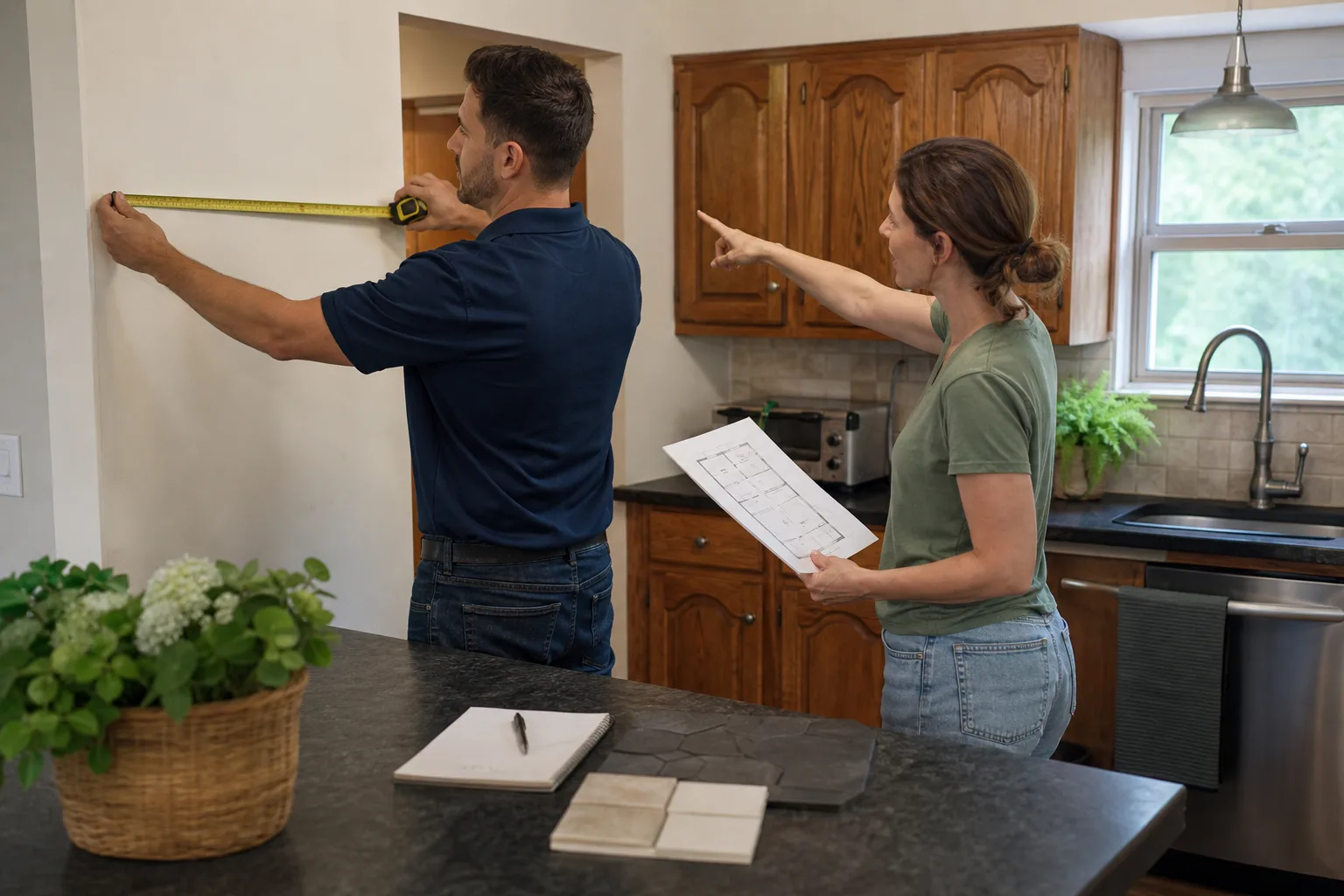
If you’re unsure whether your project crosses the line, the cheapest call you can make is to the county building office or to a licensed contractor who pulls permits for a living. Our general contractor work in East Los Angeles runs on documented, inspected permits for exactly this reason.
What California Law Won’t Let You Do Yourself
California is stricter than a lot of states about who can pull which permits and perform which work. Even when you own the home and can legally act as your own general contractor on some projects, the state has carved out whole categories of work that must be done by a licensed trade.
Here’s the practical list of what California restricts to licensed professionals regardless of your skill:
- Electrical beyond a simple swap. Adding circuits, moving a panel, running new wire in a wall, or installing a subpanel is licensed electrician territory. A licensed electrician is required for permits, and the inspector wants to see a license number on the permit.
- Plumbing beyond a trap or valve swap. New supply lines, drain moves, gas line tie-ins, and water heater replacement fall here. Gas work in particular is restricted and dangerous.
- Structural work. Any project that moves or removes a load-bearing wall, alters a footing, or involves new lateral bracing typically requires a licensed contractor and engineering signoff.
- HVAC refrigerant work. Refrigerant handling is regulated at the federal level. Replacing a compressor or charging a system isn’t a homeowner job.
A quick safety note for anything involving the electrical panel, gas lines, or a load-bearing wall: these are the components that hurt people and burn houses down. The DIY savings on any of them, compared to the cost of a fire or a collapsed header, don’t add up. Get a licensed electrician or plumber. If the wall carries load, get a structural engineer and a contractor who will pull the permit.
How Unpermitted Work Shows Up on Title Reports and What It Costs
This is the part of the story that surprises homeowners most. Unpermitted work doesn’t vanish because a contractor or homeowner never mentioned it. It enters the property record in three places: the county assessor’s records, the MLS listing history when a previous owner disclosed it, and the title report’s list of recorded permits and inspections.
When a buyer’s inspector flags a finished garage with drywall, a bedroom without a closet, or a bathroom that doesn’t match the recorded square footage, escrow gets a nasty follow-up question: where’s the permit? At that point, the seller usually has three options.
- Retroactively permit the work. That means opening finished walls and floors so the county can inspect framing, wiring, and plumbing. Typical costs run $8,000 to $25,000 in Los Angeles County for an unpermitted garage conversion, depending on how much has to be exposed.
- Demolish the work to bring the property back to recorded condition. This is the cheapest option when the work wasn’t load-compliant or doesn’t meet current code, but it means losing the space you thought you gained.
- Disclose and negotiate a credit. Buyers routinely ask for $15,000 to $40,000 off the price to absorb the risk of the unpermitted work, and lenders sometimes refuse to fund the loan entirely.
For a homeowner in East Los Angeles, the pattern repeats often enough that our crews have learned to ask whether an addition or converted garage was ever permitted before we bid on the surrounding work. If a project is going to be caught eventually, the cost of getting ahead of it is always lower than the cost of getting caught.
The Three DIY Categories That Are Genuinely Safe
Here’s the good news. There’s a lot of real DIY work you can do yourself without triggering permits, hazard, or resale risk. Any project that fits all three of the categories below is one you can confidently take on.
1. Cosmetic. Paint, wallpaper, caulk, trim, cabinet hardware, and paint-grade cabinetry doors are all reversible with minimal effort. A quality primer and two coats of paint over properly prepped drywall is one of the few homeowner improvements that returns more than it costs.
2. Non-structural. Surface tile, floating shelves (anchored into studs, not into drywall alone), light fixtures on existing boxes rated for the fixture weight, and accessories that hang from existing hardware fall here. Nothing engages a load path. Nothing moves a plumbing line or a circuit.
3. Fully reversible. If you could undo the project without opening a wall and without an inspector ever needing to see it, it belongs in this category. Paint, furniture, freestanding islands, area rugs, and cabinet pulls all qualify. If you’d have to open the wall to take it back out, it’s not reversible, and it’s not a safe DIY.
Swap hardware and fixtures with brands you intend to keep, too. Kohler and Moen fixtures on existing rough-ins are a clean cosmetic upgrade and easy to install. Blanco and Delta offer similar one-for-one swaps on kitchen sinks and faucets where the supply lines and drain size aren’t changing. The trade contractor who hangs your new kitchen cabinets or reroutes a drain is a separate question. See our kitchen remodeling work in East Los Angeles for the projects that need permits.
What “Owner-Builder” Permits Really Require
California has an owner-builder exemption that lets a homeowner pull certain permits without holding a contractor’s license. It’s the least understood part of the DIY conversation, and most homeowners don’t qualify the way they think.
Here’s the core of the statute, borrowed from the California Contractors State License Board rules:
- You must intend to occupy the property as your primary residence. Investment properties and flips are out. Second homes are out.
- You can’t sell or rent the property for at least one year after the work is completed. The one-year clock starts at completion, not at permit issue.
- You’re taking on the liability personally. That means no workmanship warranty from a contractor, no workers’ comp claim to file if a helper gets hurt, and no recourse if the finished work fails inspection because you didn’t know what you were doing.
- You will still need licensed trade subs for electrical, plumbing, and mechanical rough-in. Owner-builder status does not cover these. The county wants those permits pulled separately by the trade.
The honest read on owner-builder: it’s useful for one very specific scenario, which is a homeowner who genuinely intends to live in the house for years and is doing their own non-structural remodel with licensed subs on the trades. For everyone else, the paperwork and inspection load usually exceeds the cost of hiring a contractor to pull the same permits. And once you’ve sold inside the one-year window or pulled an owner-builder permit on a rental, you’re the one holding the bag if the county visits. Our bathroom remodeling work in East Los Angeles runs the other way around: permits pulled by us, inspections passed before we close the walls.
How East Los Angeles Climate Changes What Fails First
East Los Angeles sits in a dry, warm microclimate that reaches sustained triple digits for much of the summer, and the drywall and paint that hold up in a coastal home don’t always hold up here. That has real implications for which DIY projects are actually worth doing yourself.
Paint fails faster than most people expect. Exterior paint on the east- and south-facing sides of an East Los Angeles home takes more UV load than the same paint in Malibu, so a cheap DIY repaint that saves $800 upfront can need redoing in half the time. A primer rated for stucco and two topcoats of a mid-grade exterior product is the correct DIY move here. Just don’t skip the primer.
Kitchen and bath moisture pays you back for doing it right. The region swings from dry to humid during Santa Ana events, and the affordable-but-not-permitted caulk-and-grout fixes that work in cooler climates don’t seal the same way under that swing. Anything behind a tile or a wet area needs a properly sealed substrate. If it isn’t, water gets in, and repairing it costs more than installing it correctly.
Deck and hardscape footing failures. Dry, expansive soil around much of East Los Angeles pushes and pulls at deck piers and patio slabs in a way that interior-only readers rarely deal with. That’s why structural decks and new hardscape fall into the “hire it out” bucket; without engineering, a homeowner can’t tell whether the footing is adequate for the soil here.
This is the kind of thing that’s easy to miss reading a national remodeling article. Our crews have seen it on hundreds of East Los Angeles properties.
DIY Savings vs. the Cost of Getting It Wrong
Real numbers make the trade-off clearer. If a homeowner repaints an average East Los Angeles living room and kitchen, the DIY cost runs $250 to $500 in paint and supplies. A pro crew charges $1,800 to $4,000 for the same scope. That’s a genuine savings of over $1,000, with no permit and no risk beyond a bad tape line.
Now apply the same math to a that a homeowner doing a bathroom refresh might tackle: swapping a vanity, replacing the toilet, and dipping into a floor tile. DIY surfaces run $400 to $1,200. But if the tile is installed without a proper cement board substrate over the subfloor, or the toilet is set on a flange that has dry rot under it, the rework runs $3,000 to $6,000 plus a permit to reopen the wall. And if the work was never permitted in the first place, the escrow hit is higher still, as covered above.
The pattern is consistent: the DIY wins on the projects where the worst case is aesthetic. The DIY loses badly on the projects where the worst case is hidden, structural, or unpermitted. Getting a written scope and written price from a licensed contractor doesn’t rule out DIY next to it; it just tells you where the line is.
For a full look at what Bradford and our trades handle end to end, see Bradford Remodeling Co East Los Angeles home. Across the wider Garrison Partners family we’ve worked on every version of this question, and the answer rarely gets simpler when the numbers get bigger.
Common Mistakes to Avoid
- Skipping the permit because a contractor told you it wasn’t needed. If a contractor tells you a project doesn’t need a permit, ask them to put that in writing. In our experience, the contractors who resist permits are the ones who can’t pass inspection, and you’re the one left holding the paperwork at resale.
- Treating a converted garage as finished living space. A drywalled, insulated, finished garage in East Los Angeles is the single most common unpermitted-space complaint county inspectors see. Be honest about whether the space was permitted before going deeper on a project inside it.
- Pulling an owner-builder permit on a rental property. State law prohibits it, and the county can void the work retroactively when a title search catches it. If the home is an investment, hire it out.
- Assuming a handyman is allowed to do permitted work. A handyman license caps out at small jobs and doesn’t cover permitted electrical, plumbing, or structural work. Match the license to the scope.
- DIY-ing a load-bearing wall without engineering. A 2×4-studded interior wall in a 1960s East Los Angeles home frequently looks cosmetic but carries load. Any wall removal needs a licensed contractor and, usually, an engineer.
- Skipping the takeoff on finish materials. Buying tile, cabinet pulls, and paint without a written takeoff leaves you short of material at the worst moment, and that last-minute second order is where DIY budgets go sideways.
- Doing a complete bathroom or kitchen as DIY without a lead on permits. Full-room remodels trigger multiple permit categories (electrical, plumbing, mechanical). Doing the work yourself while listing a licensed contractor as the permit holder is a code violation for both you and them.
See the difference
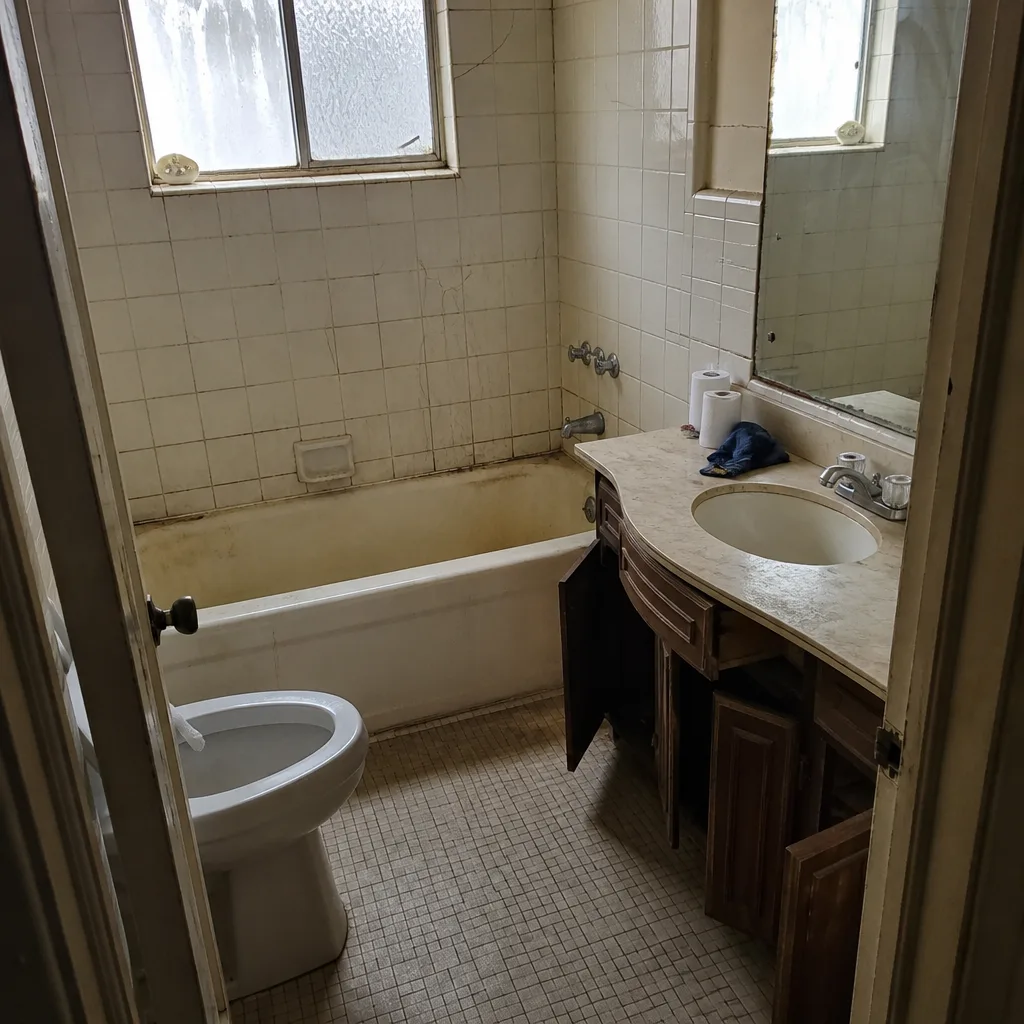 Before
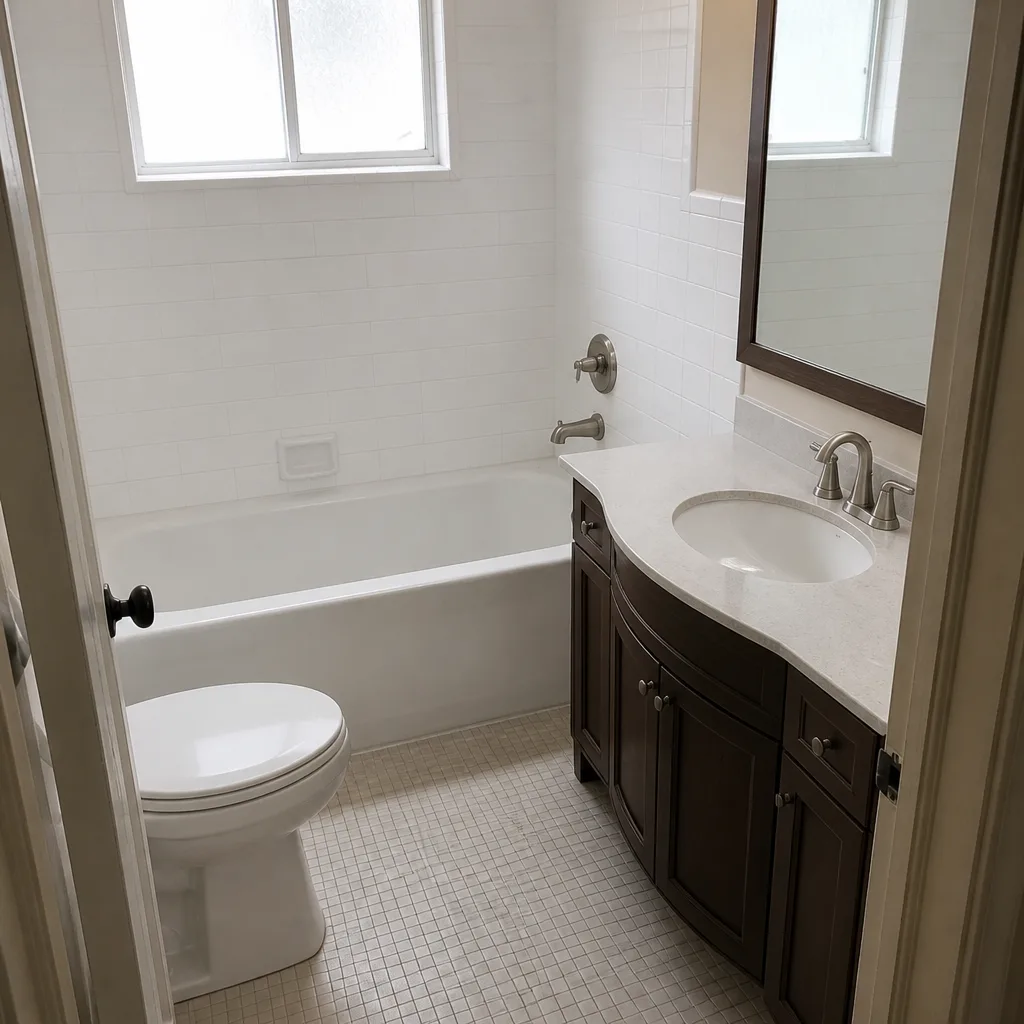 After
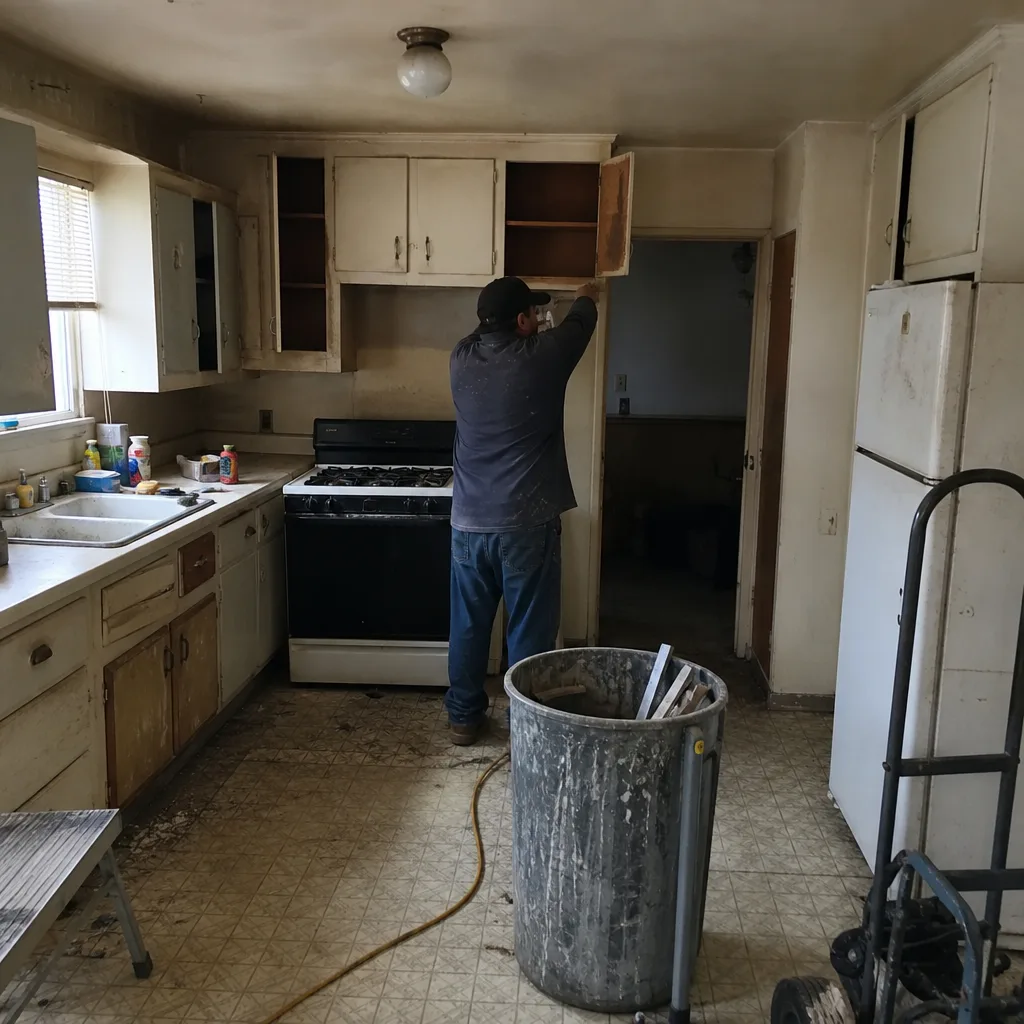 Before
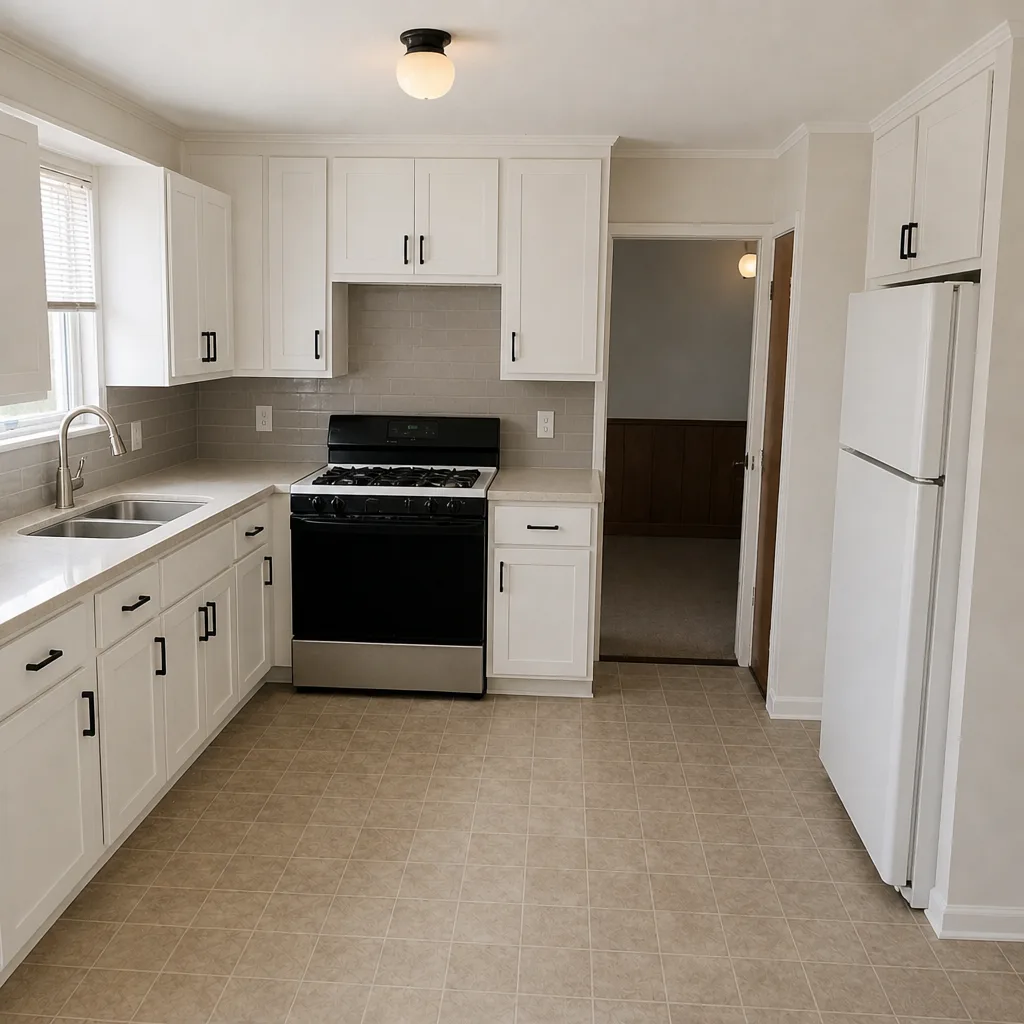 After
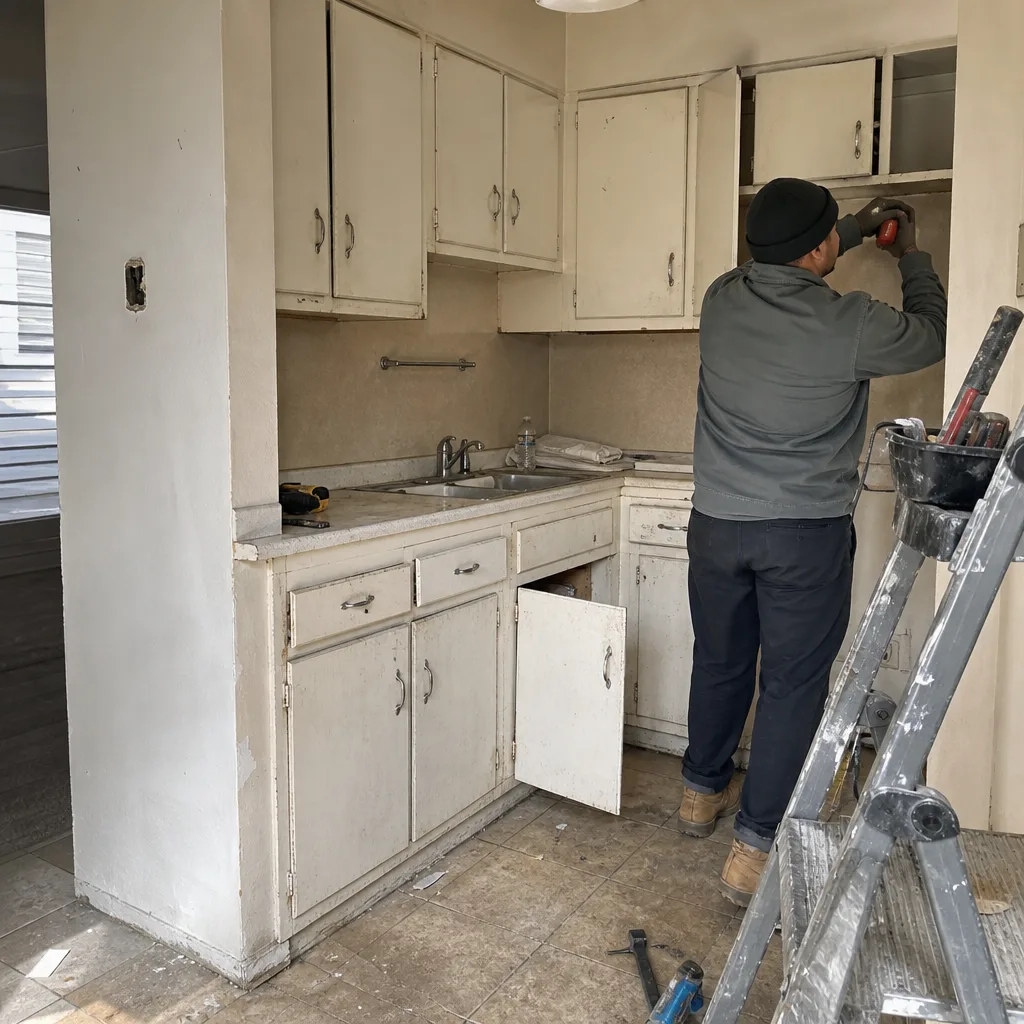 Before
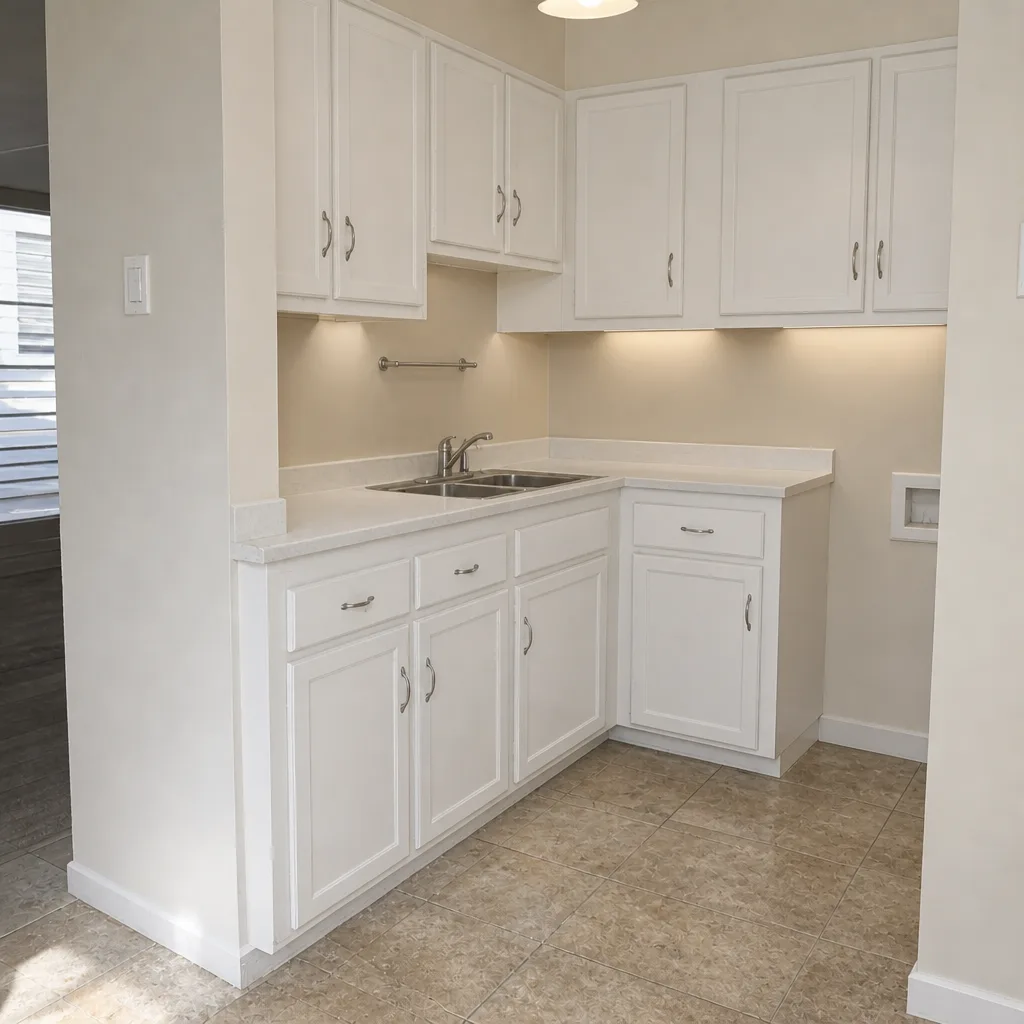 After
When to Call a Professional
If your project involves a load-bearing wall, a panel upgrade, moving a gas appliance, new plumbing runs, a permit, a bathroom currently in use, or a kitchen you need back within a few weeks, call a professional. At Bradford Remodeling Co East Los Angeles, we run projects on a written price before any work starts, on documented materials (KraftMaid and Wellborn cabinetry, Cambria surfaces, Kohler and Moen fixtures, GAF and James Hardie exteriors, among others), and on a 365-Day Done Right Promise: if the work fails within the guarantee period, we come back and correct it at no charge. Our technicians bring up to 22 years of experience, and everybody who walks into your house is background-checked and uniformed. Bradford Remodeling Co East Los Angeles offers free estimates in East Los Angeles – call (833) 520-6636. A live person answers the phone 24/7, seven days a week, and picks up on the first ring.
Frequently Asked Questions
Ask three questions: Is the work permanently attached to the house, does it touch electrical or plumbing lines, and would it need to be opened to reverse? If any of those answers is yes, it’s not a DIY project in Los Angeles County. Cosmetic swaps that pass all three (paint, hardware, surface tile on existing substrate) are safe.
You can pull the permits as an owner-builder if you intend to live in the home as your primary residence, but the electrical, plumbing, and mechanical rough-in still need licensed trades, and you cannot sell or rent the property within one year of completion. In practice, most East Los Angeles homeowners hire a licensed contractor for this because the inspection exposure at resale outweighs the cost savings.
Retroactive permitting typically runs $8,000 to $25,000 in Los Angeles County for a garage conversion or similar scope, depending on how much of the work has to be opened and re-inspected. Demolishing the unpermitted work to restore the recorded condition can cost less if it isn’t code-compliant either way. Getting it permitted before sale is almost always cheaper than negotiating a buyer credit at escrow.
Yes, especially the electrical and plumbing work. Insurers routinely deny claims involving a fire or water loss traced to unpermitted or non-code work, and they typically don’t have to pay for a defect that the owner created. If your policy doesn’t cover the loss, the whole repair bill is out of pocket.
No. Paint, wallpaper, trim, cabinet hardware, like-for-like fixture swaps on existing connections, and floor covering over existing subfloor don’t need a permit. The permitting triggers are load-bearing changes, new or extended circuits, moved plumbing, structural work, and anything creating new habitable space.
At Bradford Remodeling Co East Los Angeles, the answer is no. We give you a written price before any work starts, and it doesn’t move at the door. Every change order that would move the price has to be in writing, and you have to agree to it before it happens. Call (833) 520-6636 to schedule your free estimate.
The Bottom Line
The DIY question isn’t about skill. It’s about permanence, permit exposure, and who carries the liability at resale, in an insurance claim, and at escrow. Safe DIY work is cosmetic, non-structural, and fully reversible. Anything that touches a load-bearing wall, a circuit, a plumbing line, a gas line, or a permit belongs with a licensed contractor. In East Los Angeles, that line matters more than in most places because of how aggressively the county enforces permit history and how quickly escrow catches it. Before the first tool comes out, get a written scope and a written price from a contractor you’d hire. Bradford Remodeling Co East Los Angeles provides written pricing and a 365-Day Done Right Promise on completed work. Call (833) 520-6636 for a free estimate.
Written by the team at Bradford Remodeling Co East Los Angeles.