Last updated November 17, 2026







Free written scope consultation - allowances, timeline, and change-order rules on paper before a single trade is scheduled
Bathroom Remodeling Maintenance Schedule: What to Do and When
Silicone caulk at a tub-to-tile joint has a functional lifespan of 5 to 7 years under normal use. Ignore it past that point and a $12,000 bathroom remodel quietly develops a $4,000 subfloor rot problem. That’s the uncomfortable truth about a remodel: it starts depreciating the day the crew leaves, and the finish that lasts fifteen years instead of five is usually the one with a written maintenance rhythm behind it. Almost no homeowner has that rhythm, because almost no contractor hands one over. This guide gives you the whole calendar, task by task, with the real trade terms and honest numbers, written from what we see in East Los Angeles bathrooms every week.
Quick Answer
A bathroom remodel needs four maintenance intervals: a 30-day post-remodel inspection, a 6-month check of caulk joints and grout lines, an annual review that includes testing the exhaust fan’s CFM and exercising the water heater’s temperature and pressure relief valve, and a 5-year deep pass on sealers, fixtures, and movement joints. Skip the annual and 5-year items and you shorten the life of the finishes you paid for. East Los Angeles hard water makes all of it faster.
Styles & brands we work with
- Kitchen remodeling
- Bathroom remodeling
- Home additions & ADU
- Roofing
- Windows & doors
- Driveway & pavers
- Fence
Table of Contents
- Why a New Bathroom Starts Aging Immediately
- The 30-Day Post-Remodel Inspection
- The 6-Month Check: Caulk, Grout, and Movement Joints
- The Annual Pass: Ventilation, the T&P Valve, and Water Quality
- The 5-Year Deep Maintenance
- East Los Angeles Water: What It Does to Grout, Chrome, and Cultured Marble
- Which Tasks Void a Finish Warranty and Which Are Cosmetic
- Common Mistakes to Avoid
- When to Call a Professional
Why a New Bathroom Starts Aging Immediately
A bathroom is the wettest room in the house, and every material in it is fighting the same enemy: water sitting where it shouldn’t. A remodel buys you better materials, correct slope, and a proper waterproofing layer under the tile. None of that is a permanent state. Sealers wear. Caulk shrinks. Grout hairline-cracks at a movement joint that was never designed to stay rigid. The clock starts running on day one.
The maintenance gap is what turns small wear into large cost. In our experience, the failures that land in a five-figure range almost always trace back to a small, cheap item that was ignored for two or three years. A $12 tube of silicone left to fail is how a tub surround leaks behind the wall for months before anyone notices the soft spot in the floor.
A simple test: a bathroom kept on the schedule below will still look and function well at 15 years. One kept on nothing will start showing real wear at 5 to 7, usually at the tub-to-tile joint, the shower valve escutcheon, or the base of the toilet. That’s the whole point of a calendar – it converts a future replacement into a 30-minute task you do once a year. When a bathroom is ready for a full redo rather than a repair, that’s the moment to look at Bathroom Remodeling in East Los Angeles, and to understand what a rebuilt wet zone actually includes.
The 30-Day Post-Remodel Inspection
Things move in a bathroom’s first month. Wood framing acclimates, sealant cures and shrinks slightly, and the house settles back into its normal humidity. A 30-day walk-through catches the small stuff while the work is still fresh and, more to the point, while it’s still covered.
- Re-check every caulk joint at 30 days. Look at the tub-to-tile joint, the shower pan corners, and the backsplash seam. Hairline separation at 30 days is common and normal. It’s also the cheapest possible time to fix.
- Look for grout haze or pinholes. A pinhole in a grout line lets water into the substrate behind the tile. Run a fingernail across suspect lines; a true hole will catch.
- Test the shower pan hold. If the pan was not flood-tested before close, a one-hour water hold at the drain (plug the drain, fill the pan, watch the level) tells you if the waterproofing layer is sound before a leak finds the ceiling below.
- Check the toilet base for rock and seal. A toilet that rocks has a failed wax seal or a bad flange. It should not move at all when you sit on it and gently shift your weight.
- Confirm the exhaust fan actually vents outside. Hold a tissue at the grille and turn the fan on. It should pull the tissue firmly. If it flutters, the fan is either undersized or venting into the attic – both are common and both cause mold.
This is also the window to file anything that qualifies as a correction, and it’s why we put the 365-Day Done Right Promise in writing before a single tool comes out. If the work fails inside that full year, we come back and correct it at no charge. A 30-day inspection is the easiest time to spot something worth a call.
The 6-Month Check: Caulk, Grout, and Movement Joints
Every six months, walk the room with a flashlight and a fingernail. Move slow, especially around water. This is where the cheap repair lives and where the expensive one gets prevented.
- Inspect movement joints at the tub surround. The seam where the tile wall meets the tub is a movement joint, not a grout line. It flexes because the tub moves and the wall doesn’t. Caulk there, not grout, and replace it the moment it peels or turns chalky.
- Check caulk at the shower valve escutcheon. The plate around the shower handle hides a hole in the tile. If the seal behind it fails, water runs down the inside of the wall. Probe with a fingertip; it should be firm and flush.
- Look at floor-to-wall junctions. Any inside corner is a movement joint. Hairline crack in grout there is normal; a gap that catches a fingernail is not.
- Test the base of the toilet and the supply line. Dry the supply line with a rag, then wrap a tissue around the nut. Come back in an hour. A damp tissue means a slow weep that will eventually rot the floor.
- Clear the drain strainer and check the overflow. Hair and soap scum build at the same rate whether the bathroom is new or old, and a slow drain puts stress on the trap and the stopper linkage.
Silicone caulk is a consumable. Five to seven years is a realistic lifespan at a wet joint; some joints last longer, and East Los Angeles hard water shortens it. Replacing it is a $10 to $25 job if you catch it early. Waiting past failure is how the subfloor starts to go.
The Annual Pass: Ventilation, the T&P Valve, and Water Quality
Once a year, do three things that almost no one does, and that matter more than the cosmetics: verify exhaust fan CFM, exercise the water heater’s temperature and pressure relief valve, and look at the mineral load on your fixtures. These are the items that turn into safety or structural problems, not just an ugly line.
1. Verify exhaust fan CFM
Bathroom exhaust fans are rated in CFM, cubic feet per minute. The rule of thumb is 1 CFM per square foot of bathroom floor with an 8-foot ceiling, so a 5-by-8 bathroom wants at least 40 to 50 CFM, and a fan serving a shower often wants more. A tissue test is the quick field check: hold a single-ply tissue against the grille with the fan on. A working fan holds the tissue flat against the grille. If it droops or drops, the fan is weak, the duct is kinked, or the vent terminates in the attic.
Undersized or failed ventilation causes a specific problem in East Los Angeles: moisture that never leaves. When a bathroom never dries, mold shows up at the grout lines and tile edges first, and the homeowner blames the grout or the tile. It’s not the grout. It’s the air. That’s one reason a bathroom remodel done to spec includes a properly sized fan ducted to the exterior, not just a fan screwed into the ceiling.
2. Exercise the temperature and pressure relief valve
Every water heater has a T&P valve, temperature and pressure, and it’s a code-required safety device, not an optional upgrade. Its job is to release water if the tank gets too hot or the pressure climbs too high. It can seize if it hasn’t moved in years. A valve that hasn’t been tested in three years should be treated as a safety question, not a maintenance nuisance.
This is where we’re direct: do not open and close a T&P valve yourself as a first move unless you understand what happens if it doesn’t reseat. A stuck-open valve floods the utility area; a stuck-shut valve is worse. This is a job for a licensed plumber. What you can do is find the valve, confirm it has a discharge pipe that runs to a safe place, and schedule the test. A failed test on a valve that old usually means replacing the valve, which is a modest cost compared with the damage an overheated tank can do.
3. Check the mineral load
East Los Angeles water runs hard, which means calcium and magnesium in the supply. You’ll see it as white scale on the showerhead, the faucet aerator, and the glass. Once a year, pull the showerhead and soak it in a 50/50 mix of white vinegar and water for an hour, then flush it. Clean the faucet aerator the same way. This is maintenance, not repair, and it protects the inner workings of the fixtures you installed.
The annual pass is also the honest moment to ask whether the bathroom is still working for the house – a layout that fit a family of four doesn’t fit a family of six. If it’s time to plan that work rather than maintain it, the roadmap for a full tear-out and rebuild lives in General Contractor in East Los Angeles.
The 5-Year Deep Maintenance
Every five years, treat the bathroom as a system and inspect it end to end. This is where you make the call on whether finishes still have life or are ready for a pass.
- Re-seal or replace all wet-joint caulk. Five to seven years is the realistic ceiling on silicone in a shower. Replace, don’t touch up. A fresh bead over a failed one traps moisture underneath.
- Re-seal stone and porous tile grout. Grout sealer is a wear item, not a permanent coat. Stone tile (travertine, marble) needs sealer more often than porcelain; a water bead test tells you – if a drop of water on the grout soaks in within a few minutes instead of beading, it’s time.
- Replace the toilet wax seal if there’s been any rock. A wax ring that has shifted is a slow leak into the subfloor. For the cost of a ring and an hour, this is the cheapest insurance in the room.
- Look behind the shower valve escutcheon and the toilet supply. If there’s any sign of past water (staining, mineral crust, soft drywall), you’ve found the slow leak before it became a structural repair.
- Exercise every valve and shower diverter. Open and close each one fully. A diverter that sticks is a diverter about to fail.
- Have the water heater inspected and the T&P valve serviced. The five-year point is a good one for a plumber to look at the anode rod and the tank itself, not just the valve.
This five-year pass is the single most effective maintenance you can do because it catches the two or three items that cause structural damage. It’s also where a homeowner learns whether the original installation did the details right, and where finding out early beats finding out after the ceiling comes down.
East Los Angeles Water: What It Does to Grout, Chrome, and Cultured Marble
Bathroom maintenance in East Los Angeles runs faster than in a soft-water city. Hard water leaves mineral scale on chrome, in grout lines, and on shower glass, and the cleaning products people reach for to fight it often cause more damage than the scale itself. Getting the cleaning chemistry right is part of the calendar.
What’s safe:
- Warm water and a few drops of mild dish soap on chrome and most faucets. Dry with a microfiber cloth.
- White vinegar diluted 50/50 for showerheads and aerators, and for glass shower doors – but keep it off natural stone and off grout sealer, which it degrades.
- A soft nylon brush on grout, not a wire brush. A wire brush opens the grout surface and makes it absorb faster.
- pH-neutral stone and tile cleaner on natural stone and on any grout that carries a fresh sealer.
What damages finishes:
- Chlorine bleach left sitting on grout. It strips sealer and stains some caulk.
- Abrasive cleaners and scouring pads on chrome, which scratch the finish and expose the metal underneath.
- Acidic cleaners on cultured marble. Cultured marble is a resin and stone mix, and acid etches it, leaving a dull patch that can’t be polished out the way real stone can.
- Ammonia and vinegar mixes on natural stone, which dissolve the surface over time.
Scale isn’t just cosmetic in East Los Angeles. Calcium buildup inside a shower valve shortens the life of the cartridge and can cause a drip that runs down the inside of a tile wall for months. If the home’s water is very hard, a whole-house softener pays for itself in fixtures and water heater life; that conversation belongs with a plumber. Bathroom finishes that hold up to hard water – glazed porcelain, sealed stone-look ceramic, and the right sealer, not the wrong one – should be part of the plan from the start.
Which Tasks Void a Finish Warranty and Which Are Cosmetic
Here’s the distinction most homeowners never hear, and it’s the one that costs money. Some maintenance tasks are purely cosmetic. Others are a condition of the finish warranty on the product you bought. Skipping a warranty condition is how a claim gets denied.
Warranty conditions – skipping these can void a claim:
- Grout sealing frequency. Many tile and grout manufacturers require the sealer to be maintained on a stated interval, often annually for shower areas. If the product fails because sealer was never maintained, the manufacturer can point to that.
- Using the wrong cleaner. Chemical damage from an acidic or abrasive cleaner is typically excluded, and cultured marble and natural stone are the usual victims.
- Ignoring a known leak. Nearly every product warranty excludes damage from a leak that was visible and left unaddressed.
Cosmetic – unlikely to affect a warranty:
- Replacing a showerhead, a towel bar, or a mirror.
- Re-caulking a joint. Caulk is a consumable, and replacing it on schedule is exactly what the instructions tell you to do.
- Replacing a toilet seat or a flush valve.
- Touch-up paint on a bath wall.
Here’s where a written guarantee does real work. The 365-Day Done Right Promise is a written guarantee on the finished work: if it isn’t done right inside that full year, we come back and correct it at no charge. That’s separate from the manufacturer’s finish warranty, and it’s the piece that’s in the homeowner’s hand at close – clean site, documented scope, signed guarantee. When a finish fails inside that window, you call and we correct it, and you don’t need to argue about whether it was “installed correctly.”
Common Mistakes to Avoid
- Caulking over a failed bead. A fresh layer of silicone over old, failed caulk traps water behind it and makes the failure worse. Cut the old bead out completely, dry the joint, and start clean. We see this at tub surrounds all over East Los Angeles.
- Using bleach on grout and sealer. Bleach strips sealer and leaves grout more porous than before. It cleans the stain and accelerates the next one.
- Assuming a quiet exhaust fan is a working one. A fan can turn on, make noise, and still not move air. The tissue test is the only honest check, and it’s the single most-ignored annual task.
- Never touching the T&P valve. Leave a temperature and pressure relief valve unmoved for years and it can seize. A safety device that doesn’t function is worse than no expectation of safety at all.
- Ignoring a toilet that rocks. A rock in the base means the wax seal or flange has failed. It’s a $15 part and an hour of work, or a rotted subfloor. There’s no middle.
- Cleaning cultured marble or natural stone with an acidic product. The etch is permanent and won’t polish out. Match the cleaner to the material.
- Venting the exhaust fan into the attic. Some installations run the duct into the attic instead of through the roof or wall. That dumps moisture into the attic and turns a bathroom fan into a rot problem.
When to Call a Professional
Call a professional when the repair is behind a surface, when it’s a safety device, or when it’s a structural question. That means water behind tile, a shower pan that loses its water hold, a subfloor that feels soft at the toilet or the tub, a T&P valve that won’t reseat after a test, an exhaust fan that’s clearly undersized for the room, or a grout and tile problem that keeps coming back after you’ve re-sealed. A recurring water stain is not a cleaning issue; it’s a leak finding a new path.
For a bathroom that needs to be rebuilt rather than patched – a failed shower pan, a subfloor that’s gone soft, a layout that no longer works – the sensible first step is a written scope and a written price before work begins. Bradford Remodeling Co East Los Angeles gives you exactly that: a background-checked, uniformed crew, a documented roster of name-brand materials (Kohler and Moen fixtures, Cambria and Caesarstone surfaces, KraftMaid and Wellborn cabinetry, among others), and the 365-Day Done Right Promise on every completed project. Free estimates in East Los Angeles – call (833) 520-6636, and a live person answers any hour of the day or night.
See the difference
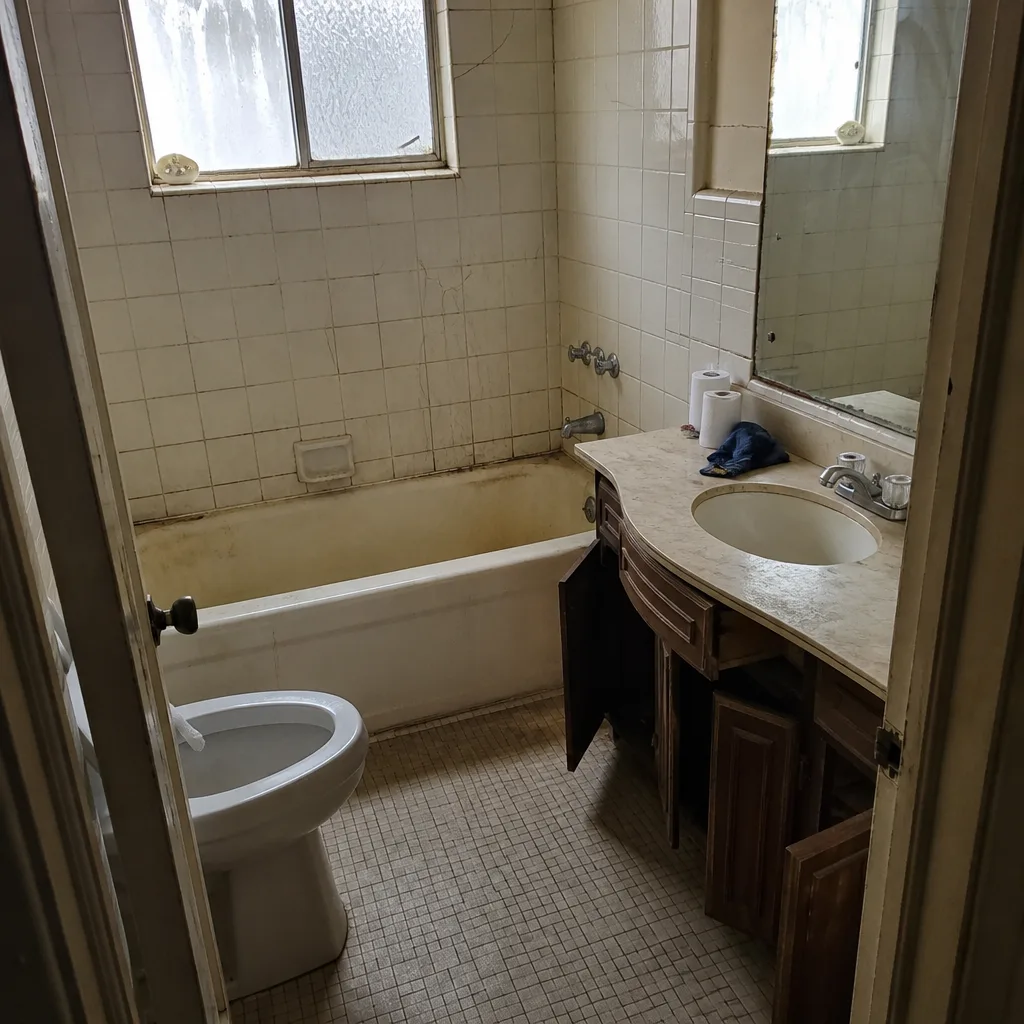 Before
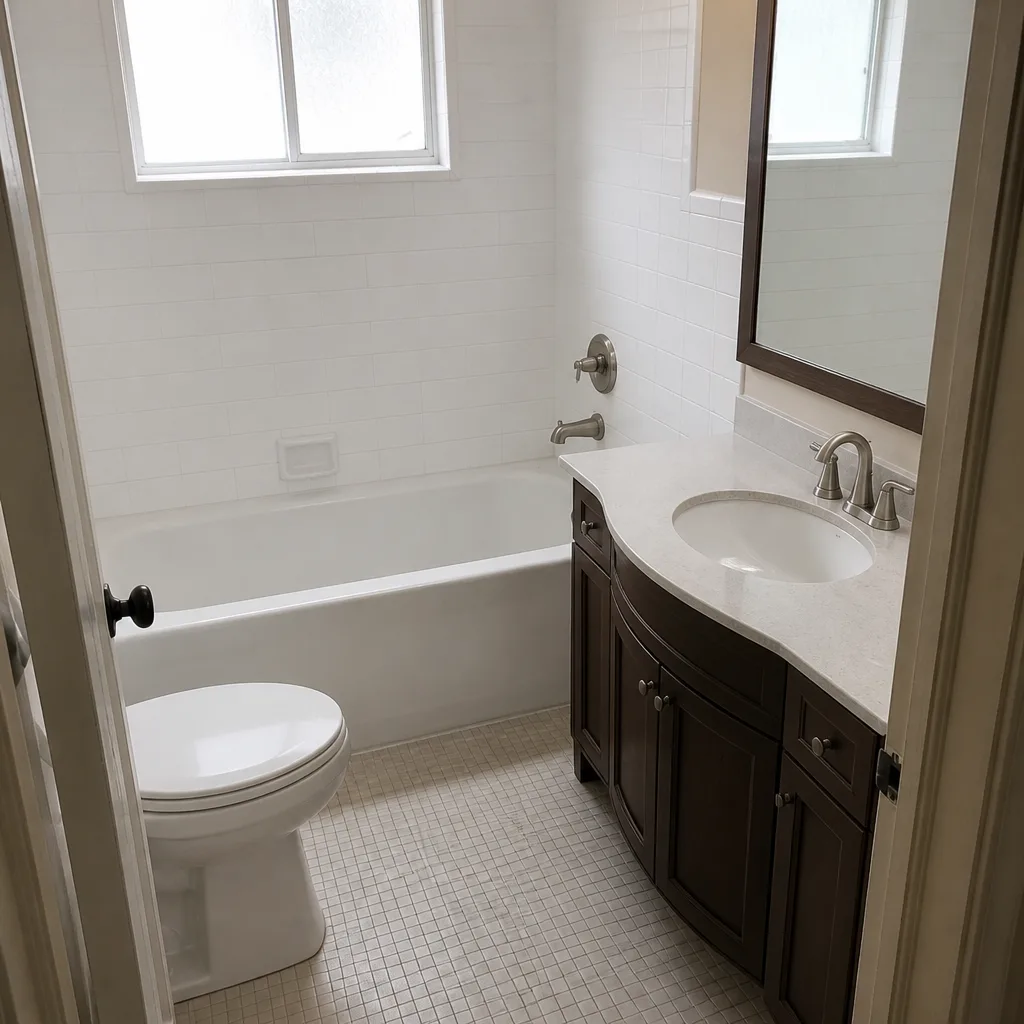 After
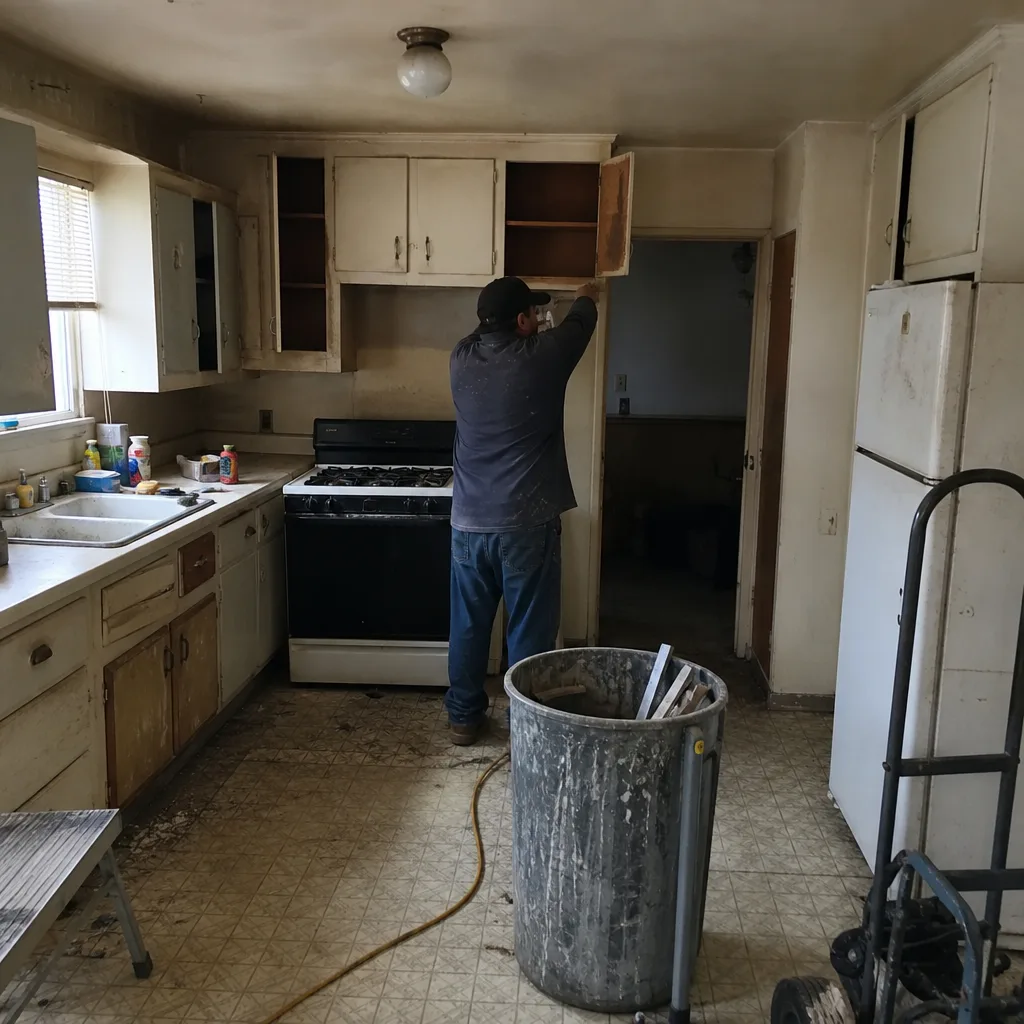 Before
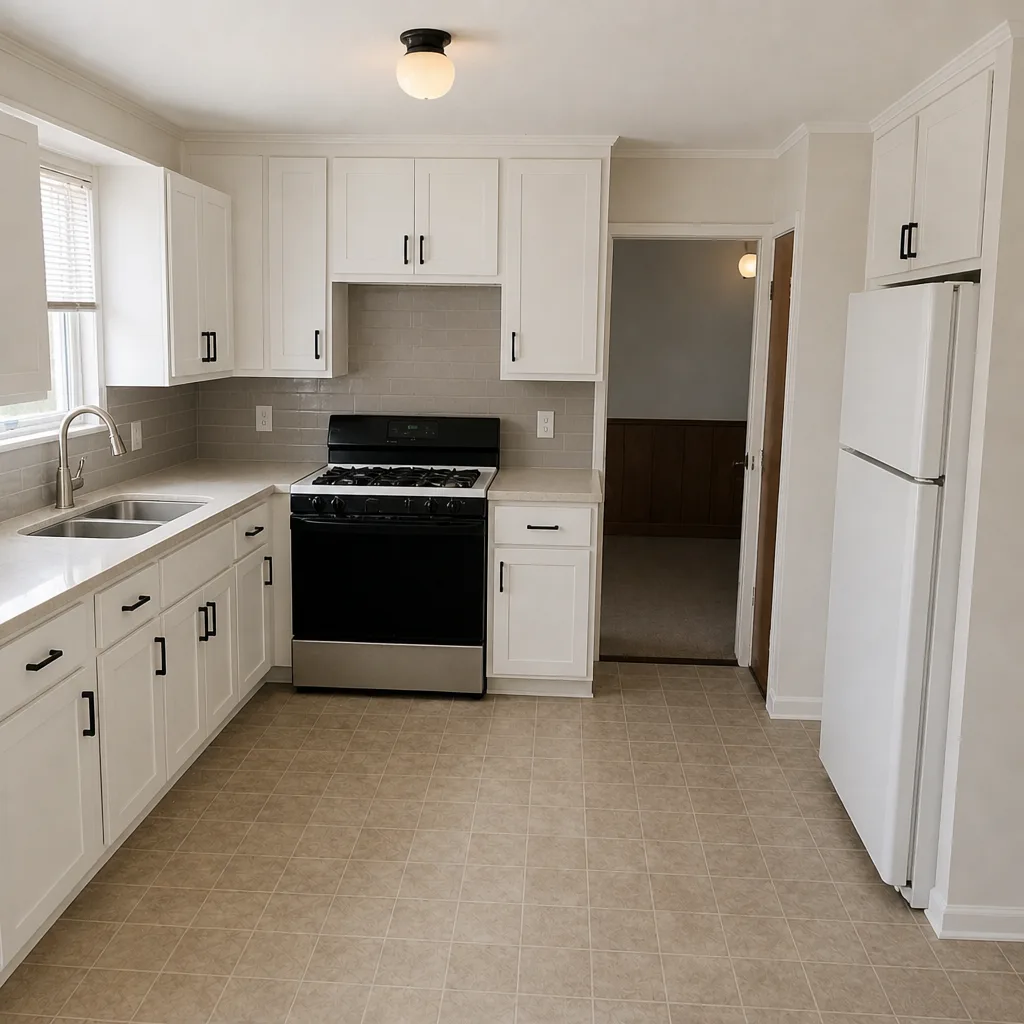 After
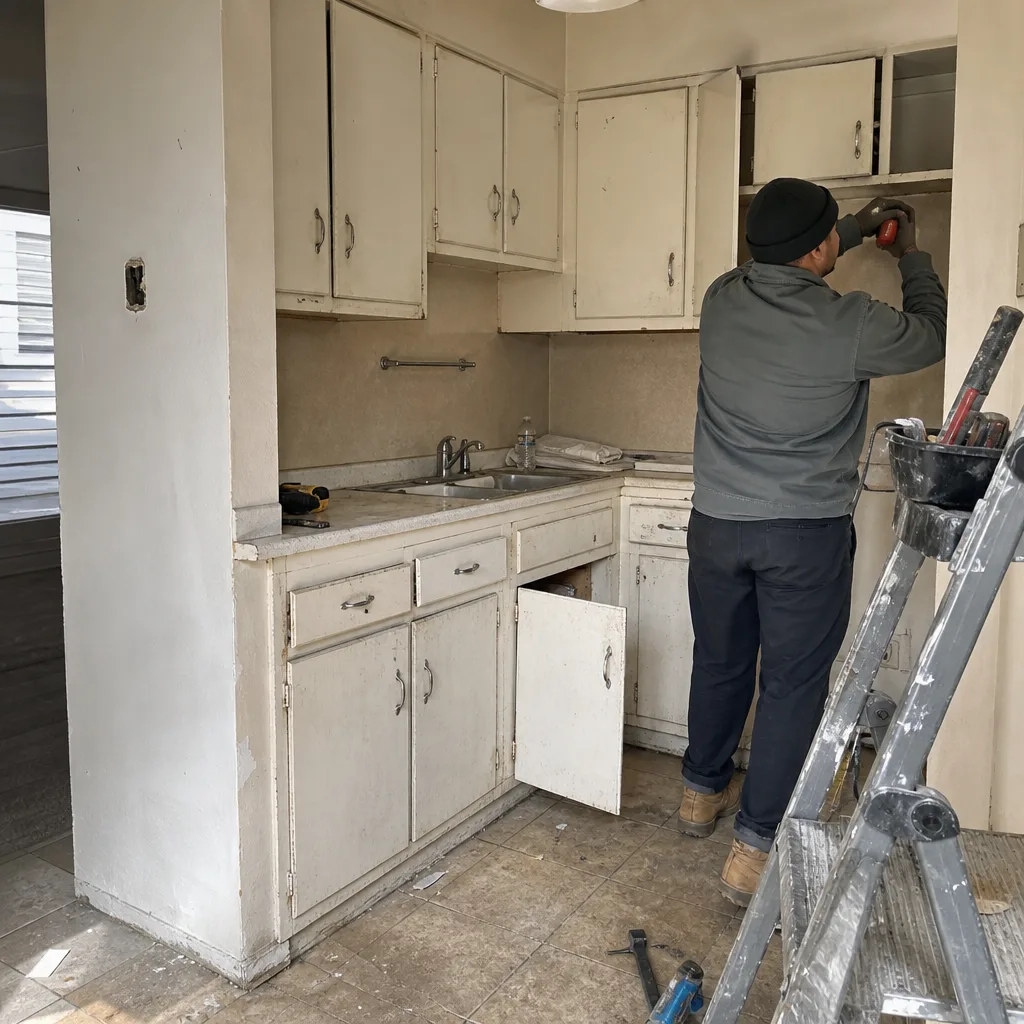 Before
 After
Frequently Asked Questions
Re-caulk the shower and tub joints every 5 to 7 years under normal use, and replace any bead sooner if it’s peeled, chalky, or has pulled away from the tile. In East Los Angeles, hard water shortens that interval for some households. Caulk is the cheapest item on the whole maintenance list – a tube costs $8 to $15 – and it’s the one that protects the subfloor. If a joint has already failed and water has been getting behind the wall, that’s a repair to price before it spreads; call (833) 520-6636 for a free estimate on anything that’s gone past the cosmetic stage.
Hold a single tissue against the fan grille with the fan running. If the fan holds the tissue flat, it’s moving air; if the tissue falls, it isn’t. A bathroom wants roughly 1 CFM per square foot of floor area, so a small bathroom needs at least 40 to 50 CFM. A fan that runs loudly but doesn’t hold the tissue is undersized, has a kinked duct, or is venting into the attic. Any of those three is worth a professional look, because moisture that stays in the room is the root of most mold complaints. Call (833) 520-6636 to have a fan and its venting assessed.
The T&P valve is the safety valve that releases pressure if the water heater overheats or builds excess pressure, and it serves the whole house, including every bathroom fixture. A valve that hasn’t been operated in three years should be inspected and serviced by a licensed plumber – a valve that won’t reseat can flood, and one that’s seized won’t protect the tank. Don’t open it as a first move if you’ve never done it. Have a plumber test it. If it needs replacing, that’s a modest, straightforward job; call (833) 520-6636 to arrange a free estimate on any bathroom work that follows.
Yes. East Los Angeles water runs hard, and the calcium and magnesium leave scale on chrome, grout, and glass faster than in soft-water areas. Scale inside a shower valve shortens the cartridge’s life, and the abrasive cleaners people use to fight it often damage cultured marble, chrome, and grout sealer. The fix is a maintenance rhythm – a 50/50 vinegar soak for showerheads and aerators once a year, a pH-neutral cleaner on stone, and re-sealing grout on schedule – or, in hard-water homes, a water softener. If you’re replacing fixtures and want help choosing finishes that hold up to the local water, call (833) 520-6636 for a free estimate.
Skipping three things can void a manufacturer’s finish warranty: failing to maintain grout and stone sealer on the interval the product instructions specify, using an acidic or abrasive cleaner that chemically damages the finish, and ignoring a leak you can see. Caulk replacement is the opposite – it’s a required maintenance item, not a warranty problem. The 365-Day Done Right Promise is a written guarantee on our work for a full year after completion; if the installation fails inside that window, we come back and correct it at no charge. To understand what a properly specified bathroom remodel includes, call (833) 520-6636 for a free estimate.
Remodel rather than patch when the waterproofing layer has failed (a shower pan that won’t hold water), when the subfloor has gone soft at the tub or toilet, or when the layout no longer works for the household. Replacing caulk and grout is maintenance; rebuilding the wet zone is remodel work. If you’re facing the second category, the first step is a written scope and a written price before any work starts. Bradford Remodeling Co East Los Angeles provides both, and our technicians have up to 22 years of experience. A written price, fixed up front, no numbers that move at the door. Call (833) 520-6636 for a free estimate. If you want to see what a full kitchen and bath refresh looks like done to that standard, start with Kitchen Remodeling in East Los Angeles or our Bradford Remodeling Co East Los Angeles home page.
The Bottom Line
A bathroom remodel is a depreciating asset the day the crew pulls out, and the maintenance schedule is what slows the depreciation. Put four dates on the calendar: 30 days for the post-remodel inspection, 6 months for the caulk and movement joints, 12 months for the exhaust fan CFM test, the T&P valve, and a mineral soak, and 5 years for the deep pass. Get the cleaning chemistry right for East Los Angeles hard water and keep grout sealer on the interval the product specifies. A $10 tube of silicone on schedule is the difference between a fifteen-year finish and a subfloor replacement. If a bathroom job has passed from maintenance into repair, we’ll put the scope and the price in writing before a single tool comes out.
Call (833) 520-6636 for a free estimate. Live person, any hour.
Written by the team at Bradford Remodeling Co East Los Angeles.