Last updated November 17, 2026






Free written scope consultation - allowances, timeline, and change-order rules on paper before a single trade is scheduled
General Contractor Troubleshooting: Common Problems and How to Fix Them
A contractor who goes silent after a punch list item is reported isn’t having a scheduling problem. They’re making a financial decision about whether fixing it costs more than losing you as a reference. That single insight reframes almost every remodeling dispute we walk into in East Los Angeles. Most of what homeowners call “construction problems” are actually contract problems that surfaced in lumber and drywall. This guide sorts the three types of trouble apart – workmanship defects, scope gaps, and change-order disputes – because the fix and the leverage are different for each. You’ll learn the documentation sequence, what the CSLB complaint process actually resolves, and the language that tells you a GC is preparing to walk.
Quick Answer
Most general contractor problems fall into one of three buckets: a workmanship defect (covered by your written warranty – the contractor corrects it at no charge), a scope gap (work you assumed was included but the contract never listed – usually fixed by a change order), or a change-order dispute (a price or authorization fight). Diagnose which one you have before you send a single email, because a warranty claim follows a different path than a scope negotiation. In East Los Angeles, the fix is almost always documentation first, phone call second, and formal complaint third – in that order.
Styles & brands we work with
- Kitchen remodeling
- Bathroom remodeling
- Home additions & ADU
- Roofing
- Windows & doors
- Driveway & pavers
- Fence
Table of Contents
- The Three Types of Contractor Problems (and Why the Difference Matters)
- How to Diagnose Your Problem in 10 Minutes
- The Documentation Sequence When Work Stops or Goes Wrong
- California’s CSLB Complaint Process: What It Resolves and What It Doesn’t
- Using the Written Contract as a Troubleshooting Tool
- Red-Flag Responses from Contractors (and What They Signal)
- When a Subcontractor Causes the Damage
- How to Set Up a Project So These Problems Don’t Happen
The Three Types of Contractor Problems (and Why the Difference Matters)
Before you call anyone, determine what kind of problem you actually have. This is the single most useful troubleshooting step a homeowner can take, and almost nobody does it.
A workmanship defect is when the contractor did what the contract said, but did it wrong. Tile that pops loose six months after install. A cabinet door that won’t stay aligned. A warranty claim, and your leverage is the written guarantee.
A scope gap is when the work wasn’t done because it was never in the contract. Your kitchen remodel quote didn’t mention moving the gas line for the range, and now that Toto or American Standard fixture swap requires a plumber. Not a defect – a missing line item. Leverage is a change order with a written price before work starts.
A change-order dispute is when the work happened but the price or authorization is being argued after the fact. Someone said “it’ll be about $800” at the job site and the invoice says $2,400. Leverage is whatever’s in writing, which is why a written price before work starts is non-negotiable in our book.
In our experience running kitchens and whole-home projects across East Los Angeles, roughly two out of three complaints we’re asked about are scope gaps or change-order disputes mislabeled as workmanship failures. The fix is completely different. Treating a scope gap like a defect gets you an argument instead of a solution.
How to Diagnose Your Problem in 10 Minutes
Pull out three things: the signed contract, the original written estimate or scope sheet, and any change orders. Then work through these questions in order.
- Does the scope sheet list the work in question? If yes, you’re likely looking at a workmanship issue. Move to step 2. If no, it’s a scope gap – you’ll need a change order, not a warranty claim.
- Did the contractor do it differently than specified? Compare the material named in the contract to what’s actually installed. If the contract says KraftMaid cabinetry and you got a different line, that’s a substitution issue – and probably a change order that was never authorized in writing.
- Was there a written change order for the disputed work? If not, the price is genuinely in dispute. California contract law favors the written document. That’s why we insist on a written price before any work begins.
- Is the issue cosmetic or functional? A cracked grout line is cosmetic touch-up. A shower that leaks into the framing is a functional failure – that’s a warranty matter and the clock matters.
- Is it still within the written guarantee period? Check the guarantee document, not the verbal promise at the kitchen table. If the work was completed and failed within the guarantee window, the correction is on the contractor, at no charge.
Write your answers down. This one-page summary becomes the spine of every conversation from here forward, and it’s what any honest contractor will ask you for anyway. If you want to understand how a by-the-book project is supposed to be structured from the start, our General Contractor in East Los Angeles page walks through the sequence.
The Documentation Sequence When Work Stops or Goes Wrong
Here’s the part most homeowners get wrong. When work stops or something fails, the instinct is to call, text, and complain in whatever order feels urgent. Do it in the wrong sequence and you’ll have plenty of phone records but nothing that holds up. Do it right, and the contractor who’s tempted to stall sees a paper trail forming. That’s when they fix it.
Follow this order:
- Photograph everything the same day. Wide shots showing the whole room, close shots of the failure, and one photo of the date-stamped item or newspaper if you want a clear record. No editing, no filters.
- Write a short email – one paragraph – stating what you observed, when you observed it, and what you want (a site visit, a written correction plan, or a written change order). Attach the photos. Send it to the email address in the contract, not the text thread.
- Cite the contract clause you’re relying on. If you don’t know which one, say “per our signed agreement dated [date]” and attach the scope page and any change orders.
- Give a specific deadline. “Please respond by [date one week out] with a plan or a site visit.” A deadline creates a record without escalating.
- Follow up by phone after you’ve sent the email, not before. Say “I sent you a note this morning with photos – did you see it?” This converts the call into confirmation, which is exactly what you want.
- Send one written summary of every phone call. A one-liner works: “Following up on our call today, you said you’d send a repair plan by Friday.” If they don’t correct the summary, it stands as the record.
This sequence works in East Los Angeles because the county’s contractor market is small enough that reputation actually moves. A documented, professional, non-hostile trail is the one thing a contractor can’t brush off – and it’s the thing that wins in small claims court if you ever get there. If you want the whole approach to a project mapped out end to end, our Bradford Remodeling Co East Los Angeles home page lays it out.
California’s CSLB Complaint Process: What It Resolves and What It Doesn’t
The Contractors State License Board (CSLB) is the state agency that licenses contractors in California. Its complaint process is real, and it’s a genuine tool – but it’s not a fix-all, and knowing the boundary saves a lot of wasted energy.
What CSLB will act on:
- Unlicensed contracting (a contractor without a license taking a job over $500 of labor and materials, unless an exception applies)
- License law violations – abandonment, failure to pay subcontractors, lack of workers’ comp coverage on licensed jobs, contracting outside the licensed classification
- Criminal-level violations – theft, fraud, diversion of funds
- Some workmanship issues, but only where they rise to a clear license violation
What CSLB typically won’t resolve:
- Contract disputes over price or scope that don’t involve a license violation
- Quality disputes where the work meets code but isn’t what you pictured
- Money you want back – CSLB has no authority to order a refund
- Timeline disputes – a job that ran long isn’t automatically a license issue
For money, you’re looking at small claims court (California’s small claims limit is $12,500 for individuals) or civil action, usually with a construction attorney. CSLB and small claims can run in parallel – a CSLB complaint can add pressure while a small claims action handles the dollars.
Practical tip from East Los Angeles projects we’ve seen: file the CSLB complaint after you’ve done the documentation sequence above. The complaint form asks for a factual chronology, and the homeowner who has photos, emails, and a response deadline on file gets taken seriously. The one who calls CSLB from the driveway on day one gets a form to fill out – and a contractor who now has a heads-up to prepare.
Using the Written Contract as a Troubleshooting Tool
Your contract is not a formality. It’s the reference document for every problem you’ll have. When something goes off the rails, go straight to the contract and read these four sections.
1. Scope of Work. This is where you confirm whether the disputed item was ever included. In East Los Angeles kitchens, the most common gap we see is appliance rough-in and installation being treated as separate from the cabinetry scope. If your written scope doesn’t say who installs the American Standard or Delta fixture, the answer is: whoever you sign a change order with.
2. Materials and Specifications. Name-brand specifications should be spelled out – Blanco sinks, KraftMaid cabinetry, Toto toilets. When the contract names the brand and model, “we substituted a similar product” isn’t a defense. It’s a documented substitution, and you can require correction or a written credit.
3. Milestone Schedule. If the contract has dates – demolition by X, cabinet install by Y – you can cite the missed date in writing. “Per Section 3, cabinet installation was scheduled for [date] and has not occurred.” That’s teeth. If the contract has no dates, that’s a documentation gap you’ll never cure mid-project. Write into your next one.
4. Change Order Procedures. A by-the-book contractor has a written process: change orders must be signed before work begins, no verbal price changes, no “we’ll square up at the end.” That’s the same logic behind Kitchen Remodeling in East Los Angeles or a Bathroom Remodeling in East Los Angeles project being priced in writing before the first fixture comes off the wall.
If your contract is thin on any of these – especially items 2 and 4 – that’s not a flaw you can argue your way out of. It’s a lesson for the next one. Our rule: the written price arrives before the tools do.
Red-Flag Responses from Contractors (and What They Signal)
When problems arise, pay attention to how the contractor responds. The words matter. A contractor who’s actually going to fix it uses direct, written language. A contractor preparing to walk uses these.
“I’ll come by when I can” – no date, no promise. That’s not scheduling. That’s stalling while they figure out whether the job’s worth finishing.
“That’s not what we agreed to” – fair if true, but note whether they point to a specific contract line or just to a conversation. If they can’t point, they know the paper trail isn’t on their side.
“We’ll fix it on the next visit” – a moving target. Ask for it in writing with a date. Refusal is a signal.
“You should talk to [sub] directly” – deflection. The GC’s contract is with you, not with the sub. Unless the contract says otherwise, the GC is your single point of responsibility.
“The price went up” after the work started – that’s the surprise-invoice move, and it’s the one that most reliably destroys homeowner trust. In our view, no legitimate contractor should be repricing a job at the door. Written price before work starts, no exceptions.
“Call my other line” or a series of unanswered calls – a crew that answers the phone at the start and doesn’t answer once a problem arises is telling you something. Live-person phone coverage isn’t a luxury; it’s how you know whether you have a partner or a ghost.
We’ve built our process specifically to close the gap these signals come from – live-person phone coverage, written price before the job, and a written 365-Day Done Right Promise that returns and corrects the work at no charge if it fails inside the guarantee window. That’s what we mean when we talk about how a general contractor in East Los Angeles should run a job. It’s not marketing language; it’s the list of things a homeowner should be able to demand in writing from anyone.
When a Subcontractor Causes the Damage
A plumber cracks a valve and floods the floor. An electrical sub cuts a wire the drywaller should’ve protected. A concrete sub cracks the finished countertop’s anchor points. Whose problem is it?
From your side of the contract, it’s the general contractor’s problem. In nearly every California residential contract, the GC is responsible for the work of their subcontractors. That’s the whole point of having a general contractor. Here’s how to handle it:
- Photograph the damage and the sub’s work area before anyone touches anything. Time and date evidence.
- Notify the GC in writing the same day. “The plumber who was here today at [time] caused [damage]. Please advise on the repair plan and schedule.”
- Do not let the sub fix it on the spot. The GC’s correction should be coordinated through the GC, in writing, with a documented plan. Even if the sub offers – especially if the sub offers.
- Ask for the correction in the GC’s 365-Day-style guarantee, in writing. “Please confirm in writing the repair will be covered by your workmanship warranty for one year from the date of correction.” If they won’t confirm in writing, that’s your answer about the guarantee.
- Keep your receipts and a copy of the sub’s insurance certificate if the GC provides one. Note: in California, licensed contractors are required to carry insurance, and CSLB complaint forms will ask about it.
In East Los Angeles projects, we see this most in older homes with mixed framing, where a sub cuts into a wall and discovers something the estimate couldn’t foresee. The fix is not to negotiate with the sub – it’s to document once, escalate to the GC once, and let their written guarantee carry the load. If it doesn’t, the CSLB complaint path is next.
How to Set Up a Project So These Problems Don’t Happen
The best troubleshooting is a contract so clear that most problems don’t start. Based on the hundreds of East Los Angeles projects we’ve walked through, here are the seven things we insist on before we ever pick up a tool:
- Written scope item by item – every task, every material, every fixture, every line of labor.
- Brand and model names – not “stainless sink,” but the specific Blanco or Delta model.
- Milestone dates in the contract – not general “spring completion” language, but specific dates for specific phases.
- Written change-order procedure – no verbal price changes; every change signed before work begins.
- Written guarantee term made explicit – how long, what’s covered, what triggers a return visit, and how the homeowner requests it.
- Single point of contact – who answers the phone, when, and how to reach them after hours.
- Permit pull and inspection schedule – who pulls them, and when the inspections happen.
A clear contract up front is the same move as a clear scope sheet on day one. They’re not extra paperwork; they’re the reason work doesn’t turn into a troubleshooting exercise halfway through. That’s the whole idea behind the 365-Day Done Right Promise: the guarantee is only as good as the documentation behind it.
Common Mistakes to Avoid
- Calling before writing. A text or voicemail is not a record. Document first, then call. A call that follows an email confirms a paper trail; a call that replaces one evaporates.
- Confusing a scope gap with a workmanship defect. The most common error we see in East Los Angeles projects. If the contract didn’t name the work, it’s a change order, not a warranty claim. Treating it as a defect turns into an argument; treating it as a gap turns into a written price.
- Accepting a verbal price for extra work. “About $600” at the job site is how surprise invoices start. Insist on a written change order before the work begins.
- Letting the sub fix their own damage the same day. It feels helpful. It removes the GC from the correction, and it makes the guarantee harder to enforce.
- Missing the deadline on a written request. If you set a deadline for a response, and the deadline passes, follow up. Don’t let the record go cold.
- Filing a CSLB complaint before the documentation sequence is complete. You only get one shot at a clean complaint form; the paperwork makes the difference between a serious case and a form.
- Assuming the guarantee is what the kitchen-table conversation said it was. If the guarantee document isn’t in your hand, it isn’t in force. Ask for the written term – and read it.
See the difference
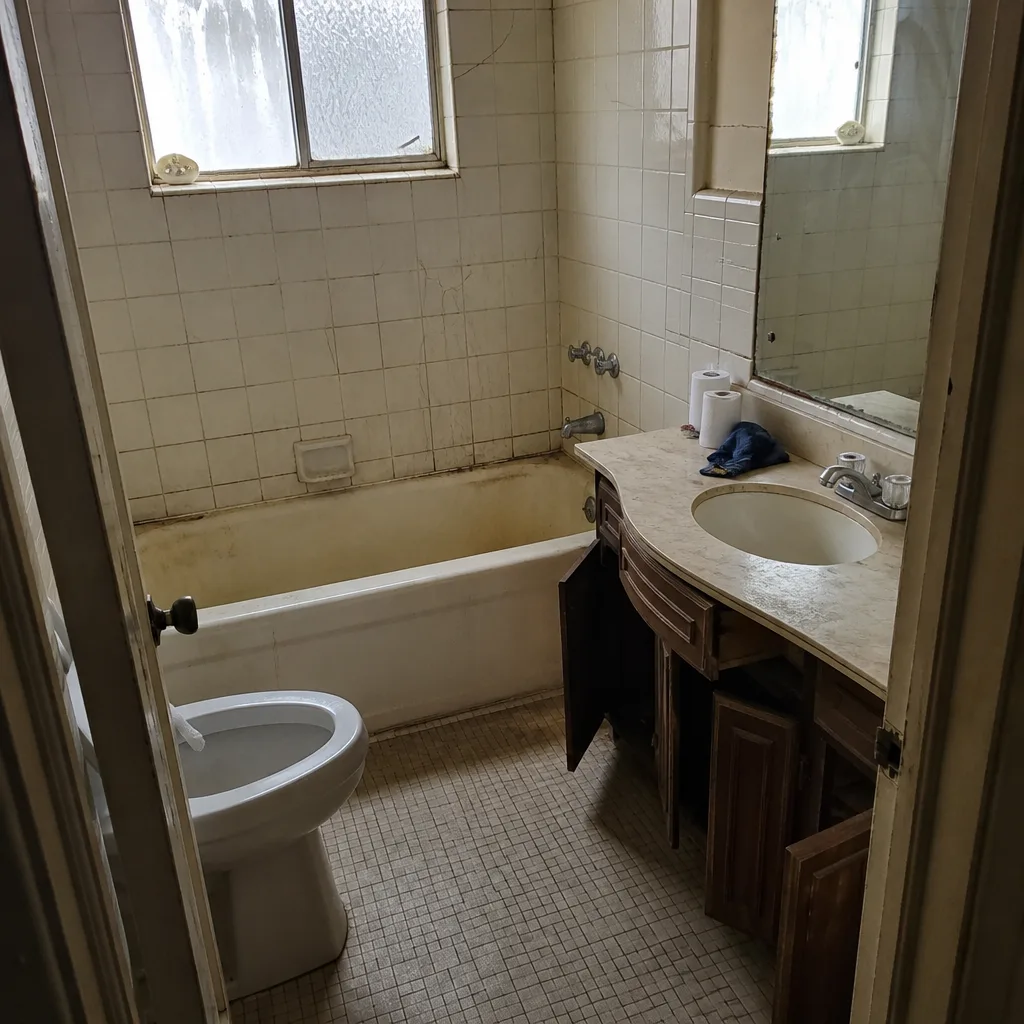 Before
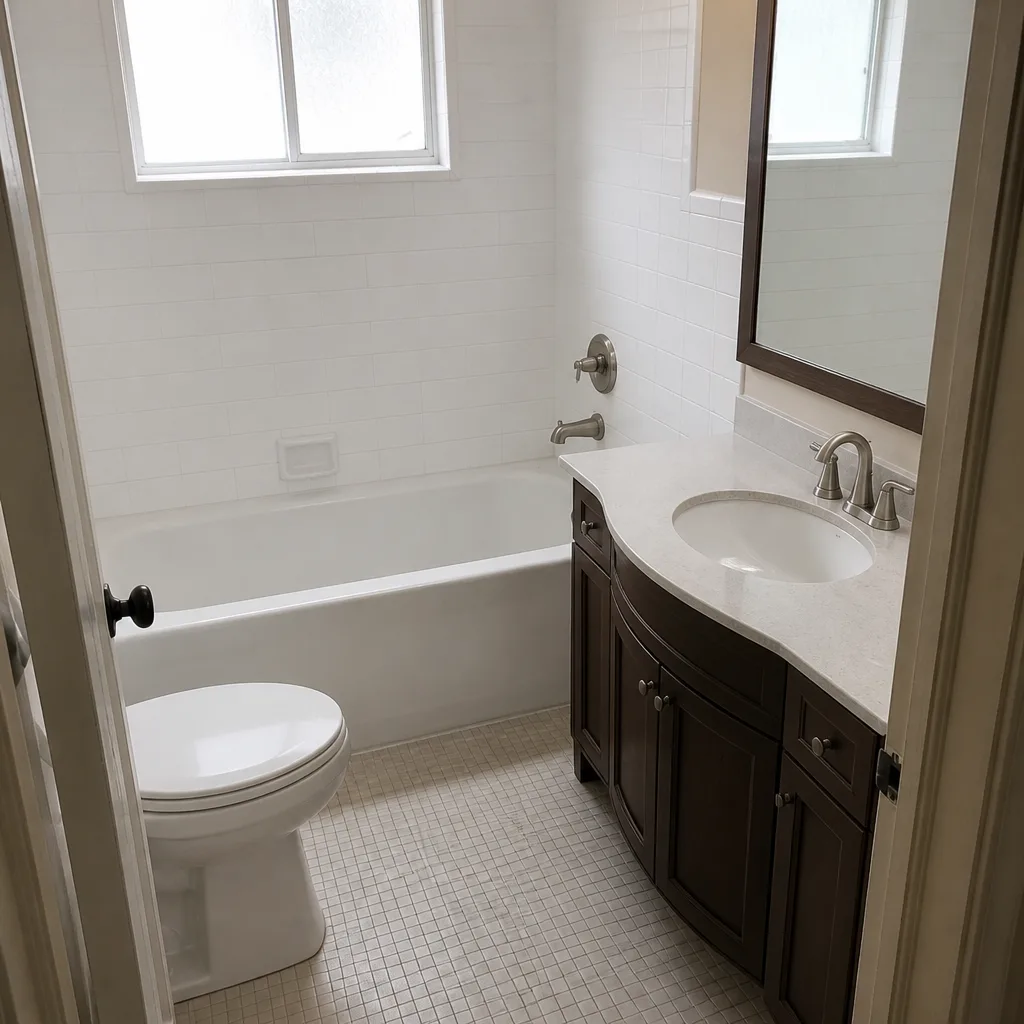 After
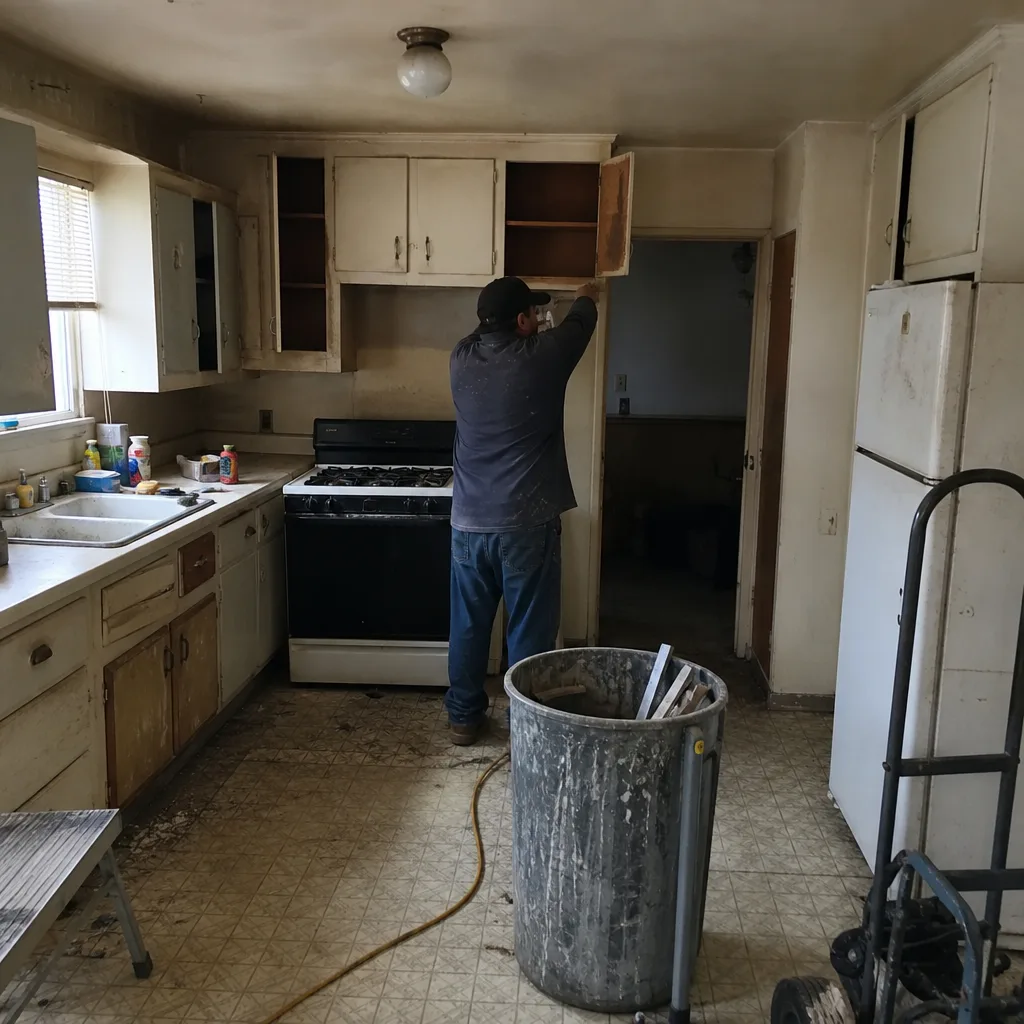 Before
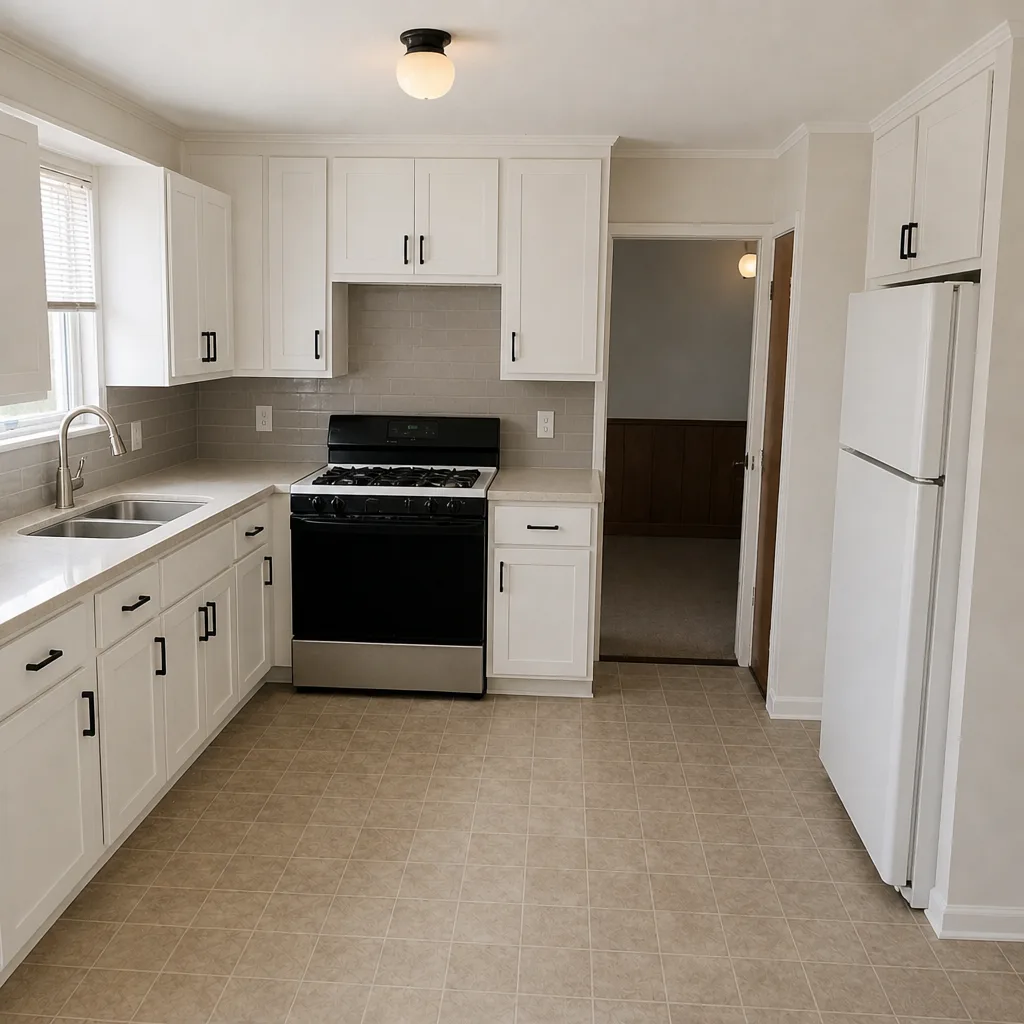 After
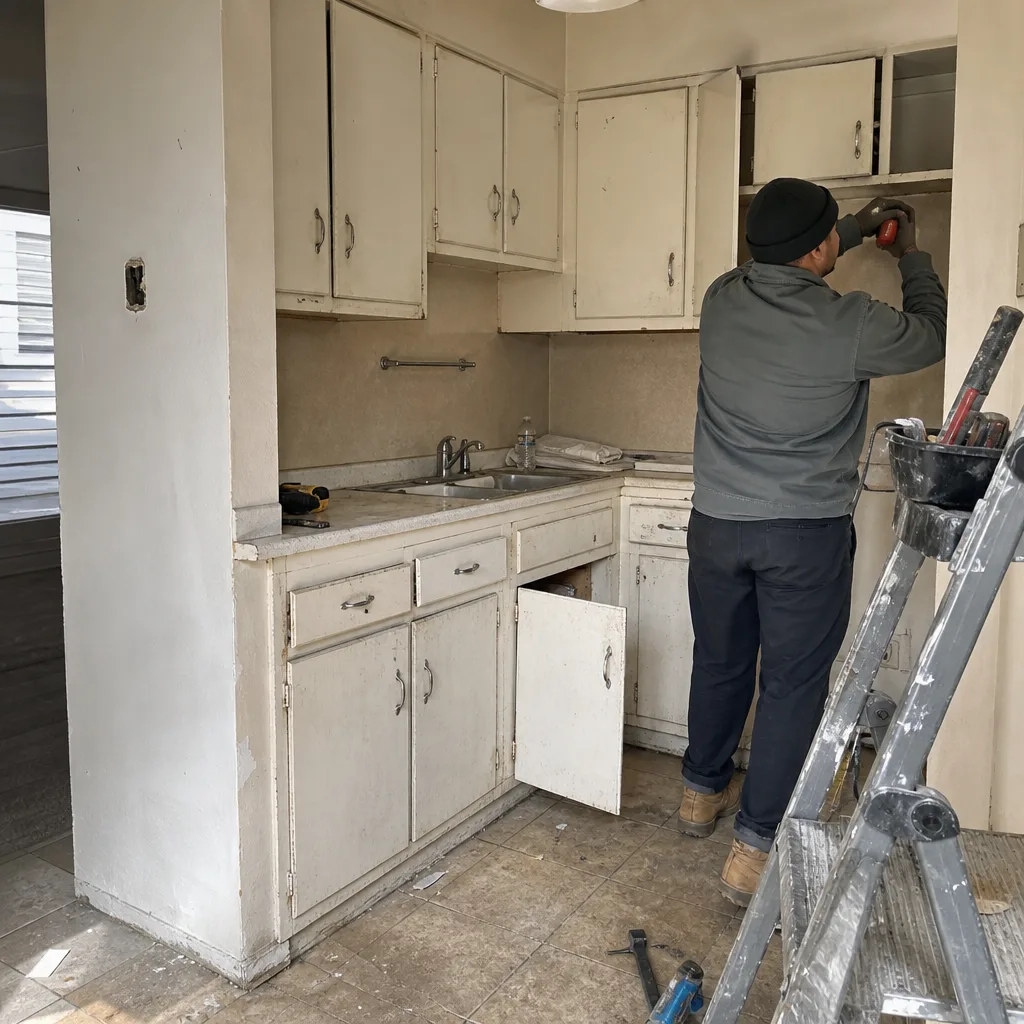 Before
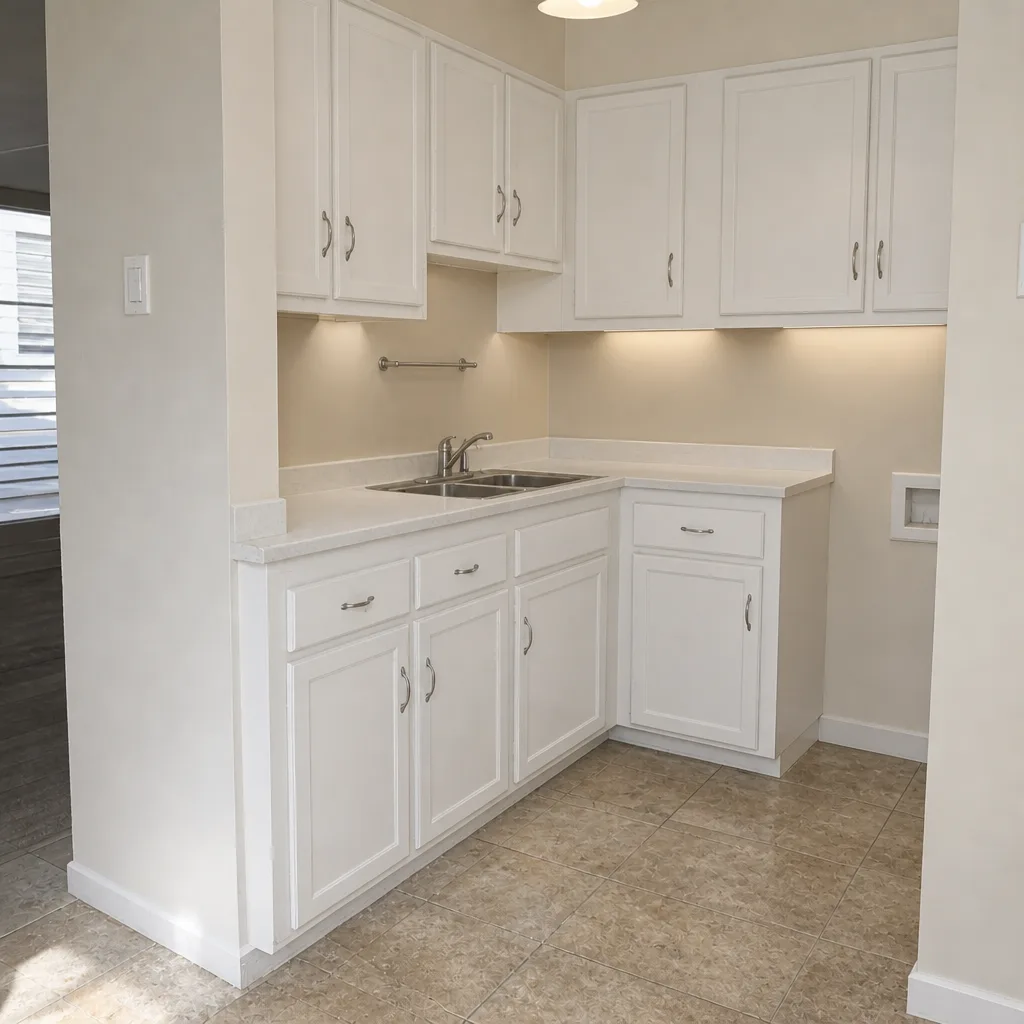 After
When to Call a Professional
Some problems are paperwork problems. Others genuinely need a general contractor’s hands on the job. Call a professional when:
- Water is entering a wall cavity or the framing is visibly wet – stop and call before the mold clock starts
- A structural alteration was made without a permit, or an inspector has flagged it
- A subcontractor caused damage and the GC is not responding in writing
- Electrical or gas work needs to be re-done and the panel labels are wrong or missing
- The workmanship defect is more than cosmetic – doors that don’t latch, cabinets separating from the wall, grout cracking in a recurring line
- The contractor’s paperwork, guarantee, or insurance coverage cannot be produced on request
Bradford Remodeling Co East Los Angeles offers free estimates in East Los Angeles – call (833) 520-6636. We answer with a live person 24/7, put the price in writing before any work starts, and back every completed project with the written 365-Day Done Right Promise. If a project is already in trouble, we’re also the crew that reads the paperwork first and tells you what’s a defect, what’s a gap, and what’s a documentation problem before we quote anything.
Frequently Asked Questions

Pull the signed contract and scope sheet and find the item in question. If it’s listed and done wrong, it’s a workmanship defect – covered by the written warranty. If it’s not listed, it’s a scope gap and gets fixed by a signed change order with a written price before the work begins. If the contract is silent on whether a verbal price was agreed, that’s a change-order dispute and the written document is what holds.
Photograph the condition of the site the same day, send a one-paragraph email citing your contract date, attach the photos, and set a one-week response deadline. Follow up by phone the same day to confirm they saw the email, and send a one-line written summary of the call afterward. Work stops usually resolve when a contractor sees a clean record forming – and if they don’t, you have the paper trail for a CSLB complaint and small claims.
Sometimes, but not reliably for money-back or price disputes. CSLB handles license violations – unlicensed contracting, abandonment, fraud, and certain license law breaches – and it can’t order a refund. For money or a specific corrective repair, small claims (California limit is $12,500 for individuals) or civil action is the tool. Many homeowners run both in parallel; the CSLB complaint adds pressure while small claims handles the dollars.
It depends on which problem – and that’s why diagnosing first saves money. Correcting a workmanship defect during the written guarantee period is typically $0 to the homeowner because the contractor returns and corrects it. Correcting a scope gap usually means a written change order: drywall patching runs a few hundred dollars, moving a gas line or adding an electrical circuit runs higher, and replacing a substituted fixture or cabinet line is priced to the brand and model in the contract. Call (833) 520-6636 for a free written estimate on any correction work in East Los Angeles – we quote the correction in writing before we touch anything.
Only if the warranty document says so. That’s why the written guarantee is the single most important piece of paper in the project file. If the guarantee names the work and the term, you have a warranty claim. If it doesn’t, you’re likely looking at a scope or negotiation. For East Los Angeles homeowners, the standard we hold to is a full year of coverage on completed work: if the work fails inside that window, the correction is at no charge. Ask for the guarantee in writing before the job starts, every time.
No. Let the general contractor coordinate the correction in writing, because your contract is with the GC, not the sub. Even if the sub offers to fix it on the spot, document the damage first, notify the GC in writing, and ask the GC to confirm in writing that the correction is covered by their workmanship guarantee. Verbal corrections from a sub leave you without a guarantee and without a record.
The Bottom Line
Most remodeling problems are contract problems that surfaced as construction problems. Diagnose first – defect, scope gap, or change-order dispute – then document in writing before you call, follow the documentation sequence, and only use CSLB for what it actually resolves. The written contract is your troubleshooting tool, and the guarantee is only as good as the paper behind it. If you’re facing a contractor problem in East Los Angeles, call Bradford Remodeling Co East Los Angeles at (833) 520-6636 for a free estimate – live person on the phone, written price before work starts, and the 365-Day Done Right Promise on every completed project.
Written by the team at Bradford Remodeling Co East Los Angeles.