
Free written scope consultation - allowances, timeline, and change-order rules on paper before a single trade is scheduled
Unilock Fence Installation: The East Los Angeles Owner’s Guide
Unilock fence installation in East Los Angeles typically runs $4,130 to $10,620 installed, depending on linear footage, wall height, and which Unilock system you’re matching. We install Unilock-compatible fences with a written price before any work starts, and every completed job carries our 365-Day Done Right Promise. Most East Los Angeles projects are scheduled rather than same-day, since concrete footings need a cure window before panels go up.
Owners usually find the problem the same way: a post that rocks when you lean on it, a cap that’s popped loose after a hot week, or a panel that’s gone wavy along the top rail. East Los Angeles sits on a mix of older clay soils and expansive fill, and fence footings here take a beating from seasonal swell and shrink. When the footing moves, the fence above it follows. That’s usually the real story behind what looks like a “failing fence.”
Which Unilock Models This Applies To
Unilock is a hardscape manufacturer, so what you’re really matching is a wall system, not a single fence SKU. The most common residential lines we see in East Los Angeles are Brussels Block, Olde Quarry, Standart, and Onyx wall units, plus the coordinating caps and coping that sit on top. Each has its own face dimensions, height profile, and cap line, and they don’t interchange cleanly. A Brussels Block cap on an Olde Quarry wall will look close in a photo and wrong in person.
To identify what you have, measure the actual face of a block (width and height in inches, not the nominal “marketing” size), check the cap overhang, and look for a stamped or ink-marked code on the underside of a loose unit or on the original pallet tag if you still have paperwork. Photograph the wall face, a corner, and the cap from directly above; those three shots let a supplier pull the correct series without a site visit.
On OEM versus aftermarket: Unilock’s own units are the safe match when the wall is visible from the street and color consistency matters. Quality aftermarket concrete wall units can work for hidden runs, garden walls, and non-structural screening, but face texture and color lot will drift from the original over a few seasons. Unilock runs color lots, and a unit bought two years after the original install may read a shade different in East Los Angeles’s afternoon sun. If the wall is prominent, order the full run from one lot.
Styles & brands we work with
- Kitchen remodeling
- Bathroom remodeling
- Home additions & ADU
- Roofing
- Windows & doors
- Driveway & pavers
- Fence
Signs Your Unilock Fence Installation Is Failing
These are the five calls we get most often in East Los Angeles, and what’s actually behind each one.
- Posts that rock or lean. The footing has lost grip, usually from soil movement or a footing that was poured too shallow for the wall height. A post that moves at the base will keep moving no matter how many times it’s re-set above grade.
- Caps popping loose or lifting at the corners. Adhesive failure combined with thermal cycling. East Los Angeles summer surface temps on a sun-facing cap run hot enough to soften typical construction adhesive, and the cap walks.
- Stepped cracks running through the block joints. Differential settlement under part of the run. This is a base problem, not a block problem, and repointing the joint alone won’t hold.
- Efflorescence, the white chalky bloom on the face. Moisture moving through the units and drying at the surface. Some bloom is normal in the first year; bloom that returns every season points to water getting behind the wall with nowhere to drain.
- Wavy or bowed top line. Either the cap course wasn’t set level to begin with or the units have shifted on a base that wasn’t compacted in lifts. Sight down the top from one end and you’ll see it immediately.
See the difference
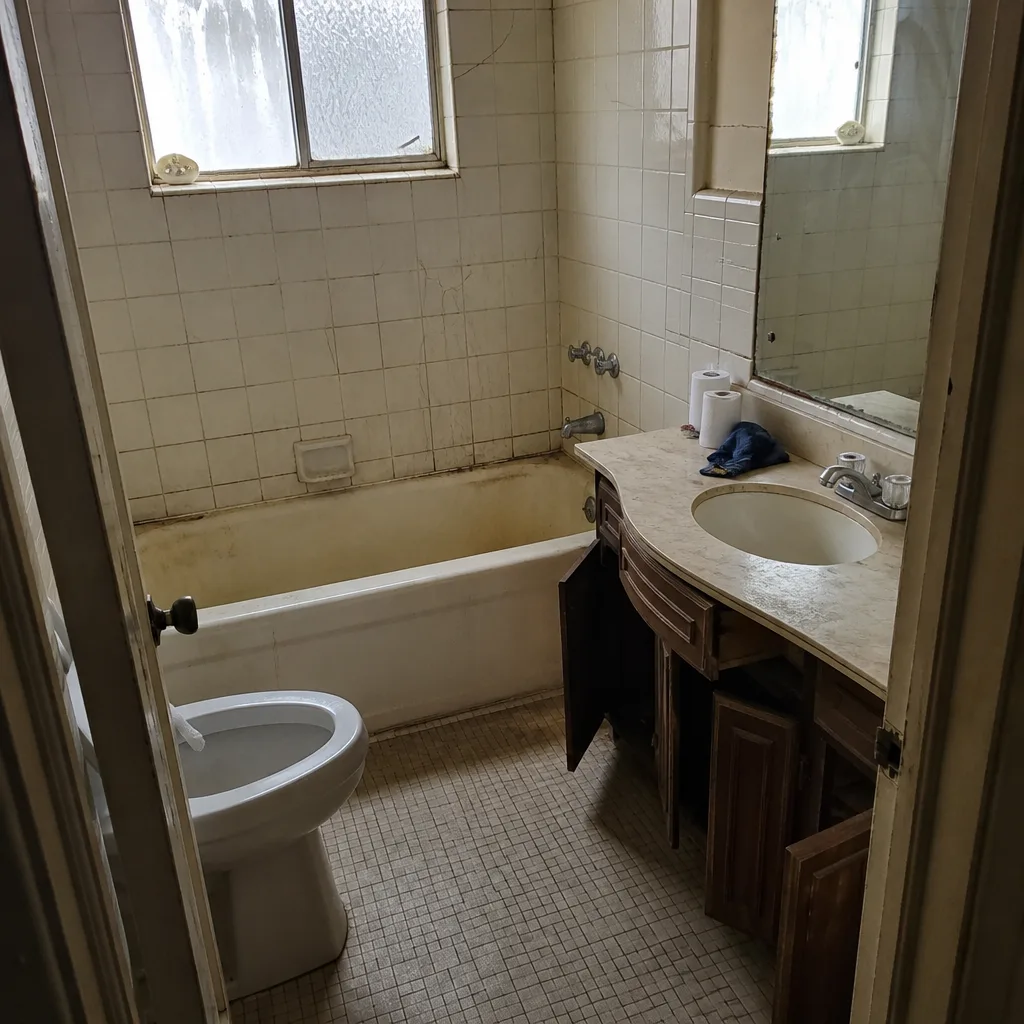 Before
 After
 Before
 After
 Before
 After
Replacement Cost & What’s Included
Unilock fence installation in East Los Angeles runs $4,130 to $10,620 installed for a typical residential run. Here’s what moves the number:
- $4,130 to $6,200 – shorter runs, standard-height garden or screening wall, straightforward access, existing footing reusable.
- $6,200 to $8,400 – longer runs, taller wall sections, new footings poured, demo and haul-away of the old wall included.
- $8,400 to $10,620 – multi-section runs, stepped grades, tight side-yard access in the older East Los Angeles tracts, or premium cap and coping details.
Every quote we write is line-item: units, caps, footing concrete, rebar, adhesive, labor, demo, and disposal are each their own line. No number moves at the door, because the number was already in writing before we lifted a tool. The work is covered by our 365-Day Done Right Promise: if the installation fails within a year, we come back and correct it at no charge. We work from a documented roster of name-brand materials, including Unilock, Belgard, and James Hardie on the exterior side, plus KraftMaid, Cambria, and Silestone on interior work.
DIY or Call Us?
What you can safely check yourself: sight the top line from one end, push on each post at shoulder height to find movement, photograph the cap course, and note where water pools along the base after rain. That’s diagnosis, and it’s useful information to bring to a call.
Where DIY goes wrong is the base. A Unilock wall is only as good as the footing and the compacted base under it, and a wall unit set on a footing that hasn’t cured properly or a base that wasn’t compacted in lifts will fail again in one or two East Los Angeles wet seasons. There’s also real injury risk in demo and lifting wall units, and a leaning wall section can come down on you. We’d rather you not find that out the hard way. Call (833) 520-6636 and we’ll walk the run with you.
FAQs
A properly built Unilock wall should hold 25 to 30 years or more, but the number that matters is the footing, not the block, and footing life in East Los Angeles varies with soil and drainage. Walls that fail early almost always fail at the base. Call (833) 520-6636 for an exact quote on your run.
Sometimes. A single rocking post, a loose cap, or one cracked section can often be corrected without tearing out the whole run, and we’ll tell you straight when repair is the right call. Once settlement is spread across multiple sections, replacement of that run is usually the cheaper path over five years. Call (833) 520-6636 for a free estimate and an honest read on which one you’re facing.
Most East Los Angeles residential runs take two to four working days, with footing cure time built into that window. Larger runs with stepped grades or multiple sections stretch to a week. You’ll get the schedule in writing before work begins. Call (833) 520-6636 to book your free estimate.
We match your series from manufacturer specs and color lot, then order the full run from one lot so the wall reads consistently. We don’t carry parts on a truck and we don’t stock units, so the material is ordered to your job rather than pulled from inventory. Call (833) 520-6636 and we’ll confirm the right series for your wall.
Bradford Remodeling Co East Los Angeles is an independent service provider and is not affiliated with Unilock.
If you’re looking at a Unilock fence that’s leaning, cracking, or shedding caps, the fix starts with a written scope and a written price. Call Bradford Remodeling Co East Los Angeles at (833) 520-6636 for a free estimate. A live person answers the phone, day or night, and you’ll know exactly what the job costs before anyone shows up.
Written by the team at Bradford Remodeling Co East Los Angeles, serving East Los Angeles and nearby areas.