Last updated November 17, 2026




Free written scope consultation - allowances, timeline, and change-order rules on paper before a single trade is scheduled
Home Remodeling Warning Signs Every Homeowner Should Know
Here’s the uncomfortable truth about hiring a remodeler: a contractor can be fully licensed, bonded, and insured in California and still take your deposit, stall for six weeks, and walk off the job. The license doesn’t prevent that. Contract language does. In our experience across East Los Angeles, the contractors who cause the most damage are rarely the ones with no paperwork at all. They’re the ones who know exactly how to make paperwork look complete while leaving the scope, the deposit, and the change-order rules loose enough to work against you. This guide walks through the behavioral and contractual warning signs that show up after a contractor passes the basic license check. You’ll learn how to read a scope of work, spot an illegal deposit request, evaluate a subcontractor list, and understand who’s legally responsible for pulling the permit.
Quick Answer
The most serious home remodeling warning signs are a vague scope of work, a deposit above California’s 10%-or-$1,000 cap, refusal to provide a subcontractor list, a contractor who asks you to pull your own permit, and change-order clauses that allow price changes without your written sign-off. A missing license number is easy to fake. Loose contract language is the real risk, and it’s harder to spot unless you know exactly what to look for.
Styles & brands we work with
- Kitchen remodeling
- Bathroom remodeling
- Home additions & ADU
- Roofing
- Windows & doors
- Driveway & pavers
- Fence
Table of Contents
- Why a Vague Scope of Work Is the Biggest Red Flag
- The Deposit Structure Warning Sign Most Homeowners Miss
- What a Contractor’s Subcontractor List Tells You
- Who Pulls the Permit Matters – Legally
- Change Order Language That Should Make You Walk
- The Timeline and Payment Schedule Red Flags
- What East Los Angeles Homeowners Specifically Face
- Common Mistakes to Avoid
Why a Vague Scope of Work Is the Bigger Red Flag
A license number is a checkbox. A scope of work is the actual contract. When a remodeler writes “demo and install new kitchen” on a single line and hands you a total price, that’s not a scope – it’s an opening for every disagreement that follows. The vague phrase is doing work for the contractor, not for you.
Here’s what vague language often hides:
- “Standard install” – With no definition of standard, the contractor decides on the day of the job whether cabinet leveling, crown molding, or a tile backsplash is included.
- “Per plan” or “as discussed” – If there’s no written plan attached to the contract, this phrase means nothing. Verbal agreements don’t survive a dispute.
- “Allowances” with no dollar figure – An allowance is a placeholder budget for materials you haven’t picked yet. If the number isn’t written in, the contractor can set it low to win the bid and raise it when you pick hardware.
- Missing brand or product specifications – “Quartz countertops” tells you material, not quality. A documented spec names the brand and line (Cambria, for example, or a specific Caesarstone series) so the quality isn’t left to the contractor’s judgment on the day of templating.
- No defined finish list – Flooring, baseboard, paint sheen, outlet covers, hardware, and trim finish all need to be spelled out. These are the exact items that become surprise change orders.
Good scope language reads like a job description. It names materials, brands, quantities, and finish standards. It says “KraftMaid semi-custom cabinetry in the specified door style” rather than “cabinets.” It lists “Kohler” rather than “faucet.” When you’re comparing bids, the bid with the longer, more specific scope of work is usually the more honest one – not because it’s cheaper, but because it’s harder to wiggle out of. If you’re remodeling in East Los Angeles and every contractor hands you a one-line scope, that’s the sign to keep shopping, not the price.
The Deposit Structure Warning Sign Most Homeowners Miss
California law caps what a contractor can collect as an up-front deposit before any work begins. For most residential jobs, that cap is 10% of the contract price or $1,000, whichever is less. If a contractor asks you to write a check for 30% to “hold your slot,” that request isn’t just aggressive – it’s illegal under state contract rules for home improvement work. A licensed contractor should know this. If they don’t, that tells you something about how the rest of the job will go.
Here’s what the payment rhythm of a trustworthy contract looks like:
- Deposit up front – No more than 10% or $1,000, whichever is lower, and tied to a defined start date.
- Progress payments – Tied to completed milestones (“rough-in inspected,” “drywall hung”), not to calendar dates.
- Final payment on completion – Held back until the job is finished, walkthrough is done, and final inspection passes.
- Lien releases – Signed by subcontractors and suppliers as their work is paid for, so you’re not left exposed to a mechanic’s lien later.
A contractor who pushes for a large deposit up front usually has one of two problems: cash flow is thin, or the job is being funded by the next client’s deposit. Either one leaves you exposed if the work stalls. When we look at a contract that comes to us from a homeowner who was burned, the deposit is almost always the first clue. Big ask, small timeline, no written completion date. If the deposit and payment schedule don’t line up with the scope, walk away, no matter how good the references sound.
What a Contractor’s Subcontractor List Tells You
Almost no remodeling contractor does every trade in-house. Plumbing, electrical, tile, HVAC, and finish carpentry is usually subbed out. That’s normal. What matters is whether the contractor can name who they’re bringing onto your property, and whether they’re willing to put that in writing. Asking for the subcontractor list is one of the fastest ways to read a contractor’s risk profile.
Here’s how to read the response:
- “Happy to send it” – They hand over a written list of subs with names and trades. This is a positive sign. It means they’ve vetted the people coming into your home and they expect to be held to it.
- “We use whoever’s available” – This is the warning sign. It means unvetted labor is being routed to your job based on who’s free that week. It also means background checks are unlikely, and quality varies by week.
- Refusal to share names – Red flag. If a contractor won’t tell you who’s installing your plumbing rough-in or your electric panel, you have no way to know whether that person is licensed for the trade. In East Los Angeles, where a lot of remodeling work happens on older homes with dated wiring, that matters more than it sounds.
- One person listed for every trade – Ask if that person holds a separate license for each trade. California requires specialty licenses for electrical and plumbing in most cases.
The best contractors treat a subcontractor list as part of the professional package, along with the scope, the schedule, and the price. Bradford Remodeling’s technicians go through background checks at the Garrison Partners level, so the identity of who walks through your door is documented before the crew arrives. Whether you hire us or someone else, ask for the list in writing before you sign.
Who Pulls the Permit Matters – Legally
The person who pulls the permit is legally responsible for the work being done to code. If a contractor asks you to pull your own permit as the homeowner, they’ve just moved that liability onto your shoulders. That’s a warning sign, and it’s a big one. If something fails inspection or causes damage later, the paper trail points at you, not at the contractor.
Here’s why this matters in East Los Angeles specifically. Much of the housing stock here was built between the 1920s and 1960s, with original knob-and-tube or early romex wiring, cast-iron drains, and pier-and-beam foundations. Any remodel that opens walls or reroutes plumbing triggers permit and inspection requirements under California code and the Los Angeles Department of Building and Safety. Work done without permits becomes a disclosure problem at resale, and buyers’ inspectors find it. A contractor who quietly suggests skipping the permit to “save time” is offloading years of risk onto you.
What a contractor should do on permits:
- Pull the permit in their licensed company name, not yours.
- List themselves as the contractor of record, with their license number on the permit.
- Handle the inspection scheduling and any corrections.
- Give you copies of the final signed-off inspection cards at job close.
Ask any contractor you’re considering, “Will the permit be in your name?” If the answer is anything other than a clean yes, that’s your sign.
Change Order Language That Should Make You Walk
A change order is the written amendment that updates scope, price, or timeline when something changes mid-job. Every real remodel has at least one – a hidden water line, a discovered drain issue, an upgraded tile that costs more than planned. The problem isn’t change orders. The problem is change-order language that lets the price move without your signature.
Watch for clauses that say:
- “Contractor may adjust price for unforeseen conditions” – Without a definition of “unforeseen” and a required written notice to you before the work begins, this clause is a blank check.
- “Verbal change directives are binding” – No. Nothing should be binding unless you’ve signed it. If the contractor’s crew foreman can change the scope on a phone call, the original price means nothing.
- “Additional work will be billed at hourly rates” – Ask for the hourly rates in writing, plus the not-to-exceed cap. An open hourly rate with no ceiling is a repricing engine.
- No change-order form in the package – A serious contractor has a standard form ready – a page with a description of the change, the added cost, the timeline impact, and signature lines for both parties.
The Garrison Standard requires a written price before any work starts, and it requires that any change to that price be documented, signed, and dated before the work is performed. That’s not a special favor. That’s the baseline. If the contract you’re reading doesn’t say that clearly, rewrite it or walk.
The Timeline and Payment Schedule Red Flags
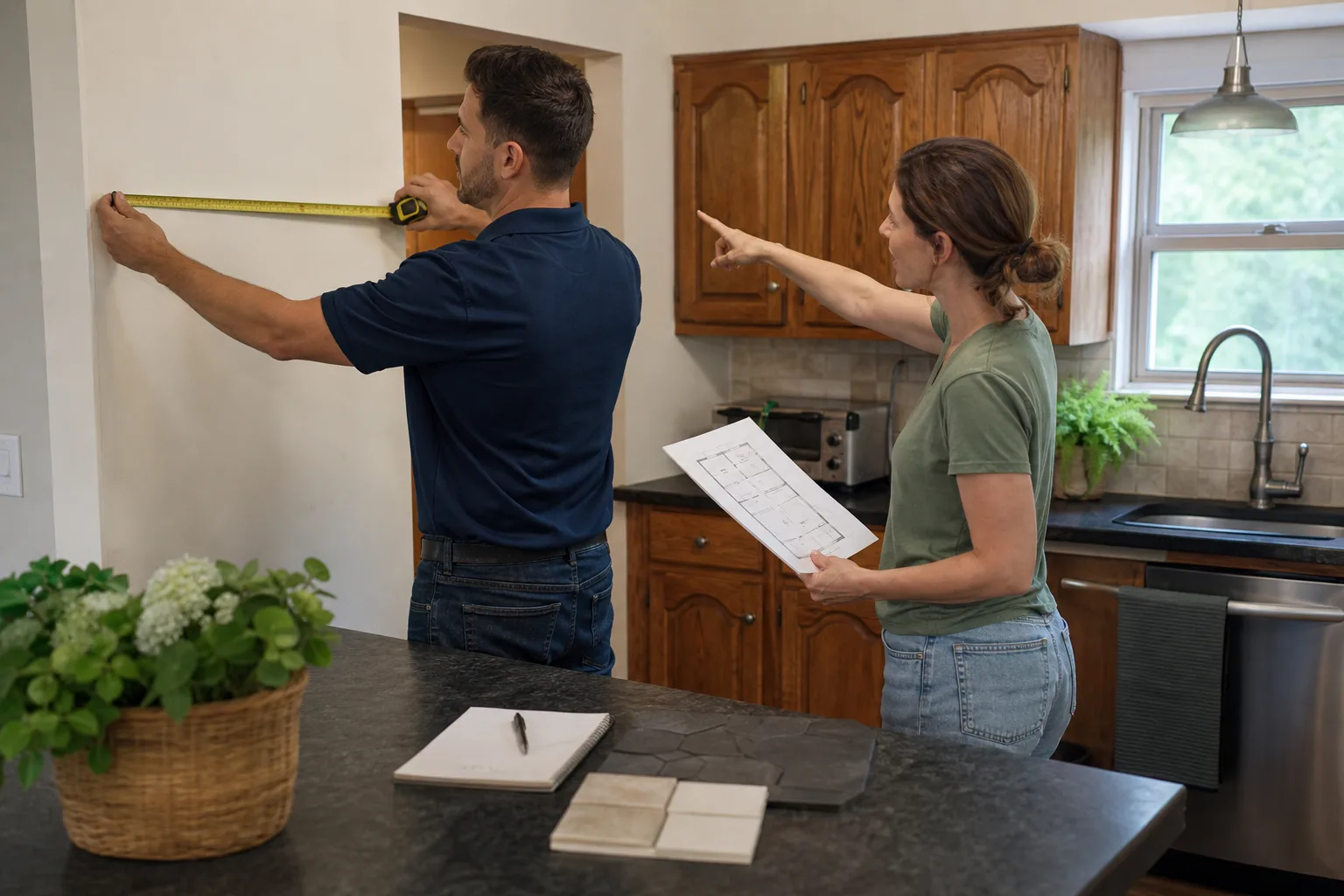
A vague schedule is a warning sign dressed up as flexibility. “We’ll be in and out in about a month” is not a schedule. A real schedule names the start date, the demolition window, the rough-in inspection date, the drywall and finish dates, and the final walkthrough. Every milestone is tied to a payment.
Four things to look for in the schedule:
- The lock-in start date – “Sometime in the next few weeks” is not a start date. You should have a specific day in writing.
- Weather-sensitive work flagged – Roofing, exterior siding, and hardscaping have real weather windows. In East Los Angeles, the marine layer and the occasional Santa Ana wind cycles affect drying times for exterior coatings and concrete pours. A schedule that ignores that is optimistic.
- Inspection dates on the calendar – Rough-in and final inspections aren’t optional events, they’re gate points. If they’re not on the schedule, they’ll be “worked around” – which means they’ll be skipped.
- Payment tied to milestones, not dates – “Payable on the 1st of each month” rewards the contractor for being slow. “Payable on completion of rough-in and passing of inspection” rewards the contractor for being done.
When we walk a homeowner through a schedule in East Los Angeles, we make sure they understand which milestones they control (material selections, walkthroughs) and which milestones we do. There’s no ambiguity about who’s waiting on whom. That takes half an hour in the initial meeting and saves weeks of grief later.
What East Los Angeles Homeowners Specifically Face
East Los Angeles is not a generic remodeling market. It’s an unincorporated part of Los Angeles County, and that changes which building authority you’re dealing with on permits and inspections. It’s a mix of pre-war bungalows, mid-century stucco homes, and additions stacked onto older footprints over decades. That’s a real warning-sign amplifier for homeowners here.
Three things to look for in East Los Angeles specifically:
- Unpermitted prior work – If a contractor proposes to “just build on top of” an existing addition without checking whether the original work was ever permitted, that’s not saving you trouble, it’s compounding it. Ask for a permit history check on any addition or major remodel.
- Stucco and water intrusion – Much of East Los Angeles is clad in stucco over wood frame. Poorly detailed window flashing is a common cause of hidden rot in these walls. A contractor who doesn’t discuss flashing, weep screed, and drainage isn’t thinking about the East Los Angeles climate.
- Small lot, tight access jobs – Many East Los Angeles lots have narrow driveways and limited staging. A contractor who doesn’t walk the site before giving you a price is likely to find “unforeseen conditions” on day one and issue a change order.
If you’re comparing contractors and one of them has clearly walked your specific street or neighborhood before, that’s a positive signal. The local knowledge isn’t just about weather – it’s about which inspectors look at what, which suppliers can deliver on narrow lots, and where the real cost drivers sit in this market.
Common Mistakes to Avoid
- Trusting the license number alone. A license in California is easy to verify on the CSLB website, and many bad contractors know it. What you’re really vetting is the contract language, the subcontractor list, and the deposit structure. Check all four, not just the license.
- Signing with an undefined “allowance” figure. In East Los Angeles remodels, a quartz countertop allowance that isn’t tied to a brand and a dollar amount is a repricing trap. Cambria, Silestone, and Caesarstone all sit at different price points, so “quartz” means nothing until you name the line and the number.
- Letting the contractor work without pulling permits. If the contractor asks you to be the permit holder, that’s you taking on the liability. It also becomes a resale problem – buyers’ inspectors find unpermitted work in East Los Angeles all the time, and it kills deals.
- Paying a deposit above the legal cap. California caps deposits at 10% or $1,000. Any contractor asking for more than that in East Los Angeles is either unaware of the law or choosing to break it. Both are disqualifying.
- Accepting verbal change orders. Even a $300 change needs a signature. Verbal changes are how a written price becomes a surprise invoice at the end.
- Skipping the pre-signing site walk. A contractor who prices your East Los Angeles home without walking the property is pricing a hypothetical. The site walk is where hidden conditions surface, and it’s where the written price gets grounded.
- Not asking for the finish list. Paint sheen, trim profile, hardware brand, outlet plates, and grout color are all finish decisions. If they aren’t in the scope, they’ll appear as line items later.
See the difference
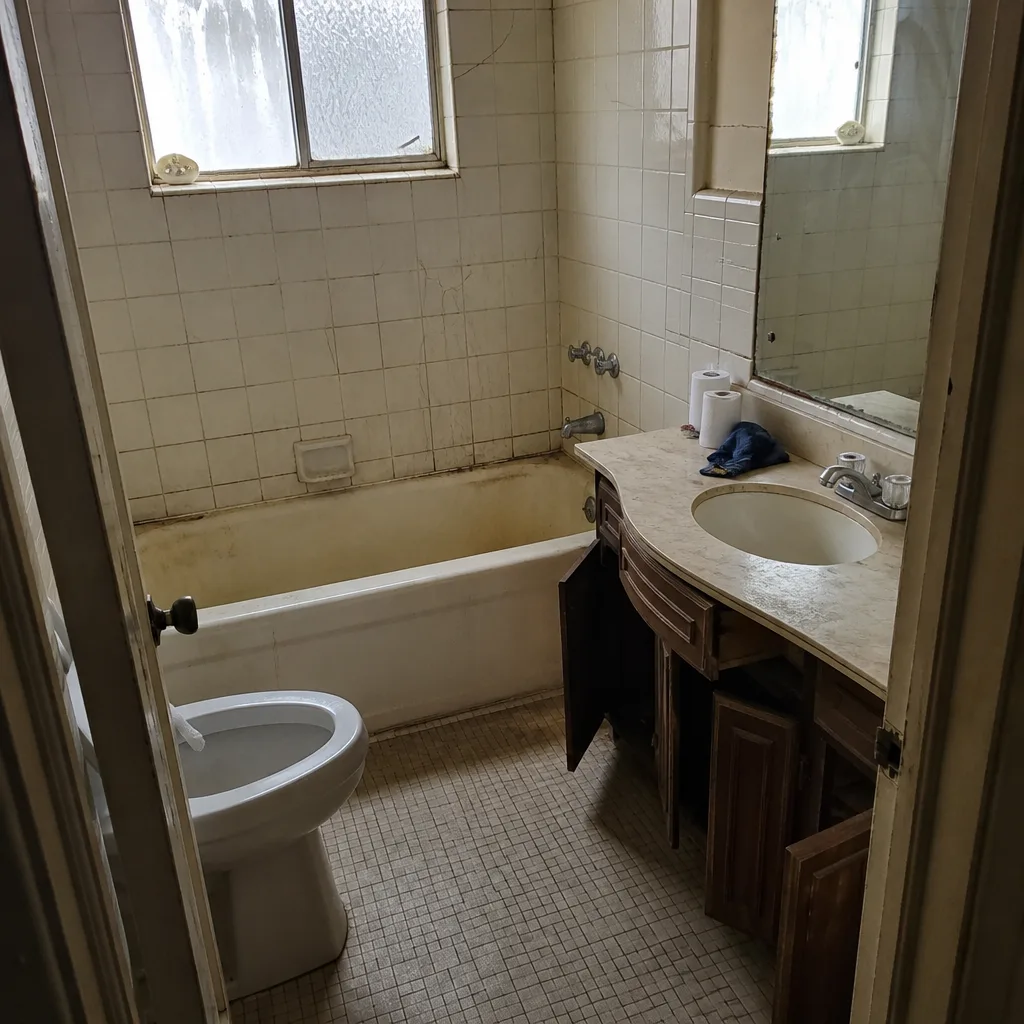 Before
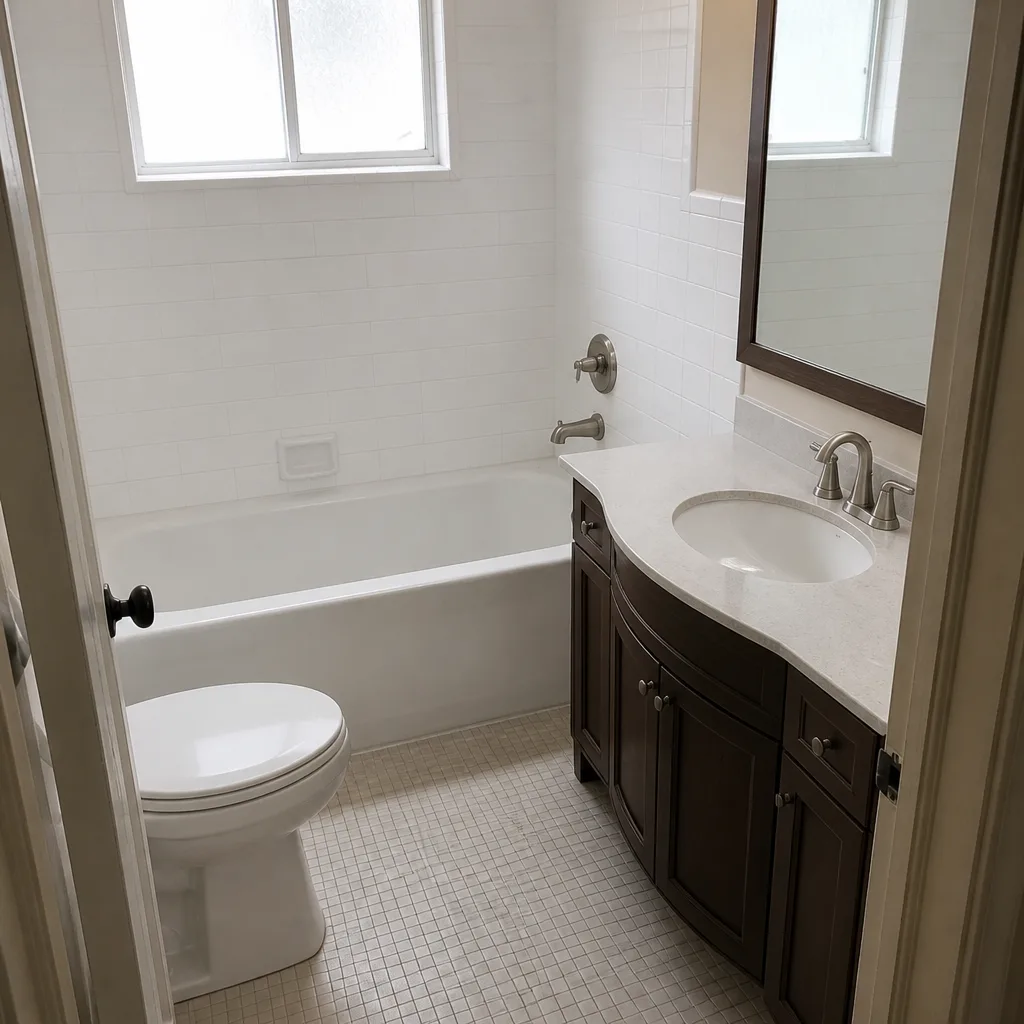 After
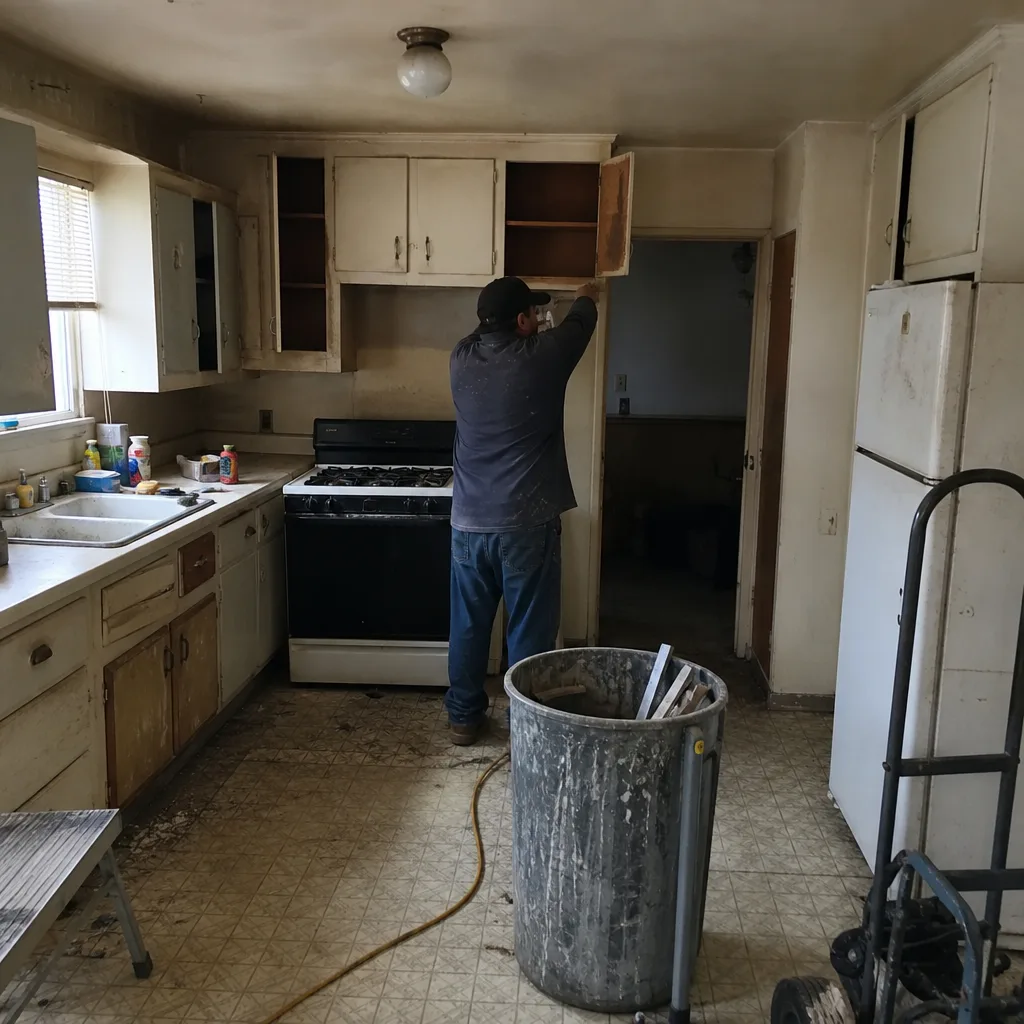 Before
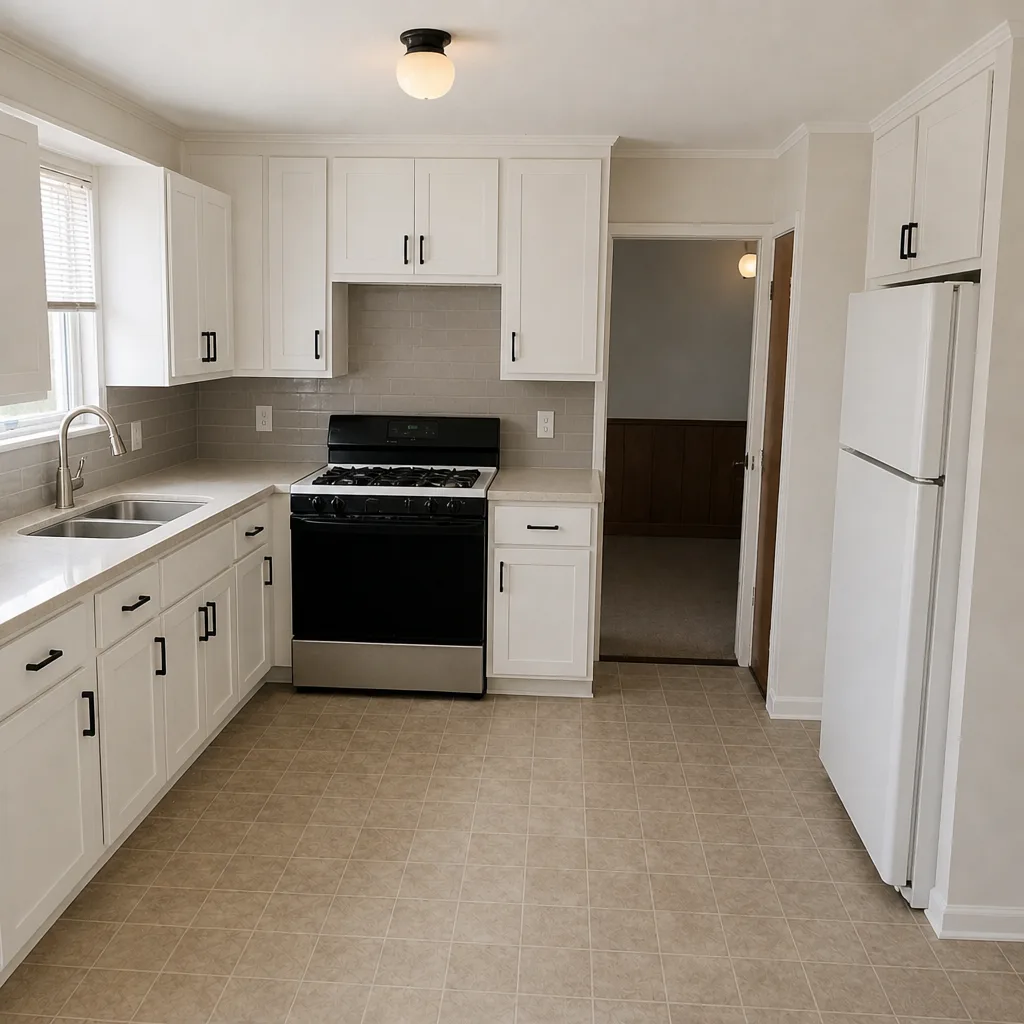 After
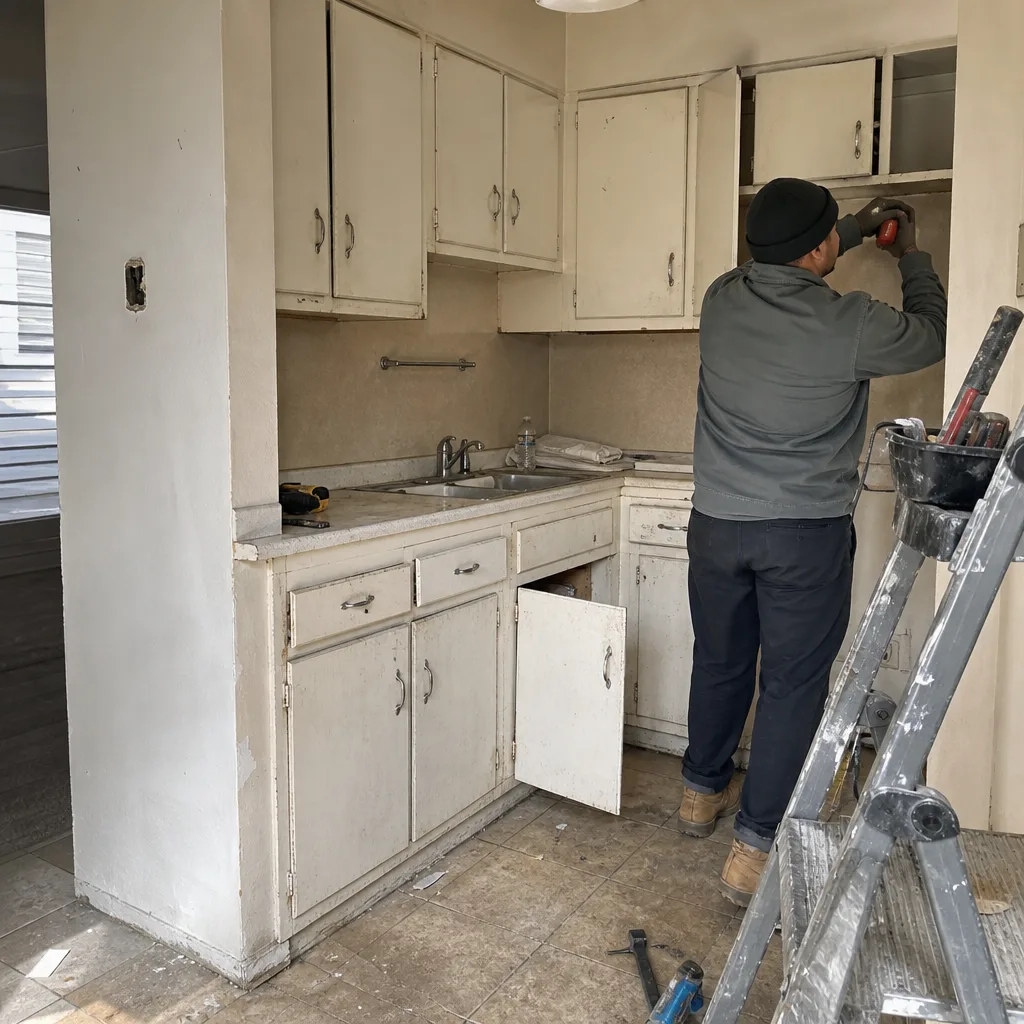 Before
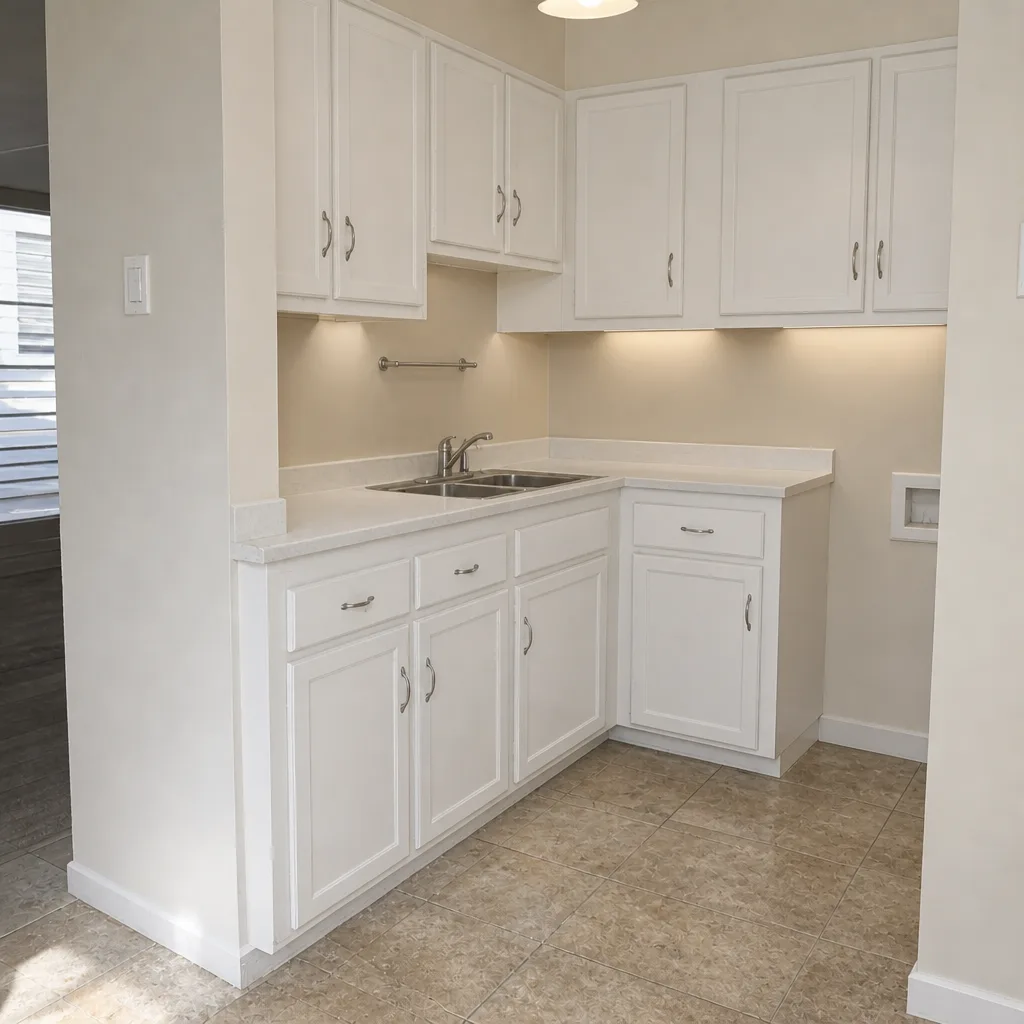 After
When to Call a Professional
Some remodeling decisions genuinely need a professional to look at before you sign anything. If your contract has a deposit above 10% or $1,000, an undefined allowance, a change-order clause that allows repricing without signature, or a scope of work you could summarize in one sentence, it’s time to get a second set of eyes on it. If you’re facing a contractor who won’t provide a subcontractor list, won’t pull the permit in their own name, or won’t commit to a start date, that’s not a negotiation, it’s a walk-away. And if you’re planning a kitchen or bathroom remodel in East Los Angeles and you want the price and the guarantee in writing before the first tool comes out, we can help. Bradford Remodeling Co East Los Angeles offers free estimates in East Los Angeles – call (833) 520-6636.
Frequently Asked Questions
The single biggest warning sign is a vague scope of work. If the contract can’t describe what materials, brands, quantities, and finish standards are included, every disagreement during the job becomes a change-order fight you can’t win. A specific scope makes the price defensible, and a vague scope makes it negotiable – in the wrong direction. Call (833) 520-6636 for a free estimate with a written, itemized scope attached.
For most residential home improvement contracts, yes. California caps up-front deposits at 10% of the contract price or $1,000, whichever is less, before any work begins. A contractor asking for 30% to “secure your slot” is either unfamiliar with state contract rules or choosing to work outside them. Either one is a serious reason to walk. Call us at (833) 520-6636 and we’ll walk you through a legal payment schedule on your East Los Angeles project – free estimate, no pressure.
No, and you shouldn’t. In East Los Angeles, which is unincorporated Los Angeles County, the permitted contractor of record should pull the permit in their licensed company name. If a contractor asks you to pull the permit, they’re moving the legal responsibility for code compliance and inspection results onto you. That’s a hard warning sign. We pull every permit we work under, schedule the inspections, and hand you the signed-off inspection cards at job close.
Ask the general contractor for the subcontractor’s name and license number, then verify it on the California State License Board database. If the contractor won’t share the name, that’s the red flag – not the license lookup. Electrical and plumbing require specific trade classifications, and a general B-license doesn’t cover plumbing or electrical work on its own. Call (833) 520-6636 if you want help reading a subcontractor list.
A change order should require a written description of the change, the added cost, the timeline impact, and a signature from both the homeowner and the contractor before any work begins. If the contract allows the contractor to adjust the price or scope without your signature – even for “unforeseen conditions” – the original price is not a real price. Call for a free estimate with a written price and a signed change-order process spelled out in the contract.
Kitchen remodeling costs in East Los Angeles vary widely depending on scope, but a mid-range full kitchen remodel typically runs from the high five figures to the low six figures once cabinetry, countertops (Cambria and Silestone are common upgrades), plumbing fixtures, electrical, and permit costs are included. A cosmetic refresh with new cabinet fronts and surfaces can land well below that. The only way to get a real number for your kitchen is a written, itemized estimate – call (833) 520-6636 for a free one, and you’ll have the price in writing before any work starts.
The Bottom Line

The warning signs that matter most in home remodeling aren’t the ones the internet checklists cover. A license is easy to fake or borrow. What’s hard to fake is a specific written scope, a deposit inside California’s legal cap, a subcontractor list handed over without being asked twice, a permit in the contractor’s own name, and change-order language that requires your signature. If any of those are missing, you’re the one holding the risk. If all five are in place, you’re working with a professional. Bradford Remodeling Co East Los Angeles puts the price and the 365-Day Done Right Promise in writing before the first tool comes out – call (833) 520-6636 for a free estimate, and you’ll see exactly what that looks like on paper.
For a broader look at what we do, start at our Bradford Remodeling Co East Los Angeles home, or read more about our General Contractor in East Los Angeles, our Kitchen Remodeling in East Los Angeles, and our Bathroom Remodeling in East Los Angeles.
Written by the team at Bradford Remodeling Co East Los Angeles.