Last updated November 17, 2026



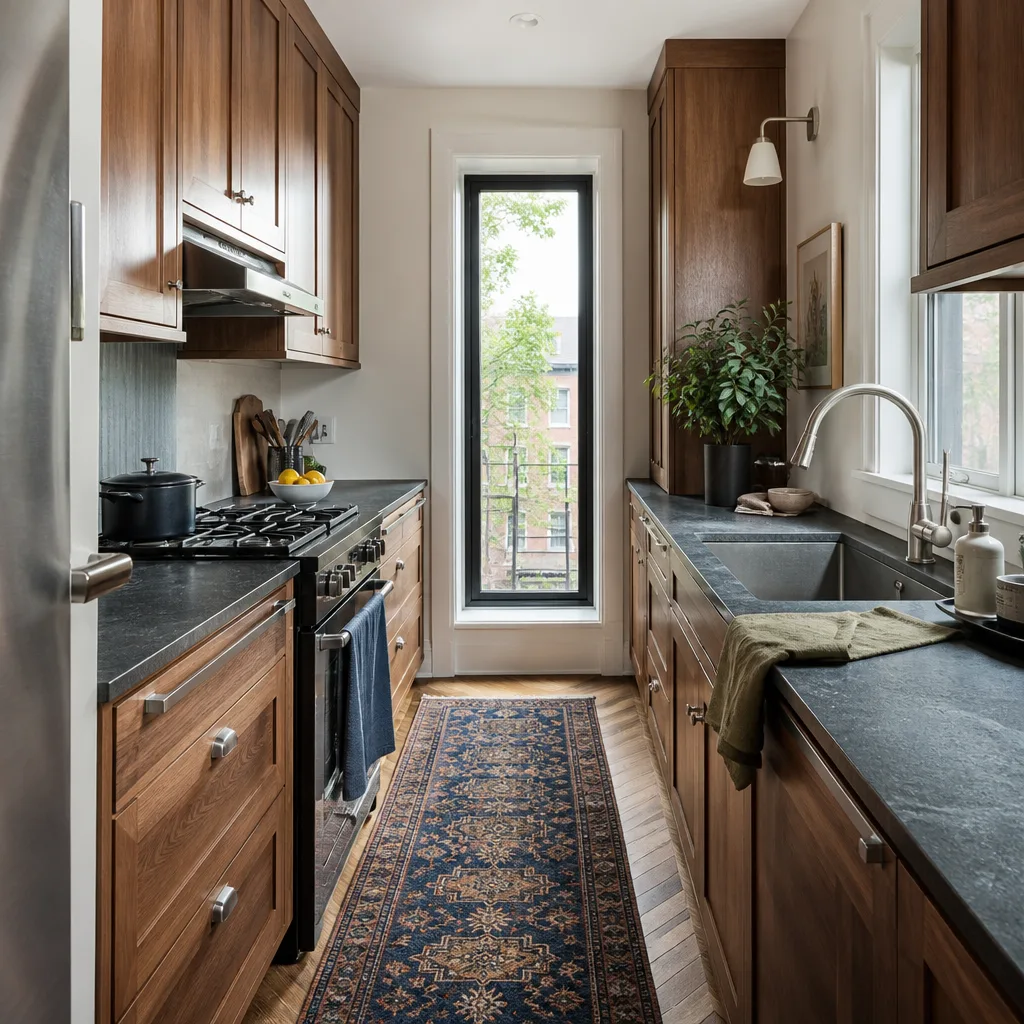
Free written scope consultation - allowances, timeline, and change-order rules on paper before a single trade is scheduled
Construction Warning Signs: An East Los Angeles Homeowner’s Reference Guide
Most warning-sign guides tell you to look for the obvious: a crack, a stain, a sag. That advice fails East Los Angeles homeowners because the marks that matter are rarely obvious. A crack running at 45 degrees from a window corner and a crack that’s just settling look almost identical to an untrained eye, yet one is cosmetic and the other points to foundation movement or missing hold-down hardware. A sulfur smell under the kitchen sink isn’t a plumbing annoyance; in a pre-1965 East Los Angeles house it’s often the first readable signal of a cast-iron drain line failing under the slab. This guide is organized by what a sign means structurally, not just what it looks like, so you can hold a real conversation with a contractor before damage escalates.
Quick Answer
The most important construction warning signs in East Los Angeles are diagonal cracks radiating from window or door corners, doors that suddenly bind in their frames, white mineral deposits on stucco, slow drains paired with a sulfur smell, and ungrounded or aluminum wiring in older homes. Each of these points to a specific system – foundation, wall assembly, drain line, or electrical – and each is worth a professional look before it becomes a repair you can’t schedule around.
Styles & brands we work with
- Kitchen remodeling
- Bathroom remodeling
- Home additions & ADU
- Roofing
- Windows & doors
- Driveway & pavers
- Fence
Table of Contents
- Reading Cracks: A Visual Taxonomy
- Cast-Iron Drain Failure in Pre-1965 Homes
- What Stucco Efflorescence Tells You
- Electrical Warnings in Older East Los Angeles Wiring
- Foundation Signs in Expansive Clay Soil
- Moisture and Water Intrusion Patterns
- Unpermitted Work and What It Costs You
- A Nine-Point Walkthrough Checklist
Reading Cracks: A Visual Taxonomy
Cracks are the most misread signal in residential construction. The pattern, width, and location of a crack tell you which direction stress is traveling through the structure. A vertical crack running straight up from a corner is often thermal movement in stucco and rarely structural. A horizontal crack across a foundation stem wall is a different story – it usually indicates lateral soil pressure, which is common in East Los Angeles because of the region’s expansive clay. A diagonal crack at roughly 45 degrees from the top or bottom corner of a window or door frame is the one to take seriously.
Here’s how to read what you’re seeing:
- Hairline (under 1/16 inch): Usually cosmetic. Monitor it with a pencil line across the crack and a date written on the wall. If it widens within a season, call someone.
- 1/16 to 1/8 inch, diagonal from a corner: Shear stress indicator. Often points to foundation movement or inadequate hold-down hardware at the frame.
- Wider than 1/8 inch anywhere: Get an evaluation. This is the width at which water intrusion and framing stress become real problems.
- Stair-step cracks in brick or block: Movement along the mortar joints. Common in older East Los Angeles masonry where the footing has shifted.
- Horizontal cracks in a stem wall: Lateral pressure. Worth a structural look, especially on hillside lots.
Write down the date you first noticed each crack. A crack that’s been the same width for five years is a monitoring item. A crack that appeared in the last rainy season is a diagnostic problem. That single note is what a contractor needs to give you a straight answer.
Cast-Iron Drain Failure in Pre-1965 Homes
Much of the housing stock in East Los Angeles was built before 1965, which means a large number of homes still have original cast-iron drain lines under the slab. Cast iron doesn’t fail all at once. It corrodes from the inside out over decades, and the first signs show up as small annoyances most homeowners dismiss for years. By the time a drain backs up into the house, the line is usually already collapsed.
Watch for this sequence:
- Slow drains that get slower over months. A single slow drain is often a local clog. Multiple slow drains across the house point to the main line.
- A sulfur or rotten-egg smell. This is hydrogen sulfide from decomposing waste. It can also signal a broken vent, but in an older home with cast iron it’s worth a camera inspection of the line.
- Soft spots in the flooring near a fixture. A failing line under the slab leaks into the soil and eventually into the subfloor. In East Los Angeles, where many homes have original hardwood or tile over a wood subfloor, a soft spot near a bathroom or kitchen is a strong indicator.
- Repeated backups after snaking. If a plumber has snaked the same line twice in a year, the pipe is likely scaled or cracked, not clogged.
The correct next step is a camera inspection of the main line, not another snake. A camera run costs a fraction of what a slab repair costs, and it gives you a documented answer. If the line is failing, the repair is a real construction job – trenching or relining – and it’s worth pricing with a written scope before anyone starts.
What Stucco Efflorescence Tells You
Those white, chalky mineral deposits on the outside of a stucco wall are called efflorescence, and most homeowners either ignore them or scrub them off. Scrubbing them off is the wrong move. Efflorescence is salt that has been carried to the surface by water moving through the wall assembly and evaporating. If you remove the visible salt but don’t find the water source, the deposits come back – and the moisture keeps working on the framing behind the stucco.
What the pattern tells you:
- Isolated patches below a window or roofline: Usually a failed sealant joint or flashing. Water is getting in from above and finding its way out through the stucco.
- Widespread across a single wall: Often the wall faces the prevailing moisture. In East Los Angeles, walls facing the marine layer direction get more prolonged dampness, and stucco that wasn’t detailed correctly at the base lets that moisture wick upward.
- Efflorescence at the base of the wall, near the soil line: Frequently poor grading or a missing weep screed. Water is standing against the foundation and traveling up through the stucco.
- Efflorescence that appears only after rain and disappears in dry weather: A moisture path exists. It needs to be traced, not painted over.
Drywall interior damage behind an efflorescing wall often shows up as paint bubbling or a soft, chalky feel when you press on it. If you find that, stop and get the wall opened up for a look before you do any finish work. James Hardie fiber cement siding is a common replacement when stucco has been holding water for years, because it manages moisture differently and can be detailed with a proper drainage plane behind it.
Electrical Warnings in Older East Los Angeles Wiring
Older East Los Angeles homes were wired to a standard that predates modern appliance loads. Much of that original wiring is still in the walls. Electrical problems are the one category on this list where we tell homeowners not to investigate anything beyond visual identification, because opening a panel or probing a wire is genuinely dangerous. What you can and should do is recognize what you’re looking at from a safe distance.
Three patterns worth knowing:
- Ungrounded outlets. A three-prong outlet with only two wires connected is ungrounded. If you plug in a tester and the middle light doesn’t come on, the ground isn’t there. This is common in pre-1965 homes and it’s a real safety issue for anything with a metal chassis, not just a code nicety.
- Aluminum branch wiring. Aluminum wire is typically visible at the panel as dull silver conductors rather than copper. Aluminum expands and contracts differently than copper and can loosen at terminations over decades, which creates heat. A licensed electrician can identify it and recommend the right mitigation.
- Federal Pacific Stab-Lok panels. These breaker panels have a known history of failing to trip under overload. If your panel is a Federal Pacific, that alone is a reason to have it evaluated by a licensed electrician before you add any load to the system.
Signs that a circuit is already stressed: a faint burning smell near a receptacle, a switch plate that’s warm to the touch, lights that dim when an appliance kicks on, or breakers that trip repeatedly. Any of these means stop using the circuit and call a licensed electrician. Bradford Remodeling Co East Los Angeles is a remodeling contractor, not an electrical contractor, and we’d rather point you to a licensed electrician for a panel issue than have you guess at it.
Foundation Signs in Expansive Clay Soil
East Los Angeles sits on expansive clay soils that swell when wet and shrink when dry. That seasonal movement is the single biggest driver of foundation behavior in the neighborhood, and it produces a specific set of signs that are easy to misread if you don’t know the pattern. The signs don’t arrive all at once. They accumulate.
Three measurements worth taking:
- Door binding pattern. A single sticky door is usually a hinge or a paint issue. Doors that stick in summer and free up in winter, or vice versa, are showing you seasonal foundation movement. Doors that suddenly bind and stay bound are showing you a real shift.
- Floor slope. A golf ball or marble on a hard floor will find the low spot. A slope of 1/2 inch over 20 feet is worth a survey. A slope of 1 inch over the same distance is a structural question.
- Perimeter gap reading. Walk the exterior and look at the base of the stucco and the junction with the soil. A gap that widens in dry weather and closes in wet weather is clay movement. A gap that appears and stays is a foundation that’s shifted.
Cracks in the interior drywall that fan out from a doorway corner, cabinets that pull away from the wall on one side, and floors that have developed a noticeable dip are all worth documenting with dated photographs. That documentation is what lets a contractor or a structural engineer give you an honest assessment instead of a guess. We’ve walked through homes in East Los Angeles where the owner had been told “it’s just settling” for a decade; the photos told a more useful story.
Moisture and Water Intrusion Patterns
Water is patient. It finds the smallest path and it uses it every day. The warning signs of moisture intrusion are often interior and easy to write off as cosmetic, which is exactly when they’re most useful. A water stain on a ceiling is the last chapter of a story that started weeks earlier.
Look for:
- Paint bubbling or blistering. Moisture is pushing from behind the drywall. This is almost always an active leak or a wall that’s holding water.
- A musty smell that doesn’t clear with ventilation. Often a wall cavity or a subfloor that’s stayed damp.
- Chalky, crumbling drywall. Water has broken down the paper and gypsum. If you press on it and it gives way with a soft crunch, the wall has been wet.
- Dark or discolored trim at the base of a wall. Water is wicking up from the floor or down from a leak above.
In East Los Angeles, roof leaks often show up at the valleys and around penetrations first, then travel along the framing before they surface. That travel path is why a ceiling stain in a hallway can come from a roof problem on the other side of the house. Therma-Tru exterior doors are a common replacement when the original door has begun holding water at the threshold; a properly installed door with a sealed pan flashing is what stops the pattern repeating. If a ceiling or wall has been wet more than a few days, get it opened up before you close it again.
Unpermitted Work and What It Costs You
Unpermitted work is the quietest warning sign on this list because it doesn’t announce itself with a crack or a stain. It shows up at resale, at insurance time, and at the moment a future contractor opens up a wall and finds something they can’t legally touch. East Los Angeles has a lot of older homes that have been added onto, converted, and modified over the decades, and not all of that work went through the building department.
How to check before you buy or start a project:
- Pull the permit history from the city. Every permitted project leaves a record. A converted garage with no permit record is a red flag.
- Compare the recorded square footage to what’s actually there. A discrepancy of a few hundred square feet is a clue.
- Look at the electrical panel and the plumbing rough-in for work that doesn’t match the era of the house. New breakers on an old panel, or PEX plumbing in a 1950s home, are signs of a recent unpermitted upgrade.
- Ask for documentation from anyone who did the work. A legitimate contractor will have it. See our general contractor in East Los Angeles page for how we handle permits and inspections on every job.
When we take on a project, we pull the permits and pass the inspections. That’s part of The Garrison Standard, and it’s not a line item you should have to ask for. If you’re buying a home in East Los Angeles, a quick permit history check is one of the cheapest due-diligence steps you can take.
A Nine-Point Walkthrough Checklist
Walk your house once a season with this list. It takes about 30 minutes and it catches the small things before they’re big things.
- Check every window and door frame for diagonal cracks, especially top and bottom corners.
- Open and close every interior door. Note any that bind, scrape, or don’t latch.
- Walk the perimeter of the house at the base of the stucco and look for gaps, white mineral deposits, or staining.
- Run every sink and tub and note any that drain slowly. Note any sulfur smell.
- Check every outlet with a plug-in tester and note any that read ungrounded.
- Look at the electrical panel labeling. Note the brand. If it’s a Federal Pacific, write that down and call an electrician.
- Look up at every ceiling for stains, bubbling, or discoloration.
- Press on the drywall at the base of exterior walls and look for soft spots.
- Photograph anything you note, and date the photo. Keep the set in one folder.
That photo folder is the single most useful thing you can hand a contractor. It shortens the diagnostic conversation from an hour to a few minutes and it makes the estimate more accurate. If you’re considering a kitchen or bathroom update alongside repairs, we cover the trade-term basics on our kitchen remodeling in East Los Angeles and bathroom remodeling in East Los Angeles pages, including what a proper substrate and rough-in look like before finish work goes on.
Common Mistakes to Avoid
- Scrubbing efflorescence off the stucco. It removes the evidence without finding the water source. The deposits will return, and so will the moisture damage behind them.
- Snaking a cast-iron drain a second time. If a line has backed up twice in a year, a camera inspection is the next step, not another snake. You’ll spend more on repeat service calls than on a diagnostic.
- Caulking a diagonal crack and calling it done. Caulk hides the crack from view and from the contractor who needs to read it. Photograph it and leave it accessible.
- Adding a new appliance to a circuit without checking the panel. This is especially common in East Los Angeles homes with original wiring, and it’s how overloads start.
- Assuming a ceiling stain is a roof patch job. Water travels along framing. The stain is often not above the leak.
- Buying a home without pulling the permit history. Unpermitted additions and conversions surface at resale, at insurance time, and when the next contractor opens the wall.
- Waiting for a “better time” on a binding door pattern. A door that suddenly sticks means something shifted. A door that has stuck for five years in the same way means it settled. Those are different problems with different urgency.
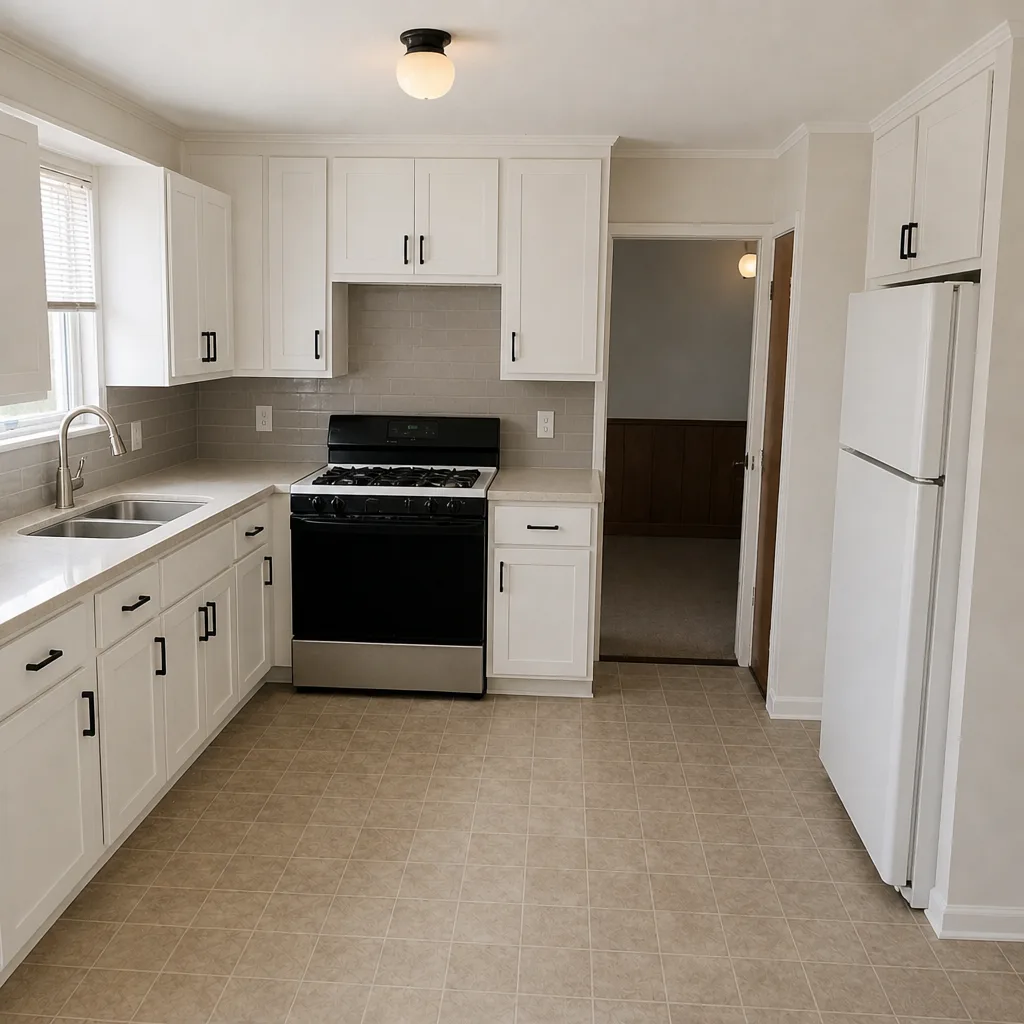
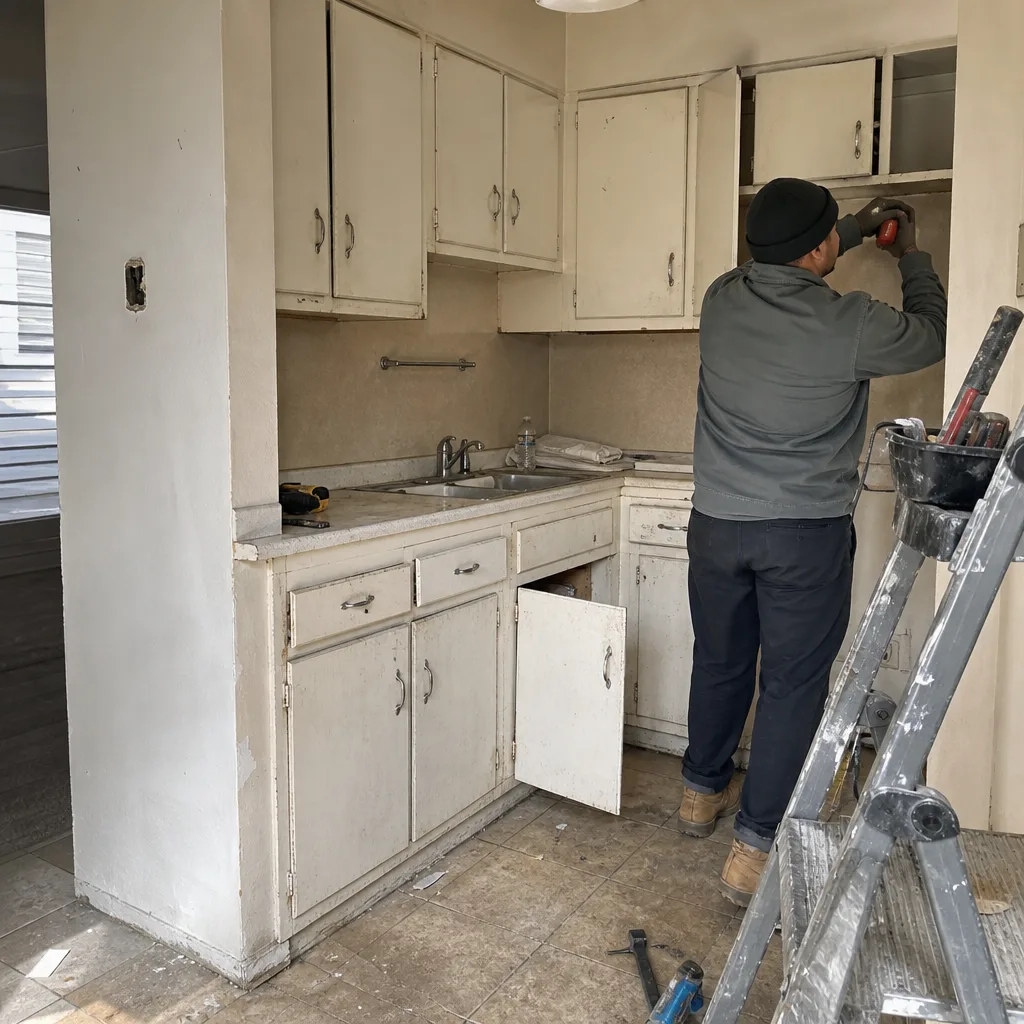
See the difference
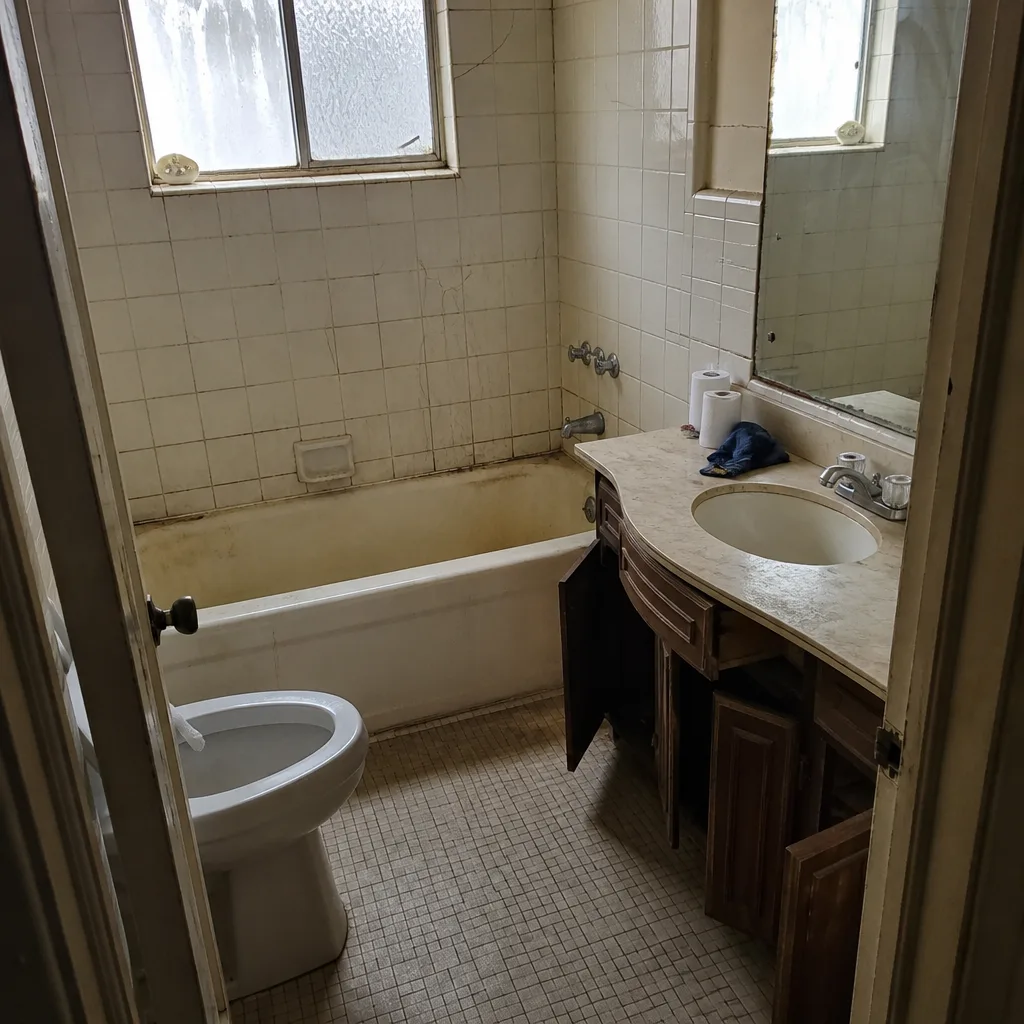 Before
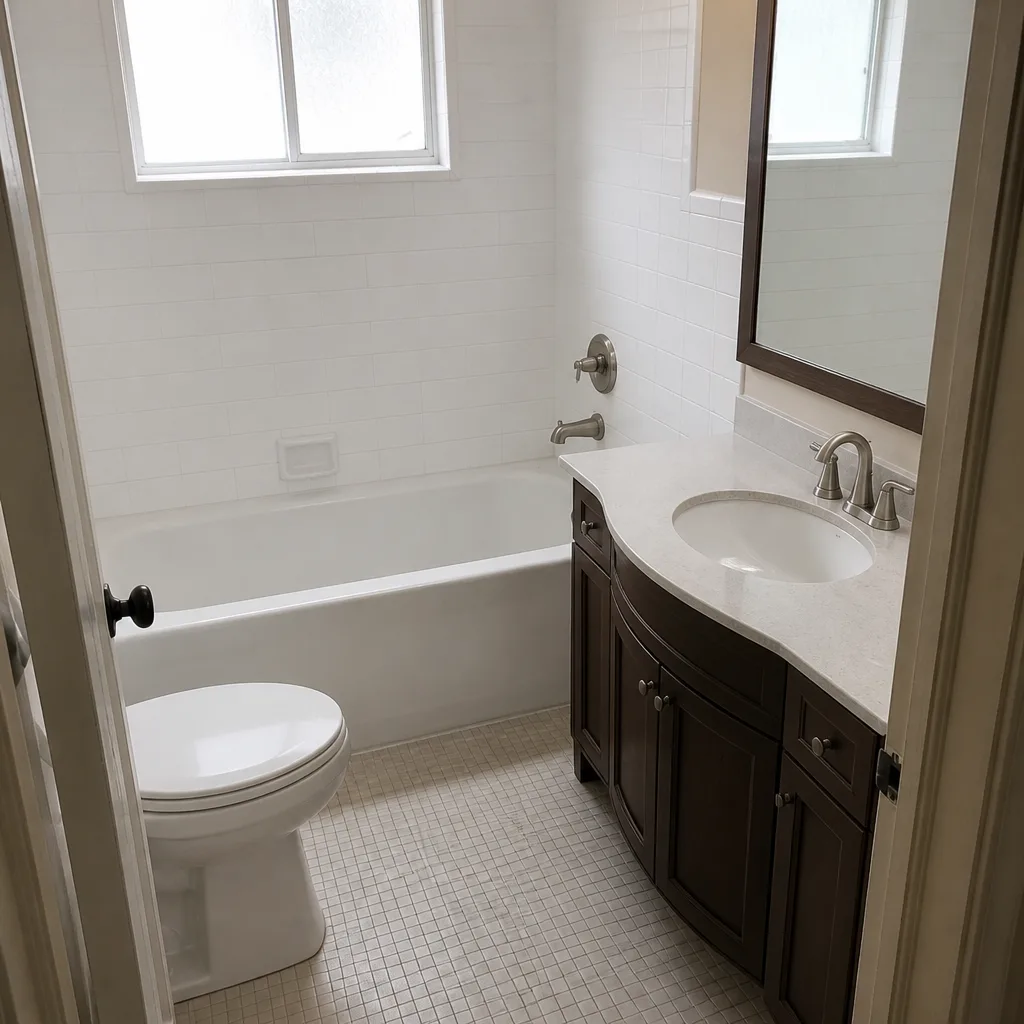 After
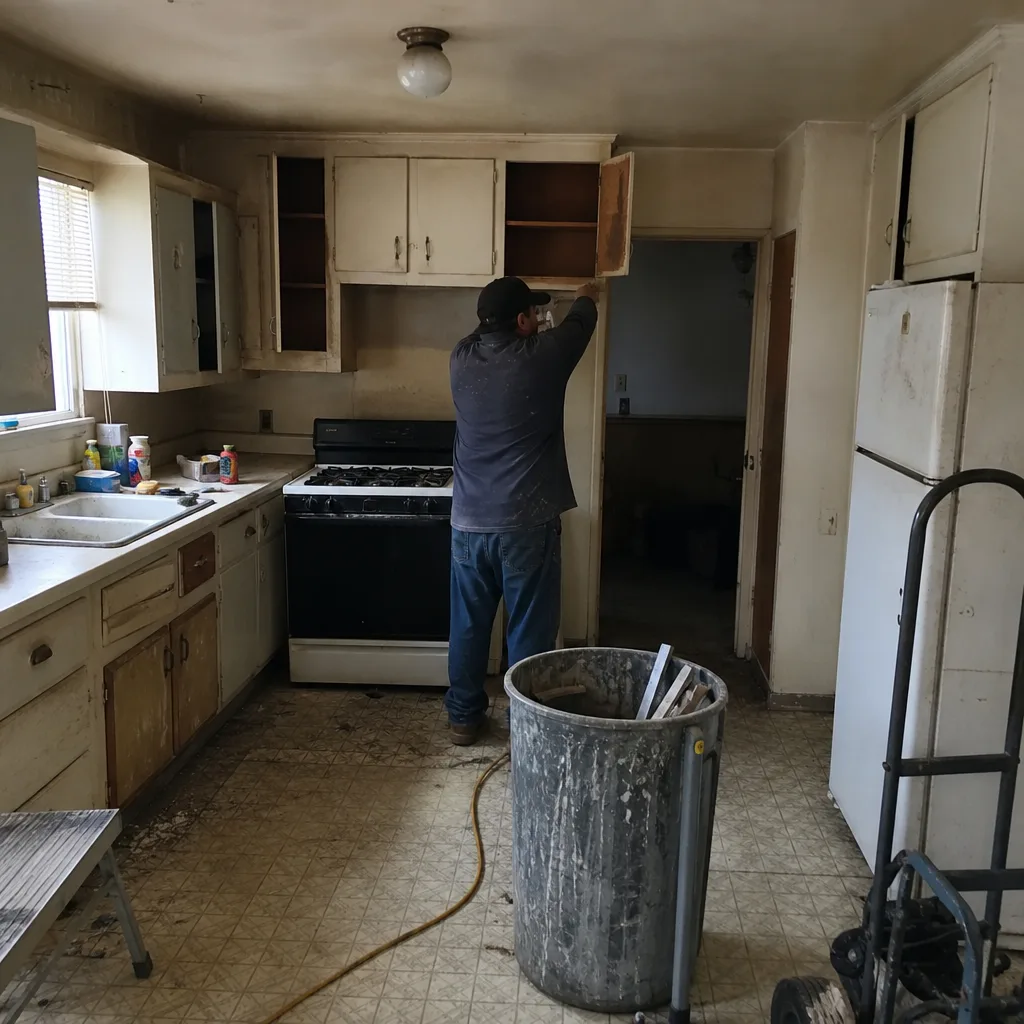 Before
 After
 Before
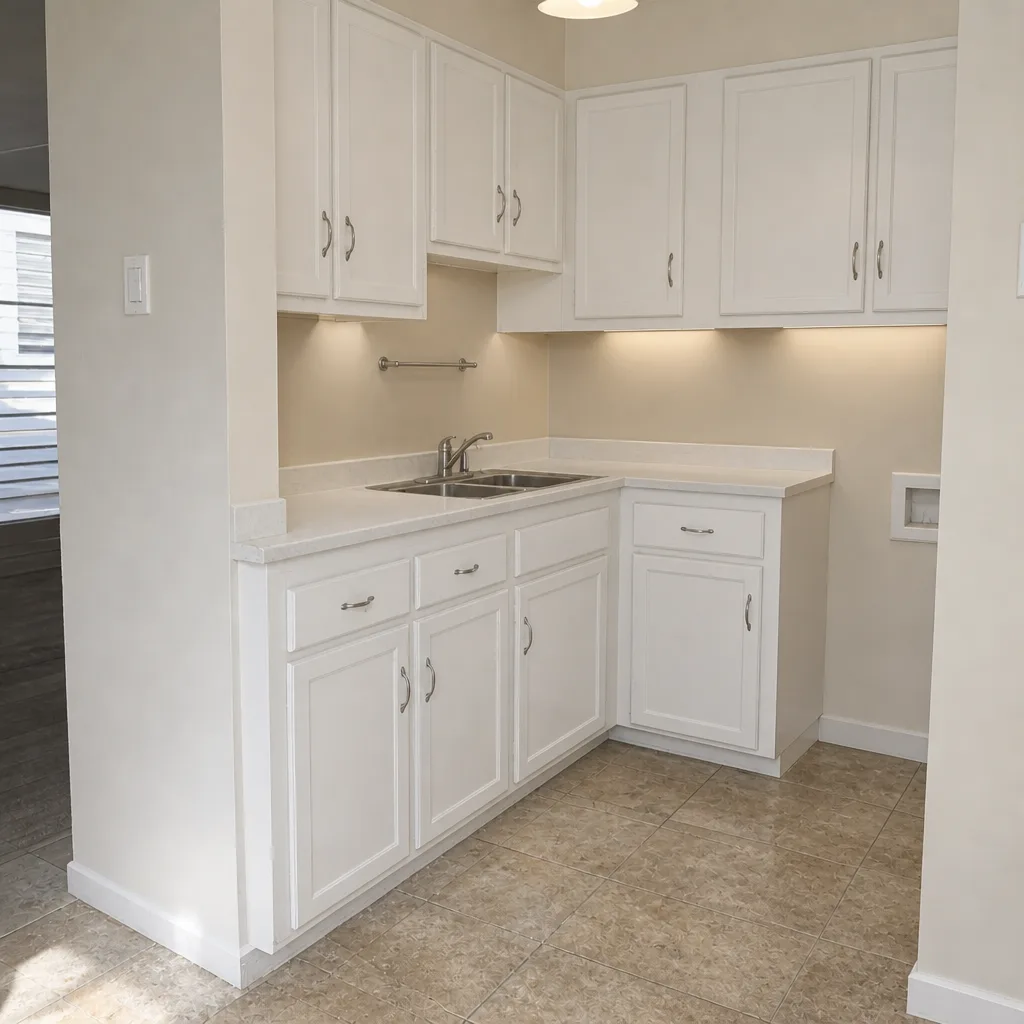 After
When to Call a Professional
Call a professional when a crack widens, a door binds suddenly, a drain backs up twice, you find a Federal Pacific panel, you smell sulfur near a floor drain, or you find efflorescence with soft drywall behind it. Those are the scenarios where a documented look is worth more than another season of monitoring. Bradford Remodeling Co East Los Angeles offers free estimates in East Los Angeles – call (833) 520-6636 and a live person will pick up. We’ll walk the property with you, write down what we find, and give you a written price before any work starts. We do repair and remodel work, and when a problem is outside our scope – like a failed electrical panel – we’ll tell you plainly and point you to a licensed electrician.
Frequently Asked Questions

A cosmetic crack is usually hairline, vertical, and has stayed the same width over multiple seasons. A structural crack is often diagonal, radiates from a corner of a window or door frame, and widens over time. The test is measurement: mark the crack, date it, and check it after a rainy season and a dry season. If it’s wider than 1/8 inch or growing, get an evaluation. Call (833) 520-6636 if you want a second set of eyes on it – the estimate is free.
Sulfur smell near a drain in an older home often points to hydrogen sulfide from waste in a failing cast-iron line or a broken vent. It can also come from a dry P-trap or a water heater anode, so it’s not automatically a drain failure. In pre-1965 East Los Angeles homes with original cast iron under the slab, a camera inspection of the main line is the cheapest way to rule out the worst case. Call (833) 520-6636 for a free estimate on getting it scoped and quoted.
It’s efflorescence – salt carried to the surface by water moving through the wall and evaporating. It means moisture is traveling through the assembly and needs to be traced to its source. Don’t paint over it or scrub it off without finding the water path; the salt will return. A stucco inspection around windows, rooflines, and the base of the wall usually finds the entry point.
Aluminum branch wiring usually shows at the electrical panel as dull silver conductors rather than copper. It can also appear at receptacles and switches when a cover plate is removed. Because opening a panel is genuinely dangerous, have a licensed electrician check it rather than confirming it yourself. If it’s aluminum, the electrician can recommend the right mitigation for your home’s loads. Call (833) 520-6636 and we can point you to an electrician and quote any wall repair that follows.
East Los Angeles sits on expansive clay that swells when wet and shrinks when dry, so seasonal door binding is often the soil moving under the foundation. A door that sticks every summer and frees up in winter is showing routine movement. A door that suddenly binds and stays bound is showing a real shift. Document it with photos and dates before you call anyone – that record is what makes the assessment useful. Call (833) 520-6636 for a free estimate on a foundation evaluation.
Yes. We pull the permits and pass the inspections on every project that requires them, as part of The Garrison Standard. Every job also comes with a written price before work starts and our 365-Day Done Right Promise – if the work fails within the year, we come back and correct it at no charge. If you’re weighing a remodel against repairs, start with the Bradford Remodeling Co East Los Angeles home page to see how we scope work. Call (833) 520-6636 for a free estimate.
The Bottom Line
The warning signs that cost East Los Angeles homeowners the most money are the ones that look like small annoyances: a slow drain, a sticky door, a white patch on the stucco, a breaker that trips. Each is a readable signal about a specific system, and each is much cheaper to evaluate than to repair once it fails. Learn the vocabulary – diagonal crack, efflorescence, ungrounded outlet, expansive clay – document what you see with dated photos, and call a professional when the pattern points at structure. A free estimate now is the cheapest line item in any repair budget.
Bradford Remodeling Co East Los Angeles is a member of the Garrison Partners family, established in 2004, and operates as an independently owned and operated business held to The Garrison Standard. When you call (833) 520-6636, a live person answers – day or night. We give you a written price before any tool comes out, and our 365-Day Done Right Promise covers every completed project in writing. If it’s not done right, we come back and make it right. Call (833) 520-6636 to schedule your free estimate in East Los Angeles.
Written by the team at Bradford Remodeling Co East Los Angeles.